Showing posts with label dungeonbg. Show all posts

Monday, January 14, 2019

Show and Tell

A couple days ago, Timothy Brannan commented on my "Bubble" post. Part of what he wrote included the following:
Moldvay, Holmes and Mentzer Basics were all a product of their times. That is getting people (often read as "kids") to learn how to play. As someone who has been developing college curriculums for 20+ years I can tell you kids and young adults don't go to books to learn how to do something, they want a video or podcast (but mostly a video) and that's where they go first. If I were writing a course on how to learn D&D I'd first look at my video budget. BTW this is not a value judgement on learning, it is a different modality. I used to work with severe Learning Disability students back in the 80s that used similar modalities because they could not process information via text and they did fine this way. I know people that swear by audiobooks too and others that hate them. (I have spent much of my academic and professional career on these exact issues.)
...which I find interesting and worthy of exploration.

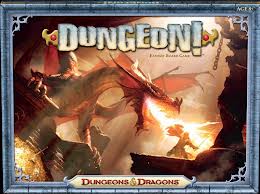
My son is young (he turns eight this week), but he already exhibits a lot of his father's love of gaming (duh, of course). He enjoys card games (rummy 500 is his current favorite, but he plays cribbage, poker, and a few others, including Uno, Pokemon, and Magic: the Gathering). He loves Blood Bowl (we had a BB "World Cup" tournament over the summer that was pretty epic). He just acquired Axis & Allies & Zombies for Christmas (it was the top of his Santa list). And he's been playing my old games of Dark Tower and Dungeon! since he was three and four, respectively.

[he is also interested in designing his own games, as I've blogged on a couple-three occasions]

As I write this, in the early morning hours while the rest of my family sleeps, I can see from my vantage point two board games (AA&Z and Camel Up!), completely set-up, on two different tables, where he was tinkering with both (a third table holds a recently used Yahtzee and a cribbage board, though my four-year old daughter was the one messing with the latter), and I know there's a new Star Wars Monopoly floating around somewhere (acquired from los Reyes Magos).

As far as I know, he's never read a single instruction book or manual.

In fact, while he opened the new Axis & Allies (and Zombies) himself, and set it up in its entirety, he has all but refused to read the manual, other than the parts on set-up and disposition of forces. He wants me to read the instructions and teach him how to play. And lest you think he will eventually get restless waiting on me and buckle down and read the instructions himself, I would draw your attention to the fact that he's owned Arena of the Planeswalkers since last Christmas, and has never gotten around to playing it, because no one in the house has read the instructions.

[he has used AotPW and its neat minis for other purposes, however...he's just never played the game as intended]

Now this is a child who enjoys reading...he's read the first three or four Harry Potter books, half a dozen of those Wimpy Kid books, and more than double that number of Nancy Drew mysteries (the original ones, written in the 1930s)...he's currently on the Ski Jump Mystery. And that's when he's not reading non-fiction history books, which he really loves...especially anything about World War II or ancient Egypt. He's read a lot of the Magic Treehouse books, but he prefers the dry, "Fact Finder" series that provide the historical foundation for the time travel adventures. The kid even read (an abridged) Moby Dick over a four hour road trip...that was last April; I haven't even read Melville!

But, of course, there's a difference between reading a book and a manual. A book's sole purpose is to entertain and/or inform. A manual's job is (or should be) to instruct, for the purpose of understanding how to do something...like operate a blender or maintain your car or play a board game. Some people really dig on manuals (my wife is one, and she's not a huge reader). Most of us, though, prefer only to use them minimally...as a reference when actually needed. After all, manuals are merely a means to an end, whatever that end might be (working the blender, changing the car oil, playing the game).

In asking my son how he'd like to learn a new game, his clear preference was to have me read the manual and then teach him. His second preference? Have mom read the manual and teach him. Asked if he'd rather watch a video instead of reading the instructions himself, he said "sure"...if his parents weren't available and a video was (my child isn't given ready access to the internet). Reading instruction manuals is just "really boring."

And when I really think about it, it's hard for me to find a lot of disagreement in my heart. Reading manuals are one of my least favorite methods of learning anything, even ones that include photos or illustrated examples. Even videos are a poor substitute for teaching...you can't ask questions of a video, nor ask for additional clarification when required.

I have this story in my head about role-playing games, about learning to play them from reading them, because I've read and learned so many over the years...all the way back to B/X Dungeons & Dragons (which I taught myself to play). But this hasn't been the way I've learned most of the games I know. All the card games I know how to play have been learned the same way as my boy: I've been taught them by other people. Even Magic cards (which were showed to me by a roommate back in 1999). But most of the "standard" card games I know were taught to me by my grandmother in Montana (they play a lot of card games in Montana over the long winter months): everything from rummy and hearts to cribbage and pinochle. I asked my mom to buy me Dungeon! when I was eight years old, and I'm pretty sure it was she that first read the instructions and taught me to play...as she taught me to play Scrabble, Clue, Monopoly, and (presumably) Candy Land.  I taught myself Risk, but I'd seen it played before by my teenage uncles and their friends (again, in Montana). My father taught me chess.

Even recently (three or four months back), I purchased the deck-building game Ivion only after I was taught the game in a demo with the husband of the game's designer. I know deck-building games are a "thing," but till Ivion I'd never figured out how to play any of them. I even purchased a Blood Bowl-themed deck-builder about five years ago (based on great reviews) that sits on my shelf to this day.

Of course, it's not just games I've learned from other people. Every job I've had has required on-the-job training. Sure Burger King showed me a couple 30-minute videos during my first day of orientation (as a 14 year old), but an experienced person walked me through all the ins and outs of the kitchen (and only allowed me to make the most basic of sandwiches till I'd mastered that). The 15 year career I quit to move to Paraguay required four weeks of training in Olympia before I even got a desk in the (Seattle) office, and then 11 more months of a probationary period where I was assigned a dedicated trainer who audited every single action I took for my first six months.

And around the house, I am hesitant to start ANY home improvement project unless I've done it before or consulted with someone more knowledgable than myself (like a contractor buddy or my mom's 65-year old boyfriend who's a retired Boeing engineer and ex-military). I am more likely to pay someone to do the work, not because I have money to burn (I really don't) but because I don't trust myself not to screw things up without at least some solid instruction.

[though I should say I have been much better in recent years in taking the initiative in home projects...but that wasn't the case for the first four decades of my life]

Learning from others...at least learning the basics...is the way most of us feel more comfortable learning. Probably it's a cultural thing (schools and stuff) but regardless of whether we learn best by seeing, hearing, or doing all of us want someone to teach us the various skills we want to learn. Once we've acquired knowledge of the basics, THEN we can refine our knowledge through our own exploration or experience with the subject matter (or seek coaching for more speedy or targeted improvement). But the more complex the skill we're attempting to learn...and the more consequence to failure...the more we desire the help of a teacher.

Now, of course, I have taken the time to read game manuals...many, in fact. However, in all the cases where I have "self-taught" myself something I believe there are caveats that can be attached as to why this occurred.

  • In the case of some games (Axis & Allies, Camel Up!, Battleship Galaxies, Pokemon, Go Go Gelato, Lost Cities, etc.) there was a case of my children begging me to read an instruction manual in order to teach them, so that we could play a particular game. My kids have been my biggest impetus to learning new games over the last three-four years.
  • In the case of some games (Firefly, Nautilus, Dragonriders of Pern), the theme or setting of the game was one I had particular interest in AND there was a significant (or possible) method of "solo play" included with the game. I have acquired other games with themes/settings that have special appeal for me (The Dark Crystal, The Call of Cthulhu Card Game, Bang!, Arctic Scavengers) that I've never bothered to learn as I have no one with whom to play.
  • Some games, almost all RPGs, I've acquired for reasons of nostalgia, intriguing theme, or specific "design purposes" (i.e. to examine them for how they designed their various systems and incorporated them in the game). However, while I've "read" the manuals for most of these, I can't say that I've learned how to play them. In fact, if you asked me point blank to run most of these (including Everway, Dragonraid, Hero Wars, Privateers and Gentlemen, Blood Red Sands, or the newest Star Wars line from FFG), I would need a substantial amount of "refresher time" (probably a week or more) to re-read and absorb the material before we could have anything like a first session.
  • Other games have been much more easily digested (and thus remembered/retained) because their basic "chassis" are so closely akin to another game I'm already familiar with...like, for example, Dungeons & Dragons.

Yes, Dungeons & Dragons, the game on which I base the lie that "all you need to learn a game is a good instruction manual" because, of course, I was able to learn how to play D&D without the aid of anyone teaching me. This, by the way, is absolutely true: I received my copy of the game, I read it, I introduced my friends to it, taught them (to the point that some of them would later run the game as DMs themselves, for other friends), and never looked back. Having said that...
  1. The edition I first acquired was the Tom Moldvay basic set, perhaps the single greatest edition for learning the basics of "dungeons" and "dragons" ever published. Complete with multiple page-long examples of character creation, running encounters, creating adventures, and running players through the game. The included The Keep on the Borderlands adventure module also provided great notes from Gygax and examples of home bases, wilderness areas, and dungeons...and tying them all together.
  2. The basic premise of basic D&D isn't all that far removed from the Dungeon! board game which, as I noted above, I had already acquired and learned (through my mother) prior to picking up my first box of Moldvay. Just the concept of a multi-level dungeon (filled with monsters, traps, and treasure) gave me a leg up on understanding the game's premise.

I probably can't overstate how much Moldvay's examples of play helped me. I read and re-read these examples many times, even after playing the game the first time. The encounter example (page B28) shows how to use the reaction table, how spells work (in and out of combat), how to conduct missile and melee combat, and how players interact with the DM and each other based on alignment (not to mention basic kibitzing during a game). The "sample dungeon expedition" (page B59 to B60) shows how the DM presents information to the players, how to clarify that information, how to present traps, how to describe features of the adventure site, how to award treasure, how to deal with character death (it happens), and how to manage a group of players...at least, a group all bent on the same objective of play. From these examples, I could look at my own DMing (at a young age) and at least get some idea of whether or not my game looked at all like the one Moldvay was playing. Everything else I learned later (adding the "Advanced" texts to our game) was built off this foundation.

If I had come to the game through some other gateway (especially the original version of the game or first edition AD&D) I can understand how a teacher would have been pretty much essential, just to prevent frustration with trying to understand the instructional text of the game. Hell, I'd be hard pressed NOW to try to parse out the D&D "instruction manual" as it is today, without my basic foundation (I've blogged before how I've literally fallen asleep every time I've attempted to read through 4th edition Champions). I can definitely see that, lacking a foundation and any teacher or mentor, I too would be left with little alternative besides combing the interwebs for some video to show exactly how I'm supposed to play this game...

I feel I've been something less than charitable to folks who "don't like to read the instructions" (even my own boy!) or who prefer watching a video to reading a manual. Instruction manuals aren't terribly fun (usually) and even when they are written in a "fun" way, it's usually somewhat less fun than the fun anticipated from the end for which they've been written (for example, playing the game the manual explains). Dungeons & Dragons especially is a hard game to learn, regardless of edition. I was simply fortunate that my introduction to the game was written for persons "Ages 10 and Up" (yes, I was reading above my age level back in 1982), and that it was written in such a particular, precise yet streamlined manner...even including a page count (64 minus illustrations, tables, and example text) that wouldn't bore the shit out of my young mind. Something to think about with regard to my own game design going forward.

Now, if you'll excuse me, I have a manual to read about World War II zombie invasions...

Probably everyone loses...

Wednesday, May 13, 2015

Closed System

I spent the entire morning doing research relating to child sex abuse (mainly comparing Paraguay to other countries in North and South America) which was...well, depressing, to say the least. But it was a favor to my wife and relates to her work here and gives me a chance to "contribute." Just so people don't think I'm blowing off the blog for watching Netflix shows or something (that was the other week).

ANYWAY...closed systems. Lately (the last 24 hours), I've been reflecting upon two television shows of the 1970s that I find quite interesting, especially with regard to the nature of their settings as "closed universes." One is, of course, the 1974 serial Land of the Lost (still have to finish that looooong post...this isn't it), the other is the short-lived 1972 cartoon Sealab 2020.

I never had the opportunity to view Sealab 2020 when it was on TV...I wasn't born till '73, after all. But I did regularly watch the parody show Sealab 2021 when it was first running a few years back (funny, funny weirdness), and last year I was able to pick up the original series on DVD from the Warner Archive. My son digs it (as do I), and it's quite interesting from the point of view as an action-adventure show that involves no combat with antagonists...simply the hazards inherent in conducting scientific research in a hostile (undersea) environment.

Need Dyson to map this thing.
Both Sealab (with its undersea complex located on "Sea Mount"...an underwater mountain, natch) and Land o the Lost (with its pocket universe) are closed environments...there's a limit to the amount of exploration that can be performed by the characters. In LOTL, individuals exiting one side of the map simply end up entering the map on the opposite side (this phenomenon is a key element of the first season). The folks of Sealab are restricted based on the hostility of their environment...while they might exit the 'Lab to explore the surrounding ocean, there's only so far they can go due to needing to replenish air supplies. All their adventures take place within Sealab itself, or within close proximity to its safe enclosures.

I'm just looking at the concept in RPG terms...most RPGs make their bread-and-butter by being open environments where exploration might take a character "anywhere." Even when there are some geographical limits -- like "Planet Earth" or "Medieval Europe" -- those "limits" are so vast as to be not terribly limited. I'm trying to think of an RPG that has a truly limited setting of exploration...Paranoia's Alpha Complex is vast (and adventures can take characters into the "outside world") and I don't think spaceship Warden was particularly limited in size for Metamorphosis Alpha (though MA isn't a game I've owned, or had the chance to really study).

No, RPGs don't shut their people into small box environs unless they're designed for short games with very specific objectives (usually examining tragic tales within the confines of a session or two sessions play)...here I'm thinking indie games like My Life With Master and Dust Devils. Even then, I don't suppose the environment has to be particularly confined...but the scale of the game is such that exploration of "the greater world" doesn't usually have the chance to occur.

Anyway, it's an interesting idea. The recent "thing" I was working on has a fairly small scale, but that was an accident of design (based on the game setting) rather a purposeful choice. The thing about the closed setting is it seems to really, truly limit "how far can this game go;" not just in terms of what can be explored, setting-wise, but what can be explored character-wise.

I mean, talk about a big fish in a small pond...if a character (or characters) have nothing to do but probe the confines of a single mega-dungeon (a possible D&D-ish example of a closed environment), how high in level do they really need to go? Without the possibility of building castles or exploring other planes, what's the maximum level you really need?

For some reason, my brain is drawing a correlation between such "closed systems" and board games like Dungeon!...there's no character development/advancement in the board game, there's simply roles that you play (elf, hero, wizard, etc.). Your role provides you with a certain degree of effectiveness, perhaps some different options, but the role is completely static...closed, just like the environment. Is there room for character development in such a setting? Should the elf, at some point, grow in experience to the point that she can take out one of the blue dragons or black puddings inhabiting the 6th level? Or should they always be out of her reach (sans the use of a magic sword).

Would a Land of the Lost RPG ever see the Marshalls developing the skills to take on Grumpy the tyrannosaurus? Or operate Enik's time portal?

I never played something like GURPS: The Prisoner (based on another show with a closed environment) so I don't know what one would do in such a campaign. It would seem there is room for  a series of "adventures" within such confines...a serial television show is able to come up with a number of different stories/"sessions" after all. But is it enough on which to base a game? With a limited environment, you really need some kind of win scenario or endgame, no? Otherwise, you reach the actual (if imaginary) limits of your environment and your stuck just ripping down the continuity of the thing...like the way the 3rd season of LOTL had people and monsters of all sorts just "wander in" to its closed confines.

That's what I'm thinking about today. Well, that and how Paraguay really isn't a great place to raise children. Oh, and bolt-action rifles...but that's for a completely different (and totally off-topic) reason.

Wednesday, June 5, 2013

DUNGEON! Card List


As promised (in the comments section of yesterday's post), here's the card list for my Dungeon! revamp:

Hit It Here

This card list does not include spell cards, of which there are 36 (enough that each spell-casting character can carry a full complement). I suppose for the sake of completeness, I should list them, too. Okay:

Clairvoyance - 6
Fire Ball - 9
Hold-Charm - 6
Lightning - 9
Teleportation - 6

Okie-doke...that will probably be an end to my blogging about the Dungeon! board game for the foreseeable future. I thank you all for your indulgence in this regard...sometimes one just gets a bee in the proverbial bonnet and needs to work on things completely unrelated to the main objective. Which is, of course, to craft fantastic RPGs for fun and profit!

We'll return to that main enterprise in short order.
; )

Tuesday, June 4, 2013

Your "New" DUNGEON!


This will be a quick post as I've got to get to lunch...I am starvin' like Marvin.

Here are the files for my revamped DUNGEON! board game...remember me talking about this last month? Okay, so I've got it together (just finished the rules document, which was the delay in posting this).

You can download the cards here.

You can download the rules here.

You will need your own board and pawns, of course (I was able to acquire a matching set of the correct colors from a Queen Anne game shop, but would like to have painted minis one of these days).


A few notes on assembly:

For me, I printed the cards, cut them into appropriate "color sections" and then glued 'em to a construction paper back using glue stick and the appropriate color. I then ran them through a cheap, cold-press laminator and cut them out with a pair of scissors. They turned out surprisingly well (I'm not all that "crafty") but this is more of a "what you can do" thing...you can certainly get away a simple cardstock (or heavy paper) back and no lamination.

ALSO, since I'm lazy and used the same back for both monsters and treasure (and didn't want to pay money/wait three weeks for a custom rubber stamp to do the markings), I distinguished the "encounters" from "treasures" on the same level by putting a silver "star sticker" on the back of each treasure card (you can use "gold stars" if you like...they're available in packs of hundreds from the local drugstore). I put these stars on before lamination, just BTW.


A few notes on copyright infringement:

This revamp is not intended for commercial sale but for personal use...period. I created this because my two-year old appears to have eaten half of my old cards and I'm less-than-satisfied with WotC's re-print. As such, DO NOT SELL THIS! If you want to print it up for your personal use...well, that's why I'm making it available. I freely borrowed images off the internet for use in the cards, and was happy to use terms like "Hobbit" and "Balrog" because this is a non-comercial, arts-and-crafts project. Don't be an ass trying to peddle this on eBay or something. Thanks!

Even better...feel free to use this as a template to make YOUR OWN version of Dungeon!


A few notes on play-testing:

Both the "Basic" and "Expert" rules have each been play-tested exactly one time. I always found the hero to be the easy victory, and such was the same in the current version of the basic set. In the expert game, the guy playing the hobbit came out on top...but he had a lot of lucky draws (and the other players spent a lot of time in cages). I can't thus vouch for the over-all "game balance" of this...but it sure looks fun!

Feel free to contact me with any questions.
: )

Saturday, May 18, 2013

Apologies to WotC


When I posted yesterday about the new release of Dungeon! I had more than a few unkind words to say about WotC's re-release of the classic board game. I need to retract a few of those words.

First off, regarding construction: I was incorrect earlier when I said the cards of the new game were smaller and flimsier than those of the original. A side-by-side comparison shows they are exactly the same size, and the thickness extremely comparable (it's difficult to tell for sure because of the slick/laminated surface of the new cards...but slickness does not automatically equal "flimsy").

The board of the new game is quite a bit larger, and while the construction doesn't appear to be as durable (to my eyes and touch) as the original, it is quite sturdy and should hold up to plenty of handling. In addition, the SIZE of the board should facilitate play with larger numbers of players, which is a good thing in a game that does well with more than two or three players. The addition of the random tables and objectives/goals to the board itself means that even if you lose the rule sheet, the necessary charts will still be available. This, too, is good game design.

Yesterday's post implied shoddy/cheap construction based on being made in China. This was an unfair comparison, especially considering I have no idea where my 1981 copy was manufactured. Probably in Japan or Hong Kong, though I could find no "made in" stamp anywhere on it. My personal preference for American-made products is just that...a personal preference to support "local" manufacturers whenever possible. But really, who's to say whether it could have been constructed as well here as overseas...in the end, that was just a petty jab.

My main gripe about the new game was the missed opportunity and the needless relabeling of things (like the character figures) for no good reason other than to support WotC's "brand recognition." I prefer an "old school" approach to character design, after all, and like my wizards to be wizened, bearded humans...not eternally youthful members of a pointy-eared elder race. And the "dwarven cleric" is just stupid (I stand by my earlier remarks on that score)...but again, this is mainly a gripe about style of presentation. No, it doesn't make sense to a person familiar with either D&D or (classic) Dungeon! and as a "gateway game" it will only introduce the words "dwarf" and "cleric" into the vocabulary withOUT introducing anything of the character concept. As I said, a wasted opportunity. But I guess they felt the terms "hero" and "superhero" were too cheesy and/or dated. I'm not a master of brand marketing, so what the hell do I know?

Likewise, I can't fault them for adding "variety" and brand IP to the original monster cards...I just think they did so in a lazy manner. And I don't think there's room for much denial that this WAS a lazy design choice. Especially as they did nothing to update the "prizes" (where's the rebranding there, huh?). However, the overall game play of the Dungeon! board game will not suffer for these aesthetic choices...the game play will be almost entirely the same as the original game, which is a good thing considering the quality of the original game.

So there...a few kind words sprinkled on WotC as a bit of an apology. If you own one of the classic versions of Dungeon! (in a more or less complete state), there's really no reason to buy the new version. But if you DON'T own an old copy and want a fun game to play with your kids (or your buddies over beer), the WotC retread is a pretty decent option. However, I'd suggest NOT using the terms like "rogue" or "cleric" or "elven wizard" and grabbing some neutral-looking pawns. Or better yet, some old miniatures that could be used in place of the cardboard cut-outs. It's a little confusing otherwise.

[by the way, there will be more Dungeon! posting in the near future, but I felt it necessary to issue this retraction sooner, rather than later. Thanks]

Friday, May 17, 2013

Cheap-Ass DUNGEON!


[EDIT: I have written a retraction of some of the criticisms found in the following blog post...you might want to read them after reading this. Just FYI]

I don’t know which I loathe more…WotC, or myself for giving them money.

No, actually, I do know.

Yesterday, I picked up a copy of WotC’s re-release of the classic DUNGEON! board game…a classic D&D-light type board game that I have been playing (off-and-on) for over 30 years. A couple days, I posted about doing a retread…which is to say, creating a new set of cards for my existing game. And guess what? I’ve done it…but more on that later.

Made in China


I stopped by Gary’s last night to actually talk about card construction and buying some new pawns (neither assignment successful, by the way) and I asked about the new Dungeon! game, which they carried, and was amazed to find it was less than $20! “What…was it manufactured in China or something?”

Yes…yes it was.

We popped the top and looked at the goods, and it IS pretty cheap construction…but two hours later found me back at the shop buying the game and once again putting money in WotC’s pockets. Why would I do this? Especially when I’d spent a considerable amount of time deconstructing and retreading the game myself? Well, two reasons really:

1)     It WAS dirt cheap, and to buy a complete Dungeon! game (even just to sit on the shelf)…well, it was a cheap price to pay, especially after I’d been willing to bid $30 (plus S&H) on eBay. The fact that I didn’t win the bid meant I felt like I had extra money in the ol’ wallet.
2)     I had pounded a couple beers of a particularly meaty temperament: “Brute Force IPA” brewed at Greenwood’s Naked City Brewery. O I love me some Brute Force.

And I was curious, too. I know that they had changed the “character types” in the game to include their standard D&Dish “rogue,” “cleric,” etc. And I wanted to see what special rules they had come up with. Also, I knew some new monsters had been added (when we “popped the top” I saw one of the monster cards was a “dracolich”…now that’s one I hadn’t added to my own retread!). Basically, I wanted to see what changes/updates they’d made to the game, and see if there was anything I wanted to STEAL…new treasures, new rules, new monsters, whatever.

How naïve of me…to think WotC would actually do anything creative worth stealing.

My wife was on a two-day jaunt to our nation’s capital and got home last night in time to take over bath and bed duties with the toddler. As soon as she did, I dashed downstairs to pull open the box and start analyzing the contents.

First I read the instructions: nothing new. Really. The character types have changed to rogue, cleric, fighter, and wizard but mechanics-wise they are exactly the same as the classic Elf, Hero, Superhero, and Wizard. Yes, the rogue’s only “roguish ability” is an ability to find secret doors and (inexplicably) to fight some magical monsters (like ghouls) better than heroes…or “clerics.” No, the clerics have no special abilities, are no better at fighting undead, etc. They’re simply the hero pawn…with a different name.

And a different SPECIES: for some ridiculous reason, WotC insists on giving each class a different D&D-style race…so we have HALFLING rogues, DWARVEN clerics, HUMAN fighters (superheroes), and (confusingly for Old School Dungeon! players) ELVEN wizards (are they elves? Or are they wizards?). No, the fact that the playing pieces have a race means nothing…except perhaps to engender racism as the humans and elves mock the halflings and dwarves for their pathetic fighting ability.

Combat-wise, the game uses the later 1981 edition’s player attack table: i.e. the “nerfed” or “weenie” version where high rolls are good and low rolls are bad. Yes, this is more intuitive from a game-play learning standpoint…but mechanically, it really makes the monstrous opposition weaksauce (hell, “seriously wounded” characters only have to drop half their treasure instead of ALL of it…and the probability of being seriously wounded is reduced as well!). But regardless, prior Dungeon! players will be familiar with version of the table.

So no changes to the rules…well, except that they’re poorly written (there were at least a couple instances where I felt like, “hmm…if I didn’t already know the rules, this part would have left me confused and critical”). However, I don’t have the instructions in front of me to cite at the moment, so you might just want to take that as “in my opinion.”

Next I reviewed all the cards in the game. This may sound like a huge chore, but after spending several hours constructing spreadsheets and deconstructing my 1980/81 editions, it didn’t really take much time at all. I was a little confused at first that there were only 164 cards in the game, when the box clearly states there are 165…for a moment, I thought I might be calling WotC to complain of an incomplete set. But at least one detailed reviewer on-line gave the same card count (164) and the card arrangment (which we’ll get to in a second) leads me to believe it’s the box that has the typo.

The artwork on the cards is very pretty and exhibits the same high standards WotC has used since they first got into the Magic Card business. I don’t know if I’ll ever be able to fault them for their consistency of visual presentation when it comes to glossy fantasy art (some of their B&W interiors is, of course, another matter). However, the cards themselves are TINY and FLIMSY, even compared to my 30 year old, punch-out cards…they’re small enough you can fit four to a row on an 8.5” wide sheet of paper, which is part of what leads me to the assumption that there’s only 164 cards in the set.

See, the 1980 edition of dungeon had 165 cards…24 spells, 61 monsters, and 80 treasures…which was less than the original 1975 edition but still provided a manageable game. 24 spells gave both wizards the opportunity to carry a full complement (12 each), 80 treasures is enough to fill all 80 rooms, and the 61 monsters included all the TYPES from the original set, just with less “doubling up” (instead, you reshuffle the decks when you run out of monsters). And having 165 cards allowed the manufacturer to present the entire set in three punch-out sheets of 55 cards each (5 columns by 11 rows)…you can see an image here on Board Game Geek.

[actually, their site appears to be down...sorry, no link]

The cards in the new WotC set are not “punch-out” but, rather, machine cut cards…and being short enough to fit into four columns on a standard sheet of paper, I’d suspect that’s how they were manufactured (164 cards is easily divisible by 4). But I could be wrong.

Anyway, aside from the new size and the new artwork, the spells and the treasures are pretty much exactly the same…not surprising considering the original set was play-tested and worked out over decades and the objectives (character goals) and game-play hasn’t changed since (the “new characters” still have the standard goals of 10,000, 20,000, or 30,000 depending on type). That was slightly disappointing (I was hoping for a little more variety than all the silver coffers and jade idols)…and even more so in light of the monster cards, which I actually reviewed FIRST…but my comments on them will be longer winded, so I saved that for now:

What a frigging sham.

I spent several hours the last couple days deconstructing the monster lists, looking at the average attack numbers needed for each piece based on level, carefully adding new monsters at appropriate depths that did not throw the original game’s balance out-of-whack…yet still being distinct and different from the already existing monsters in the game. I would think that a professional game company with a design team and plenty of resources and man-hours could do something similar, right? Nope…instead they took the LAZIEST ROUTE POSSIBLE and just glued new names and faces over the existing card values.

That’s right…there are no new monsters; instead (as with the playing pieces) they are simply WotC’s D&D color “painted on.” For example, in the original game (all versions through 1981) the 3rd level monster Giant Snake has the following stat line:

5, 6, 9, 6, 8, 10

There is no Giant Snake in the 3rd level of the “new” game; instead it’s been replaced with the monster “Lizard Folk” with stat-line:

5, 6, 9, 6, 8, 10

The 4th level Giant Snake has ALSO been replaced in the WotC version…here with the “Owlbear” whose stat-line is:

5, 6, 9, 6, 8, 10

Absolutely no difference between the two at all…except for the picture and name. Where this gets MORE annoying is when you have monsters on the same level that are EXACTLY ALIKE except for the picture: for example, there is no difference stat-wise between the Vampire and the Mind Flayer on the 5th level.  However, the MOST annoying thing is the completely random disregard with which these “new” monsters are assigned with little rhyme or reason.

FOR EXAMPLE, the minotaur is a classic monster in D&D (and mythology…duh). It has always (as far as I’m aware) had six hit dice (sometimes with pips) and been one of the tougher encounters (i.e. a “higher level” monsters). I made sure to add the minotaur myself to my retread, placing it on Level 4 (the same level where one finds mummies and trolls…i.e. HD 5 and HD 6…monsters in the classic game). WotC also includes a minotaur.

It’s a 1st level monster, placed alongside goblins and dire rats. It replaces the “giant lizard” found on Level 1 of the classic game (oh, and by the way? The giant lizard on the 2nd level of the classic game…with the same stat line…is still present on the 2nd level of WotC’s game!).

F’ing ridiculous…another example: the 3rd level mummy (one of the tougher encounters on the 3rd level) has been replaced with a “zombie” (same stat-line as the original mummy). Now, I don’t know about you, but I’ve never known the zombie to be the equal to a mummy in ANY version of the game, and certainly a zombie should not be a higher class of creature than, say, a minotaur or an ogre. But there it is…sheer laziness. Like they just don’t give a damn…they’re just trying to leech money out of your wallet.

Oh, yeah…and the cleric needs to roll a 10 on 2D6 to defeat the zombie in combat. This is, of course, due to “cleric” and “zombie” originally being “hero” and “mummy” and no one bothering to do any adjustments. Look, you f’ing imbeciles: if you want to “ape” the feeling of D&D in your board game (as evidenced by renaming the classic pieces “rogue” and “cleric” and “fighter” and throwing in mind flayers and “dracoliches”) then do some work to make it actually feel like D&D! Even 1st level clerics turn zombies on a 9+ in old school D&D (and probably have a better chance in 3rd+ editions)!

So, man  O man am I glad I only blew $20 on this thing. There is nothing new here except for some pretty pictures and a handful of actual adjustments (of mixed value, but I’ll get to those in a moment). For the sake of posterity, here are the “picture changes” (the WotC picture will be listed FIRST, followed by the classic Dungeon! monster it takes the place of):

1st level:
Kobold (= hobgoblin)
Minotaur (= giant lizard)

2nd level:
2 Orcs (replace 2 giant spiders)
Gnoll (= evil hero)

3rd level
Lizard Folk (= giant snake)
Evil Cleric (= evil superhero)
Evil Rogue (= evil superhero)
Zombie (= mummy)

4th Level
Duergar (= werewolf)
Owlbear (= giant snake)
2 Drow (replace two evil superheroes)
Hill Giant (= giant)
2 Green Slimes*

5th Level
2 Driders (replace two trolls)
2 Fire Giants* (replace two giants*)
Vampire* (replaces purple worm)
Mind Flayer* (= vampire; replaces purple worm)
2 Gelatinous Cubes (= original edition green slime*)
2 Black Puddings*

6th Level
Purple Worm* (replaces vampire)
Black Dragon (= blue dragon)
Dracolich (= original black pudding*)
Minus one monster*

An * listed above equals an actual adjustment to the original card or card count; i.e. an ACTUAL CHANGE (yay!). There aren’t many and some of these are questionable (or poor) decisions. But I’ll list them (in order of level) for the folks that are interested…I know this post is getting long, but I don’t feel like breaking it up:

*4th level:
Slime Needs Fire
Green slimes have had their stat line changed from the original “Lightning: 6, Fireball: -“ to “Lightning: -, Fireball: 6.” This actually makes more sense and is one of the things that has ALWAYS bugged me about Dungeon!, since fire has always been a classic method of destroying green slime (even before I played D&D, as a kid those D&D ads in comics showed the wizard destroying green slime with “fireball!”). Now, I don’t think my 1981 edition had a typo…I think that this was originally reversed as a game balance issue (there being so many fire susceptible monsters on the 4th and 5th levels where green slime is encountered, including mummies, trolls, black puddings, giants, and werewolves)…the designer had to do something to get people to use a spell other than fireball! This makes more sense from a D&D perspective, less from a design perspective, but in general I like it.


*5th Level:
Fire giants have the same stat-line as “giants” from the classic version (see “hill giant”) except that they are immune to fireball now. This is a nice way of balancing the “fireball” issue (see green slime notes), except, along with other changes, it turns 4th level into a fireball-fest, and 5th level into a lightning-arena. It was nice thinking, but a little short-sighted in this regard.

Two purple worms and one vampire originally appeared on the 5th level; these have now been replaced with two vampires and a mind flayer (i.e. three vampires, since mind flayers have the same stats as a vampire). I believe this is due to wanting to keep the largest monsters on level six…but it again lacks variety. On the other hand, purple worms are most susceptible to lightning and the 5th level was already gearing up to be “lightning land” with the change of giant to “fire giant.”

Gelatinous cubes…leaving aside the issue of whether these monsters deserve to be on the 5th level of a six level dungeon (they don’t) they have exactly the same stat line as the original “green slime” entry, including the vulnerability to lightning. Again, this is NERFING the game board by making it PREDICTABLE. Do the designers not get this? Put the slimes here instead.

Black puddings: in the 1980-81 edition of this game there are a total of three black puddings (one of the tougher monsters). Two are found on the 5th level and one on the 6th. The ones on the 5th level are(mysteriously) MORE difficult than the ones on the 6th, requiring a superhero to roll a 12 to defeat them instead of a 10 (the target needed for the 6th level pudding). In analysis of the original 1975 component list, I find this is actually a typo…ALL black puddings originally listed “10” for the superhero to defeat it. In my own retread, I correct this oversight. WotC does not, instead making the “typo” standard, which in turn makes the average target number for superheroes on the 5th level the same as that on the 6th level (10 as opposed to 9)…which makes it retarded for a superhero to even bother with the 5th level since, A) there’s more treasure per room in the 6th level, B) there’s no magical incentives in the 5th level compared to the magic sword on the 6th, and C) it’s the same average effort to kill anything! This just closes off a huge chunk of what should be regular superhero stomping ground! However, on second pass, I see this is mitigated by the purple worms being traded to the 6th level for vampires (turning the average again back to 9 and 10 respectively for the 5th and 6th levels).

*6th Level
The 1980-81 edition of Dungeon! included two vampires and one purple worm on the 6th level (perhaps echoing the OD&D description of purple worms being found “anywhere” as there were two on the 5th level). In the WotC version, there are ZERO vampires and instead two purple worms. The extra monster is simply left out (this is why the WotC game has only 164 cards and not 165). Again, this seems to be done for balance as much as the D&Dism “biggest monsters on the lowest level.” And in this particular instance it seems to work nice, especially making an equal number of monsters susceptible to lightning and fireball…though I did like the previous variety and wish they’d thrown at least ONE vampire in as a possible “light” monster encounter.

The “dracolich” simply replaces the black pudding normally found on the 6th level…but uses the original (correct) black pudding stat line, i.e. superheroes need a “10” to kill it instead of a “12.”

So, that’s it…very minor actual tweaks to the game (oh, except I forgot to mention that the “cage trap” only causes you to lose one or two turns, as opposed to D6…a nerfing in favor of making players sit less on the sidelines, which isn’t a terrible thing for fast-based board game). Mostly, it’s just a bunch of lazy “slap-a-new-image-on-the-card-and-see-if-anyone-notices” changes…many of which, really, don’t make sense. Why is a drider immune to lightning? Answer: because it was originally a troll. That’s just stupid shit.  The actual changes are fairly sensible: except they reduce variety, and run the risk of typecasting some levels (4th and 5th specifically), plus they make the 5th level easier for wizards and the 6th level harder (not sure if you want that or not…maybe). My own design tried to account for the original averages PLUS add NEW critters, with new variety and new stat lines. It’s not that hard to do…but I guess I’m not terribly surprised at WotC taking the “easy road.”

An orc is a bigger challenge than a minotaur? Are you f’ing kidding me?

By the way…does it seem weird to anyone else that the original game contained no less than five “evil hero” and “superhero” monsters and these have been entirely replaced in the WotC version? There’s not a single evil fighter in the game! WTF?!

Wednesday, May 15, 2013

Retreading DUNGEON!


Last night I was tired and feeling a little mopey and “blah” about my 5AK game. Maybe that’s not what came across in my post, but that’s what I was feeling.

F that noise.

I mean, listen: everyone involved in a creative endeavor (writing books, writing music, producing a film, whatever) has moments when they say, “what the heck am I doing?!” You really can’t control these feelings (I mean, they ARE feelings after all)…but intellectually you have to know that’s going to happen and just push on through. Because birthing your art is tough (even when your art IS crappy or hack work as is sometimes the case), and it is very easy to get stopped in your tracks by second-thought anxieties and ridiculous worries. If you let those feelings control your actions (as opposed to your mind) you can end up with a lot of projects sitting on shelves gathering dust…possibly depriving others of the enjoyment of your creative ideas.

It’s happened to me more than a few times.

[just by the way, some people will wail at the sky and ask Why O Why were humans created with feelings then, if they’re just going to get in the way at times like this? What purpose do they serve? Well, first off they are incredibly important in other aspects of our lives…such as relating to our fellow human beings…but ALSO they are an important part of the creative process itself. Without an injection of feeling your art runs the risk of “lacking humanity,” i.e. being so cold as to turn folks off or (at least) not “firing them up” in any way that they care to continue to experience your works. Hmm…that’s probably a little too esoteric for this discussion; the POINT is, they’re GOOD THINGS that need to be harnessed, not given free rein]

Anyway, here’s the intellectual truth: 5AK is a vanity project, which is to say it is a product of MY vanity. Some people will dig it and some people will not regardless of its quality (i.e. regardless of whether it’s a masterpiece or a piece of shit). It’s the same with everyone. I can recognize the time, work, and effort that goes into the gorgeous coffee table books WotC passes off as RPGs…but I don’t need another gorgeous coffee table book (I have too many gathering dust in my house as it is, mostly ones having to do with Egypt or swords…that’s just my thang), so I’m not going to buy ‘em. Some people will refuse to buy my books strictly because they are NOT gorgeous coffee table books. And a lot of people won’t get ‘em because…well, because they don’t need them and/or they’re not interested in the subject matter.

I can’t control that kind of thing, anymore than WotC can control my purchase of their merchandise. The price point thing IS an issue, but it’s a doable one. The fact of the matter is this: I have the money to finance my vanity project and finance it I shall. Hustling…um…"marketing it successfully" is on me, and I hope to do much more of it then I did with my last book (*ahem*). I don’t have to worry about “making my money back” because the money I’m fronting isn’t coming out of my family’s savings account (not that we have any money in our savings account…). My main worry is making ENOUGH money to finance the next book…but you know what? I can always release future books as eBooks, or print-on-demand, so even that is a moot worry. Having books on the shelves of my local game shop is simply another mark of my vanity…makes me feel like a real life game company or something.

I need to stop being so vain.
; )

So that’s that…now, back to Dungeon! There’s a part of me that was wondering last night, if my whole interest in D&D (and RPGs in general) is indeed a “nostalgia thing;” some sort of subconscious longing for my childhood. And I don’t just mean “back when I was a kid playing D&D with my buddies;” I’m talking about being a LITTLE kid, playing games with my parents.

The Dungeon! board game (my “gateway drug” to D&D) has been on my mind the last few days, especially considering its similarities to CHAINMAIL (the original “system” used in Arneson’s Blackmoor, which was the basis for the Dungeon! board game), and my own use of the CHAINMAIL system as the basis for 5AK.

I can still remember sitting around the dining room table, rolling plastic green dice with my brother and mother, long before I ever opened my first magenta box of Basic Dungeons & Dragons.

And we played the hell out of Dungeon! back in the day…my brother and I, anyway. So much so that we memorized the rules (including the combat tables, which I can still recite from memory). I’ve hung onto my Dungeon! game…now more than 30 years old…and have managed to keep it mostly together, having played it as recently as last year with some of the guys down at the Baranof (I won, of course, ‘cause I’m, like, awesome).

Well, I should say I managed to keep it together until RECENTLY…the last time I looked at it, the only thing I was only missing three treasure cards and the rule sheets (the latter of which were unnecessary due to the aforementioned memorization). However, I opened the box a couple days ago (I wanted to do some comparisons between the target attack numbers and CHAINMAIL…yes, I am a total nerd) and found a huge swaths of cards missing…like HALF the fifth and sixth level treasure cards! WTF?!

I didn’t realize how emotionally attached to the damn thing I was until I saw that it was now missing enough pieces to make it fairly unplayable. I’m still not sure what happened. My suspicion is that my son got into the box (he likes to open boxes…especially board game boxes…and play with the components), and then the nanny packed it up and put it in the closet where I found it (which is not where I remember putting it). I was fairly upset at the time…I even went so far as to create an eBay account so I could bid on a new (used) copy of the board game.

Sheer ridiculousness and overblown reaction on my part. Now, a few days later, I am much more cooler in the head (I was eventually outbid on eBay, thank goodness…I need that money for printing costs!), and I realize that while Dungeon! may be my favorite parlor game of all time (and may be the subconscious psychological foundation of my gaming hobby…I am a great dungeon designer, IMO, if a fairly terrible hand with the maps), it’s still unsatisfactory in some ways. Not terribly so…it’s replay quality is high (as my decades-long love affair can attest) as is its “fun factor” its inherent competitiveness and its setting (I think the board design is my favorite thing about the game). But even so, I’ve now turned my critical “designer’s eye” on the game and I see some “adjustments” that I’d like to make.

I’m thinking of redesigning Dungeon!

Well, “redesigning” isn’t the right word. “Retreading” would be more accurate. Basically, I’m thinking I’d like to create my own cards for the thing. Yes, I’m sure that missing 20-30+ cards might have something to do with my inspiration…but there it is. And, yes, I realize there are new editions of Dungeon! that already have owl bears (and include new character types, etc.)…but I don’t need a new Dungeon! board game. I have the board. I have the pieces. I have the plastic green dice. And I told you I’ve still got the rules memorized. All I need to play is a complete set of cards…and rather than buy a whole new set (off eBay or not), why not take the opportunity to use my “design sensibilities” to create my own?

That’s what I’m thinking about today. I know it’s not role-playing. I know it doesn’t have to do with anything “important” going on in my gaming world right now. But sometimes the heart wants what the heart wants…that whole “feelings” thing again. And while I wait for my art to come in on CDF, and my dice to get manufactured for 5AK, and my proof-readers to get there edits back to me…well, I think it’s okay for me to take a break and a breather for a moment to “follow my joy.”

Specifics to follow.
: )

Sunday, August 12, 2012

Killing Vancian Magic (Part 3)

[continued from here]

The spells in Dungeon! are limited to two categories: combat (fireball and lightning) and movement (teleport). The combat spells are the most effective means of combat in the game (except against evil wizards and witches, perhaps due to an unwritten, “counter-spell” ability). This is balanced by the finite nature of the spells: each spell is recorded on a card, and spell cards are discarded with use. A wizard player starts the game with a certain number of spells (in my 1981 edition, this is 7-12 cards) and part of the “advanced play” of the wizard role is nursing that finite resource and expending it wisely. In some editions of the board game (including mine) the wizard can return to the starting chamber and spend turns to regain spell cards; in other editions, they never receive more. However, even without spells wizards are formidable in the upper works of the dungeon, and are no easier to kill than any of the other character types.

The First Fantasy Campaign provides a sketchy description of Blackmoor and its operation without providing much in the way of hard, fast rules. For example, it does not discuss the exact magic system used (the subject of this post) but it DOES discuss the justification for Arneson’s magic system. And while it appears obvious that wizard spells in Blackmoor were limited (just as they were are in D&D or the Dungeon! board game) it wasn’t based on any Vancian literary justification:
"In Blackmoor, magic followed the "Formula" pattern for most magic. The reasoning behind limiting the number of spells that a Magic User [sic] could take down into the Dungeon was simply that many ingredients had to be prepared ahead of time, and of course, once used were then powerless. Special adventures could then be organized by the parties to gain some special ingredient that could only be found in some dangerous place."
Here magic-users appear to be of a more traditional (cinematic, mythological) tradition, using magic formula requiring specific ingredients (Eye of newt? Bat wings? Alchemical concoctions?) that had to be prepared prior to entry into the dungeon. Expenditure of spells (i.e. discarding “spell cards”) represented expenditure of those prepped magical ingredients…and when gone, the mage would be left bereft of magical power.

What’s evident from examination of Dungeon! and the FFC is that Arneson found it necessary to limit the number of spells available to player character magic-users. After all, he started with the Chainmail rules and spell use in Chainmail is NOT limited as a finite resource…if a mage knows a spell, it may be cast over-and-over again (though perhaps needing a successful die roll to go off). Personally, the whole “die roll for spell-casting” thing works well for me, but remember that this doesn’t apply to the wizard’s “automatic” abilities: fireball/lightning bolt, invisibility, viewing in darkness. Those “spell effects” (for lack of a better term) could simply be used at will. And while their use was limited on the battle field of Chainmail (who cares if you can auto-kill a handful of opponents with a fireball…there’s still an army bearing down on your now revealed wizard!), in the SMALL SCALE, TACTICAL SKIRMISH game of D&D these effects…if adapted straight…would be devastatingly over-powered.

See, for me, I see yet another gross design oversight leading to years of dissatisfaction and “tweaking” ever since:
  • Rules are developed for a table-top fantasy wargame (Chainmail)
  • A person (D.A.) designs a small-scale fantasy adventure game (Blackmoor)
  • DA adapts the wargame rules to the fantasy adventure game
  • Over time, actual play shows the (wargame) magic rules to be too powerful on the small scale
  • Gradually, the magic-user character is “nerfed” for balance.
The nerfing includes the following:
  • Limiting the defensive capability of wizards (no armor, less hit points)
  • Limiting their offensive capability (attack tables, weapon selection)
  • Limiting their spell effects (“damage” infliction instead of auto-kill)
  • Limiting their spells carried (in-game justification: prepping ingredients)
  • Limiting spells based on complexity (some spells require ingredients only found in the dungeon, per the FFC book) and character constitution (also per FFC notes)
And eventually (with the advent of levels and experience points; remember the game didn't start with these things):
  • Limiting the spells that may be known AND the spells that may be cast based on level of character.
Whether this last was an idea of Gygax or developed by Arneson’s group doesn’t much matter (though I’d lay the “credit” for this development and the foot of Gygax as a formulaic organizer). Was it simpler and easier to limit spells in this fashion? Yeah, probably (use Chainmail “complexity” as a basis for D&D “spell levels;” award a new degree of spell level mastery for every two character levels advanced; give up messy spell ingredient requirements, etc.). Very safe and easy and more consistent, math-wise. And this IS just a game, right? Playability is important in a game.

But, even accepting that D&D is a game (and thus de-emphasizing any importance on actually modeling the literary or real-world mythology surrounding “magic”), we still find the system wanting. Even accepting “this is just how it works” most folks are still dissatisfied with the mechanics of the magic system and how the magic-user class functions in the game. Which I’m sure is at least part of the reason why so many fantasy heartbreakers (note: NOT the “new Old School heartbreakers” discussed earlier) junk the Vancian magic system in part or completely. I’m not the only one who sees it as being in need of a rebuild.

Next up: Building a Better Magic-User

Saturday, August 11, 2012

Killing Vancian Magic (Part 2)

[continued from here]

You read or hear (at least I do) all this garbage about “how great D&D is at the low-to-mid levels” but then "sucks after that." Tell that to the guy playing a magic-user! Just how "awesome" is it to be a 4th level magic-user (where one’s average hit points and armor class are about equal)? 10,000xp…that’s a lot of dead orcs (100 in OD&D, 2000 in B/X) that need defeating. Or huge, fat wads of treasure. Now, I’m a big believer in the “3-to-5-sessions-to-level” school of thought, which means four to six months of regular play to earn that 4th level and the right to cast two 1st level and two 2nd level spells…which will probably be sleep, charm person, invisibility, and web (or levitate), right? How can that be called “satisfying play?”

Okay, okay…I’m digressing (as usual). The point of the mini-rant from the last couple paragraphs is simply this: there are problems with character class as designed/written that make game play unsatisfying. So let’s get down to brass tacks and start DECONSTRUCTING that design:

First off, all these detrimental aspects of the magic-user class…the lack of hit points, lack of defense (armor), lack of combat ability (weapons and attack %), lack of saving throw progression (incremental increase every 5 levels? Holy crap!)…all of these detriments in the main appear to be design choices made to BALANCE the character against other classes. As in, “magic-users get to cast cool spells so we have to make them suck in every other way.”

And the reason I chalk this up to design choice is that there’s not a whole lot of literary precedent otherwise. Sorcerers and wizards found in Howard or Moorcock or Bradley or Tolkien or even Vance (look at Turjan in the Dying Earth) are hale and hearty adventurers, capable of holding their own in a fight, happy to wear armor and wield weapons. Elric is one of the greatest swordsmen of his world, only hampered by his albinism (like he rolled a “3” for his Strength score); it’s not by dint of being a wizard that he's a weakling (his sorcerer cousin Yrkoon has no such problems). Gandalf and MZB’s character Lythande are likewise depicted as able (and feared) swordsmen despite their magical professions.

So the idea of a “spindly wizard” as a class is a design choice. Please note the distinction here: there are plenty of “spindly” (or at least “below average”) wizards pictured in literature, too, like Elric’s nemesis Theleb K’aarna (though NOT Jagreen Lern, the sorcerous theocrat of Pan Tang with his plate armor and great axe). However, “wimpy as class” is much different from a “wimpy character” (of any class). Get it?

Personally, I dislike this design choice, this “balance by subtraction.” After all, one could simply make fighters stouter and more lethal (because of their training) compared to the baseline adventurer (like magic-users, etc.). Instead, it feels like thieves, or perhaps clerics, are the “baseline,” and magic-users are a step-down on the physical prowess scale. And by doing this, you make the class terribly hamstrung once the character’s vaunted magic power is exhausted (as pointed out earlier).

But, hey, whether I like it or not, it’s just a choice of design, and done with an eye towards BALANCE versus the magic-user’s magic, right? Okay, so now let’s look at what that magic power entails:

Since the LBBs of OD&D, arcane magic has worked more or less the same. A magic-user has a spell book containing one or more spells. The magic-user “memorizes” spells found in the spell book. Casting a memorized spell causes that spell to be “erased” from the magic-user’s memory. Advancing in level increases A) the number of spells that are known (in the spell book), B) the number of spells that can be memorized, and C) the level (magnitude) of spells that can be learned and memorized.

In addition, it’s important to note that in most (all?) editions, spells may be transcribed on scrolls and cast simply by reading the spell; however, this causes the spell to disappear from the scroll. Depending on the edition, spells might be transcribed from a scroll into a spell book, but it is unclear (or varies) as to whether or not a spell book functions like a spell scroll – i.e. can a magic-user read a spell from a spell book as from a scroll.

According to Gygax, the mechanics of the system is modeled off the magic described in Jack Vance’s Dying Earth novels. Wizard has book. Wizard memorizes spells from book. Casting spell erases spell from memory. However, I think it’s pertinent to point out that Vance’s magic differs from the D&D system in a number of ways. There are no degrees of magnitude (“levels”) for spells. The number of spells memorized seems more connected to the degree of complication inherent in the spell. The number of spells memorized seem much fewer in number (in Dying Earth), even for a powerful mage. Scrolls (or the transcription of spells in books) are unmentioned, as I recall.

Gygax also stated that he felt the D&D magic system may have been too powerful…which is perhaps the case once player characters reach a high level of experience (as those in Gary’s campaign must certainly have done over time). Certainly, high level magic-users have the capacity to cast a great number of spells, even those with limited spell lists (limited due to an early edition of the game or restrictions based on Intelligence score in AD&D). But if a magic-user has the ability to cast five fireballs plus chain lightning, does it really matter that feather fall isn’t in his repertoire? As a side note, I believe the increased casting times and material components found in AD&D are a kind of “patch” against high level magic abuse as neither of these are aspects of the Vance magic “system” (memorized spells in Vance get cast instantly and without components).

Here’s the thing folks: I personally think Gygax’s claim of basing the magic system on Vance is mostly bunk.

The D&D magic system…which mechanically breaks down as a resource management system based on character’s placement on the “flunky-hero” scale…may have some TRAPPINGS of the Vance literature (tomes of spells, memorization, forgetfulness, fini), but that’s all they are: trappings. Flavor. COLOR, to use the Forge term. What you have is a variety of game effects like the fancy-shmancy arrows in Hawkeye’s quiver…except in this case, your quiver is your character’s brain (or “memory”). As you shoot those arrows…the explosive one, the zip-line one, the net, etc….you gradually deplete your ammunition, until you’re left with an empty quiver, and the need to return to “base” to get more.

It’s simply a DESIGN CHOICE…a game rule to limit a character’s magical firepower. Holmes writes that he pleaded with Gygax to let him use some sort of “magic points” (a different way of tracking magic ammunition) when he was writing the first Basic set, but Gary would have none of it (perhaps he really liked the Vancian style; perhaps he’d mostly penned the PHB and didn’t want to have to change the text). But where does the mechanic come from in the first place, since it seems to have little literary precedent besides Vance’s strange Dying Earth magic? Most magic in literature seems to be limited by exhaustion/fatigue or requirements of astronomy (“the right constellations”) or the need for spell components or the limited nature of magic itself (which is very rarely as flashy as what is found in D&D and video games inspired by D&D). What was the basis for this magic-as-resource system?

I would assert it comes from a combination of Chainmail and Arneson (specifically Arneson’s Blackmoor).

We’ll talk about Chainmail first: Chainmail introduces several fantasy pieces to the table-top war game in order to inject a little Tolkien into your Normans and Saxons and Vikings. We have the dragon, of course, and the hero (and superhero). Also the giant, the wraith (as in, Tolkien ring-wraith), and the troll. And you have the wizard.

The wizard in Chainmail has the same attack and defense capability of a couple armored knights, making them pretty tough hombres (no flimsy meat bags here!). They can turn invisible at will (and thus cannot be targeted) until they make an attack (ever wonder where that rule came from?). They can see in darkness. And they have the ability to throw either a fireball or a lightning bolt (chosen at the beginning of a match), making them into a mobile piece of magical artillery…which is just fine for a table-top war game as the subtlety of sorcery in S&S literature is kind of lost on the open field of battle.

Please note all of the listed abilities are AUTOMATIC (it should also be noted that fireball and lightning don’t do “damage” in the D&D sense; instead, they simply wipe out targets, though heroic figures receive a “saving throw” to avoid this). In addition to these automatic abilities, wizards will know a number of additional spells (chosen from a short list, most of which appear later in the OD&D rules). However, UNLIKE D&D there is no mention of Vance or spell books or memorization. As with literary spell-casters, the wizard either knows the spell or does not…and a spell known may be cast over-and-over again. There is no “quiver of ammunition;” instead the player who controls a wizard must roll dice to see if, in the thick of battle, the wizard can cast the spell correctly. Depending on the result of the roll, the spell will either go into effect immediately, or go into effect on the following game turn (“delayed”). And that die roll (based on the “complexity” of the spell) is OPTIONAL.

In Chainmail, the basic magic-using figure is the wizard, but players can choose to have lesser wizards in their army as well. Why would anyone want a “lesser wizard?” They cost less “points” to field in battle (for readers that have never played war games, most pieces will have a “point value” and the sum of an army’s points is compared against the sum of an opponent’s to make sure a particular match/battle is “fair”). These lesser wizards have names that will be readily familiar to long-time D&D players: Seer (-4), Magician (-3), Warlock (-2), and Sorcerer (-1). The negative number in parenthesis indicates the penalty the lesser wizard suffers when attempting to counter another wizard’s spell; lesser wizards also know less spells, and need higher die rolls to cast those “non-automatic” spells, like phantasmal forces and hallucinatory terrain.

[another side note: interesting that Chainmail has a counter-spell mechanic unlike every single edition of D&D, but very much in-line with fantasy literature]

Now as I wrote before, Arneson used Chainmail as the base rule system for resolving conflict in Blackmoor, but it is unclear whether or not wizards, as player characters, were available from the outset (the first documented game seems to indicate all players were members of the “king’s guard” and thus soldier/fighter-types). However, it’s clear that they were eventually a part of the game and we can get a clue of HOW the magic system was changed (from Chainmail) from two different sources: the board game Dungeon! and Arneson’s First Fantasy Campaign from Judge’s Guild.

Now it’s pretty well documented that the board game Dungeon! was developed from Arneson’s Blackmoor by one of his Blackmoor players. Even the combat system in Dungeon! (roll 2D6 to either one-shot the monster or not) echoes Chainmail and Arneson’s own statements about the primordial beginnings of the game.

In Dungeon! “wizard” is one of the four character types you can play (along with the “elf,” “hero,” and “superhero”). The wizard has a choice of three spells: lightning bolt, fireball, and teleport. The wizard can also fight without spells (not as well as the superhero, but better than both the elf and hero, echoing Chainmail) and I have read on-line that the first printing of Dungeon! allows wizards the choice of using magic swords (though they receive more spells if they choose not to do so). Again, the wizard is an all-around badass, which is balanced by his tougher victory conditions (wizards need more treasure to win than any of the other character types).

[to be continued]

Saturday, July 14, 2012

Thursday Night Recap

Just a few quick notes, as I've got a long and busy Saturday (still!) ahead of me.

Thursday night was a good one. Both Josh and Randy were able to come down to the Baranof and I was managed to play-test the most recent iteration of D&D Mine. We also played Dungeon! (1980 edition) which was pretty cool, and the closest contest I can remember having with that particular game.

Huh, might as well provide a little synopsis on it, since I bothered to mention it.

We each selected a different character: Randy took a wizard (with nearly a full spell roll: 11!); Josh selected a superhero, and I went with the True Blue hero. We could tell out of the gate that Josh was going to have a rough time of it when his superhero was roughed up by a giant rat in the first room. Meanwhile, Randy (in his first time playing Dungeon!) went balls-to-the wall, working his wizard like a champ and not being afraid to mix it up, mano-a-mano.

My hero picked up a magic sword in the 2nd level, and made his way downward with a good chunk of change in his pack. Unfortunately, he met his match in the form of an ogre who wounded him (“drop all treasure, place piece at start, lose next turn”), just as he’d crept over the 7500gp mark. This provided Josh with the incentive to give up his struggles in the 4th level and make a beeline for my abandoned hoard, hoping to put his total over the top.

Randy, on the other hand, had cleaned house, finding half his 30,000gp goal in the forms of a huge diamond (10k) and huge sapphire (6k). Counting his loot and realizing the wizard had enough to win, he set off for the entrance, only to get there the hard way by being wounded by a black pudding.

Realizing I had only a very brief reprieve, my hero hurried back towards the 3rd level, despairing a bit when I saw Josh’s superhero was going to get there first. Unfortunately, Josh’s anticipated triumph was short-lived as a chance encounter with a second ogre in the 3rd level storeroom (“just looking for a snack”) led to HIM being wounded as well, dropping his entire trove! Knowing I would have to fight an ogre (sans magic sword) either way, I changed my route to snatch the superhero’s bulging backpack, and finally was able to roll the 9 I needed to slay the beast.

It came down to a footrace: Randy fireballed the pudding and headed straight for the entrance. His route was more direct than mine, but he had to fight his way past a giant he’d left alive on his way down to the loot. Because of that extra stop, my hero was able to squeak out a victory (by one-turn!). Josh, did kill the ogre that had done for my hero (and thus earned himself a magic sword), but unlike Randy and I, his total treasure was far less than that which he needed for victory. As is usual in such cases, this allowed us to heap ridicule upon his head.

Yay!

After Dungeon! we drank and shot the breeze for awhile (talking mostly about fatherhood and our own childhood relationships with our parents) before figuring out it was after 10:30 and we still had some serious play-testing to get to! Loading up on another pitcher of beer, we managed to get through character generation and the first couple encounters of an adventure I’d whipped up earlier in the afternoon. And amazingly enough, I was able to get some good info/feedback despite the limited time spent on the game.

Chargen was surprisingly fast...like, I blinked with surprise when it was over. Having them add their bonuses for use with die rolls didn't take long (nor did encumbrance and armor calculations or equipment selections). Both players, I think, had fun with it, even alignment and motivation. Note to self: have to make alignment more mechanically relevant, as I've done with motive.

I was pleased one player (Randy) chose a magician subclass, as I was able to see how the retooled (i.e. "non-Vancian") magic system worked. Early verdict? Good (another happy surprise). Also, the spell choices made had a nice range of utility to them (mainly because they're all utility spells). How often do you see a 1st level wizard with read languages (or its equivalent)? Awesome. My nerfed sleep spell worked as intended: useful without being the uber-spell/monster nuke found in other editions...now it's an appropriate 1st level spell.

Rule Zero (MY "rule zero," not the rz found in other games) was in full effect tonight and worked great, though it did necessitate a couple "roll overs" during chargen. No one tried using the "push" mechanic, and I'm not sure if this is due to the fact that our only encounter was an easy one (see below) or that it wasn't well understood. The D6 mechanic worked fine, and the "high roll always = good roll" was much more intuitive than standard Old School D&D. I've got to tip my hat to WotC for that one folks, sorry.

We ran a single combat encounter: two PCs on three "quasi-goblins." The PCs achieved surprise and murdered the hell out of 'em. I wish we'd had a little more time to play as I would have liked to gotten to a larger or tougher (i.e. more complex) encounter. But the new "ironed-out" order of combat worked much better than the crocodile fight of the week before. I'm really liking it.

I also REALLY dig my new HP rules, though I actually screwed up when doing the players' HPs (fighters get bonuses and magicians get penalties and I awarded neither); ah, well...next time.

RE: monster cosmology...um, actually that's a little too much for right now. We'll blog about that later this week. Gotta' run now!
: )

Wednesday, July 11, 2012

Dungeon?! Oh, wait...

For a variety of reasons, I've decided to change my gaming night back to Thursday, i.e. tomorrow. Maybe no one will show up...but you've got to start somewhere, and Thursday is the night that works best for me. If I'm going to run a game dammit, it's got to be on a night I want to go out!

Here's a text I sent Josh (one of my regulars, and one who's no longer available on Tuesdays anyway) a couple days ago...or at least a rough approximation:

"I'm changing the game to Thursday night. And if it turns out no one's showing, I'm just going to go down to Prost! with my battered copy of Dungeon! and drink large amounts of beer."

[Prost! is a German semi-pub in the neighborhood that sells Hofbrauhaus beer by the liter]

But then I know Josh's weakness.
; )

Ugh...you know I did a lot of "research" last night (i.e. spent a couple hours surfing the internet) on Dungeon!, it's designer, rules variations, connections with TSR and Arneson and Blackmoor, etc. in anticipation of a big, cool blog post. And guess what? Turns out all my machinations and theories (conspiracy or otherwise) have already been plumbed...and in depth...by others. On forums (Old School and otherwise), with discussion with Arneson and members of his Blackmoor campaign, and on web sites completely devoted to Blackmoor, not to mention Havard's blog.

Reinventing the wheel...again. My usual M.O.

So right...I'm not going to blog about Dungeon! tonight. Instead, I'm going to hit the hay in anticipation (and in preparation) for tomorrow's game and potentially copious drinking. Did a bit of writing/work today on D&D Mine, so that's probably what I'll be running...but we'll see.

Later, gators.