[
was going to write something about copyright law, fair use, and game "licenses," but everyone's sick of that stuff, right? Maybe next week...]
So...we watch a lot of TV at my house.
Too much, I'm sure...at least by the standards of a guy who spent several years (in his twenties) not even owning a television, and not missing it one bit. But the wife enjoys it, the kids enjoy it, and it's a (lazy) way to all spend time together as a family...huddled around the video altar for an hour or two every evening.
The current slate of programming isn't all that great...
Wednesday was the last decent series we finished which, for me, was kind of a "light" (or kid-friendly) version of
Sabrina.
Yellowstone is what the wife likes to watch after the kids go to bed and it's...fine. It's just the same old 'powerful family drama' thing again (see
Sopranos,
House of the Dragon,
Empire,
Billions, etc., etc.), just in a different setting.
[I will say that the Kayce character is the most 'Montana' of all the characters written for the series...his attitude, physicality, manner of speaking, way of thinking is very much like any one of my uncles. They don't wear cowboy hats in Missoula, though...I'm guessing that's more of a Bozeman/Wyoming thing]
Current shows watched with the kids are multiple.
Ghosts is pretty funny, and while some of the humor is too risque for my children, most of that is pretty over their heads. The latest install of
The Mysterious Benedict Society has, I think, ended(?) and it kind of went out with a whimper instead of a bang, though that show has some of the most likable kids in television.
National Treasure (based on
the Disney film franchise) is...ugh...I'm not a fan. The main character is pretty cool/interesting but all her friends are SO DUMB and the plot is so contrived and filled with coincidence it's like reading a BAD
Nancy Drew story (though IS there such a thing as a 'bad
Nancy Drew' story...?). I find myself cringing a lot. Some of the Mesoamerican stuff is good...and some of it shows the writers could stand to do a little more research. Yeah...but the kids really dig it (it's a Disney show).
Then there's
Willow...or as we like to call it:
"D&D the Series." We just started this one last week or so (after rewatching
the 1988 film) and, as of last night, we're all caught up with the series (I think the season finale is tonight, but we probably won't watch it till tomorrow).
Oh, boy...where to start?
George Lucas originally conceived of the idea for Willow circa 1972...long before D&D was a pop culture phenomenon. His idea was to create a kids' fantasy film that (as with Star Wars) incorporated a plethora of tropes from myth and folklore: fairies, brownies, witches, knights, trolls, etc. The idea was always to have a little person as the lead (original title: The Munchkins) as a literal interpretation of the small guy going off into the big world of adventure. Lucas met Warwick Davis when doing Return of the Jedi (the actor's first role...he played Wicket the ewok) who would become a staple figure in later SW films. In 1987 Davis was offered the role of Willow; he was 17 at the time.
Having had a chance to rewatch the film twice now in the last year (coincidentally we showed Willow to the kids over the summer, before we were even aware the series was going to be a thing), I'd call it cute, light-hearted fare, typical of the late-80s and a cut above most kids' fantasy films not involving Tim Burton or Jim Henson. In fact, it might have been the LAST (halfway-)decent live-action film featuring swords and sorcery until the 2000s.
[when was Legend done? 1985? Yeah, same with Ladyhawke. Highlander, Labyrinth, and Big Trouble in Little China were all 1986; The Princess Bride was '87. After that, there's nothing worth mentioning till Jackson's LotR (2001). Maybe the 13th Warrior in '99? Not much magic in it, though. I LIKE Erik the Viking, but that's more parody and snark than earnest fantasy]
SO...fast foward to the new Willow which is, yet again, another example of Hollywood nostalgia-mining IP from decades past to appeal to the hearts (and wallets) of aging geezers like myself.
 |
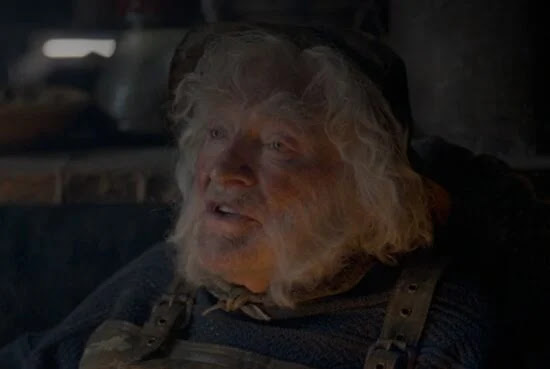
| TV's Best Beard |
It's...okay. The casting is pretty good. Warrick Davis, veteran actor, is a highlight; so is
Amar Chadha-Patel (whose physical appearance will henceforth be the basis for ALL future D&D characters of
Yours Truly, regardless of class).
Tony Revolori is (surprisingly) growing on me.
Elle Bamber and
Ruby Cruz seem...fine, I guess (as actors), but their characters (especially "Kit") are written in a way that I find extremely obnoxious and grating.
*sigh* I'm just not into teenage angst...and it is (for me) incredibly unbelievable given the circumstances in which the characters find themselves. They're just one step removed from "I miss my cell phone!"
Erin Kellyman seems to have already been typecast (after watching her in Solo and Falcon/Winter Soldier) and her emotional range seems...short. I can't tell if she's limited by the writing or her ability; probably a bit of both. But mainly her character ("Jade") is just...boring.
[I also hate Jade's sword; every time I see it on screen I just think of how unbalanced it looks and how many fingers she'd lose trying to wield it. Like, ALL her fingers]
The bit parts and cameos, however, are stellar:
Joanne Whalley, Hannah Waddingham (!), Christian Slater (!!), Kevin Pollack, and
Julian Glover all make the most of their brief appearances in the show.
Adwoah Aboah, too, isn't half-bad, especially considering (I think) that this is her first on-screen acting role (?!). Every time some random human character appears on-screen with more than a few lines of dialogue/action, it's generally a much needed shot-in-the-arm for the series.
The show, Willow, is D&D. But not the good kind of D&D.
 |
"I was once a paladin..."
(yeah, back before
your alignment change) |
It was my (non-gamer) wife who first pointed this out to us: "This is just like
Dungeons & Dragons!" You have the adventuring party composed of a pretty standard lineup (a couple fighters, a couple spell-casters, a thief, etc) going on an adventure, fighting monsters, looking for treasure, delving dungeons, finding secret doors, facing traps and obstacles, etc. The classes and tropes are easily recognizable. First level adventurers off on their
first real adventure.
But this isn't father's (or geezer blog writer's) D&D. This is D&D with DRAMA, where every character has a "secret past" (backstory!) or closeted skeleton or SOMEthing that is going to get worked out 'on-screen' over the course of the series.
Because the STORY by itself (um, something-something about saving the world) isn't COMPELLING (or compelling enough) by itself. No. We need to resolve our unrequited love and deal with our murdered siblings and find out about our secret family members and blah, blah, blah.
Hey, remember the original film? Remember the backstory for Madmartigan? Or Sorsha? Or the titular Willow himself? Remember the film explaining why this farmer was interested in becoming a sorcerer? Or how he learned to be conjurer of cheap tricks? Or why his neighbors didn't like him despite him (apparently) being a normal hardworking family man with a decent farm, a doting wife, happy little children? Remember where he received his unbounded courage and tenacity and moral compass?
No? Oh, yeah: because there wasn't any. Neither was there for ANY of the characters. You have a character, you have a situation (the plot of the film) and GO. Is Sorsha trying to work out mother-daughter issues with evil queen Bavmorda, some rivalry with General Kael, or moon over some lost lover or other? Perhaps. If she is (and that's all certainly possible for the actor to keep in the back of her mind) it isn't played out on the screen...it is simply background motivation that directs the character's actions.
Here (in the series) we have all this...um..."stuff," that is constantly being dragged out and examined and being discussed and worked on. And I suppose that if the series was about one featured character or protagonist that would be okay. But it's not about a single character...it's an ensemble cast, with six or seven (depending on whether or not you count the brother/prince) main figures, all of whom are (more-or-less) on the same team.
So...this need to share spotlight time (and film minutes) on their various mental and emotional turmoils just feels like...I don't know...some sort of narcissism.
[which, you know, is kind of emblematic of late edition D&D ain't it?]
That and the anachronisms inherent in the show. Not just the dialogue which (again) sounds like typical teenage petulance and smack talk but the damn music. No need for a sweeping, epic score transporting us to a fantasy world like, say, Game of Thrones or Rings of Power or...heck...the original film Willow on which the series is based. Crimson & Clover? Enter Sandman? Good Vibrations?!
Um...okay. So this is a teen fantasy show that would have been at home on the CW ten years ago. Except with a bigger budget.
"Dude, JB is as big a curmudgeon about his fantasy television shows as he is about his D&D! Hey, Old Man, there's more than one 'right way' to create elf-magic-fiction content!" Sure, yep, absolutely. But, watching Willow would be a lot less jarring, less cringe-worthy experience if expectations weren't set based on the very IP the showrunners decided to mine.
[heck, I'm not even dinging the show for sometimes poor pacing and occasional crap editing. Well, I wasn't till now]
"JB, that Willow movie was 35 years ago! Expectations have changed about YA fantasy! Why do you think D&D had to evolve?!"
Mm-hmm. Indeed. Welcome to fantasy in 2023.
Now, I realize that I am hopelessly behind the times when it comes to modern (well, post-modern) sensibilities, but for me...geezer that I am...adventure fantasy is about something like escapism from the petty squabbles and dramas of daily life. Take the character "Kit" for example and her quest to find her father (which seems far more important to her than her initial quest to find her brother)...I'd say there's more than a few people out there who have had their fathers exit their lives in some fashion, and hardly ever is it for some 'heroic' reason. It might be inoperable cancer or a sudden heart attack that leaves a kid half-orphaned at the age of 12 (as happened to my buddy, Matt) . It might be the guy walking out on the family with no warning (as happened to my brother and I). Hell, I know two different guys (John and Ben) who BOTH had their fathers leave their mothers for some hippy-dippy commune before either was born.
This kind of thing happens. Worse things happen with parents. I knew a guy who had a real problem with his mother because she sold his younger sister to a couple guys in order to finance her crack habit. There's some fucked up shit in this world...lots of reasons to want to escape reality for an hour or two on a regular basis. Do I need to have a fantasy setting, with magic and monsters, in order to deep dive the emotional wreck of human relationships? Isn't there therapy for that? Support groups to join? Books to read?
How about a subplot related to the story at hand: for example, Kit has been trained to be a warrior/knight type but pretty obviously has been pretty sheltered up until the events of the story...how about dealing with the emotional baggage that comes with murdering sentient beings for the first time in her life. She's having a semi-polite conversation with some hairy trolls one moment, and then whetting her blade in their lifeblood the next. And everything is still like "Oh no big deal. How can I get my romantic interest to not still be mad at me?"
But, okay, maybe we want to de-emphasize the emotional consequences of murder and bloodletting in this "fun adventure fantasy." How about dealing with the issues of duty versus love with regard to her betrothal to a political ally who happens to be on the same adventure with her as with her lover. Instead, she pretty much ignores the man she's supposed to marry, as opposed to A) trying to get to know him, or B) arranging for some fatal "accident" that will remove an unwanted complication from her life. You know?
[can you tell I'm not a big fan of the writing?]
This is adolescent, narcissistic D&D. We are on an adventure, killing monsters, surviving dangers, and working on our (young adult) emotional baggage. We don't have to particularly get along or cooperate to survive because, you know, "plot immunity." Not a lot of fear or real stress, except for the stress of meeting expectations ("Will I ever learn magic? Jeez I was happier just baking muffins!"). This isn't swords & sorcery...it's High School Musical with Ren-Fair costumes and less singing.
*sigh* I know...I'm an ass. My family's enjoying the show, and the thing has some stylish touches that are entertaining (really dig on the bits of psychedelia scattered about the series, as well as the occasional steampunk flourishes). But, for the most part, its style without substance. The substance of the show is...for my taste...rather bland. Not "vanilla" (pains have been taken to make the show very NON-vanilla in fantasy terms). But bland.
Ah, well. One episode (I think) to go. We'll see if the finale changes my mind.