[and here I was going to blog about the new Wonder Woman film. Ah, well...perhaps tomorrow. Here's the TL;DR version: it's good and you should spend money to see it. More later]
One of the...what? Nice? Interesting? things about Seattle is that it is (or was) the erstwhile home of Wizards of the Coast (now located in Renton, Washington) as well as plenty of geeky RPG enthusiasts and game designers who have actual experience with and insight into the industry. Unlike folks like Yours Truly...people who have theory-bashed and compiled info from research, publications, and the internet...there are folks who have actually been a part of companies like White Wolf and Wizards and Paizo and other, smaller, outfits, who can offer real information on The Biz as it relates to the last couple decades.
[unlike the prior decades...the 70s and the 80s...where you'd have to go to the midwest to meet the right people]
So it was, today, that I spent a good couple hours bending the ear of one such (former) insider about Wizards and the RPG industry of the early WotC years. A dude who has done freelance writing for a number of big name game companies and worked in marketing department for the biggest. The conversation was...well, fascinating, to say the least. If I hadn't had to get my three year old her lunch and a nap (she was in tow at the time) I probably would have hung out a couple hours more.
Fascinating. But sad...and sad in the ways you might expect but hope wouldn't be the case. Tales of how shit isn't ideal. How people are human and (thus) prone to flaws of human frailty. How folks can do good while still being jerks...in various ways.
Just fucking sad.
I write this (quickly) while filling the bathtub for my kids, and after quaffing half a bottle of pinot gris (really need to do something about my drinking). I know Seattle-ites like myself live life in a bubble beauty and light and liberal values that aren't really reflective of our American society as a whole. I know that I often think of fellow gamers in a similar light: that because we tend to be well read and above average intellectually that we are more often on the side of angels. I know that's a false assumption...I know it. I've read about it. I've heard about it from folks with first hand knowledge. But to hear that the industry people at the highest levels fall prey to the same problems of us "lesser mortals," well...it's just sad.
Power and money tend to corrupt humans. Whether you're talking about high ranking politicians or poor little ol' gamers. And even when it doesn't, nepotism and bitterness and jealousy often fuel and influence business practices...even when smart people should know better. All people have good inside them...but they can get lost along the way, and really end up doing a lot of fucking damage. To themselves and others. Much as I'd like to write it off in a jokey fashion, it's not really a joke. Not when people lose their livelihoods. Not when people wreck their relationships. Not when...
Ah, F it.
It's 2017. As always, hindsight is 20x20 and folks will continue to make the same mistakes and fail to learn from the mistakes of the past. It's the way of our human species, and I know that, too (man, I saw enough of that in Paraguay). I will probably never be in a position to make a ton of money (few of us are ever so lucky), but I hope...I really, really hope...that if such happens, I'll remember not to be stupid. I'll try not to get to big for my britches.
*sigh*
All right, got to go wash the filth off my children. Yak at y'all later.
Showing posts with label corruption. Show all posts
Showing posts with label corruption. Show all posts
Tuesday, June 6, 2017


Friday, June 5, 2015
KLOANE WAR KNIGHTS - C.5 P.1
CHAPTER 5: REFEREE’S GUIDE
THE REFEREE’S RESPONSIBILITIES
In
addition to the responsibilities described in the X-Plorers rules, the Referee has a number of additional
responsibilities associated with the KWN setting, especially with regard to
player character development (both getting better and worse).
Handling PCs: Corruption
The
corruption point mechanic is present for several reasons: it acts as an
incentive to promote right (i.e. “heroic”) action, it adds a consequence to the
irresponsible use of power, it provides justification for the existence of
powerful antagonists equal to the PCs (“the Shadow Lords”), and it provides the
potential for adventure stories of falling from grace and (hopefully)
subsequent redemption.
That being
said, not all players will be happy at the prospect of their characters falling to
Shadow (and becoming NPCs). Especially with new players, the Referee should
always point out when an action would gain a corruption point for the PC. Give
the player a chance to reflect: Do you really
want to do that? Even though players
might act cavalier in their attitude as “do-gooders,” it’s important to
remember that their characters have
been trained to act and behave in a certain fashion; when a Referee informs
players of the consequence of their actions he is simply acting as the voice of
the character’s conscience and training.
Characters
that “go over” to the Shadow side should generally become NPCs at the end of
the game session. If the players are all interested in playing a game of psychically
corrupt Shadow Lords fighting against the Galactic Republic, the Referee may
decide to run the campaign in that way (pay special attention to the Damage & Death section of this
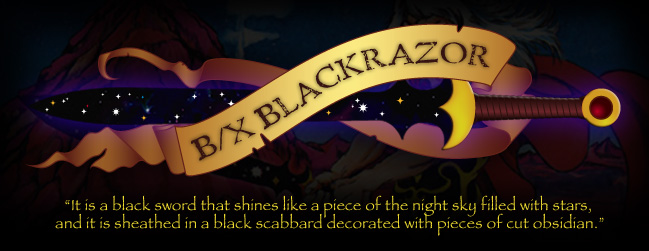
book, as the PCs will be hunted by ‘razor-wielding Star Knights!).
It may
seem odd that Corruption is
considered a milestone, since such a
character becomes an NPC under Referee control. However, Referees will no doubt
wish to bring these tragic figures back as antagonists in future game sessions
and the extra experience level ensures the NPC will be a tough challenge for
the PCs that remain. Also, it’s always possible the PCs will find a way to
redeem the character, or somehow convince the character to give up her evil
ways. If that somehow happens (and the corrupted character survives the
process), she will be even more powerful, having earned the milestone of Redemption.
A redeemed
character retains a number of corruption points equal to her level of
experience minus 1D4; if she ever goes over to Shadow again, her mind will be
irretrievably shattered (the character becomes utterly psychotic or simply
commits suicide) and cannot be recovered a second time. Such a character must
walk a very narrow line, having almost no margin for error.
Remember:
every time a character achieves a level of experience she can remove 1D4
corruption points from her character. Corruption can never be reduced below
zero.
Handling PCs: Death of a Player Character
Given the
war-torn background of the KWN setting, it is inevitable that some Star Knights
will fall in battle. While this should usually be a somber moment for the group
(remember Star Knights’ reverence for life, including their own!), it is
important the Referee not lose sight that KWN is a game…and that a player with a dead character needs to be brought
back into the game as quickly as possible! A player can take over an existing
support character if one is available (NPC apprentices are the best for this),
otherwise a new Star Knight can be created and dispatched to join the mission.
Rather than requiring the player to begin play as a 1st level
character, the Referee may allow the new Star Knight to begin with XP equal to
one-half that of the deceased character.
Characters
that possess the ascension psychic talent, need not disappear entirely upon
dying (as explained in the description of the talent), but ascended masters
usually become NPCs under the control of the Referee, especially when the
character’s former player is controlling a new (living and breathing) Star
Knight.
Handling PCs: Milestones
Milestones
are included for several reasons. They give players goals to achieve besides
simple “fight the enemy, do the mission.” They allow players to better define
their characters (and the campaign) over time by pursuing milestone objectives.
They provide incentives for role-playing. They model the real world effect that
such achievements usually grant to people. And they also provide a quicker
method of advancement that rewards invested
play…something vitally important to the melodrama of the space opera genre.
To some
Referees, it may appear that the milestones are too easily met, or vulnerable
to exploitation by over-ambitious players. For example, there’s nothing to
prevent a player from saying “my dream has always been to leave my home world
aboard a starship, and now that dream has been fulfilled…in the first session!”
While some would object to such an “auto-level-up,” keep in mind that part of
the purpose of milestones is to allow faster advancement at higher levels than
would normally occur simply by fighting mooks. Players who use milestones at
the early stages of their career will have slower advancement at latter stages.
ALSO, many psychic talents (all of which are earned by level advancement) are
unavailable to characters of low tier and characters that advance quickly
through the lower levels without developing tier first may end up
short-changing themselves.
In the
end, however, milestones are present to provide incentive for players to become
involved in subplots. The “grand romance” is a staple of the space opera genre;
and yet without milestones there is no in-game benefit or reason to seek it
out…despite the real life human condition of wanting companionship. Without
milestones, why would any player want to take on the role of an elected
dignitary or military general? The danger and responsibilities that come with
the role certainly outweigh the benefits! And yet, people do seek positions of power and are
changed by them, becoming more confident of their abilities as they grow in
their office.
Milestones
reward players for exploring other avenues of game play and are true to the
genre of space opera. Players who choose to ignore them will take a long road
to the heights of power; players who embrace them will reap the benefit while
simultaneously helping enrich the campaign through their choices.
Handling PCs: Non-Star Knights
As stated
in Chapter 1, it’s possible that
players may want to play characters that are not Star Knights; alternatively,
some Referees may want to use Star Knight characters in an otherwise “standard”
game of X-Plorers (using either the
KWN setting or a different one). Non-psychics are created in the standard
fashion (and can use the High-Born class and/or the Alien rules found in this
book); in place of a beamrazor, the PC can choose any one non-beamrazor weapon
found in the equipment list (soldiers may choose TWO weapons). High-Born PCs
may choose to start the game with a starship of Class 1 to 3, though they will
still need to hire a crew for the ship.
XP gained
should be adjusted when a group contains both Star Knights and non-Star
Knights. If the Star Knights outnumber the non-Star Knights, all non-psychic
PCs earn +10% XP for the mission; if the Star Knights are outnumbered by the
“normal” PCs, the Star Knights receive a -10% penalty to earned XP.
It is
possible that a non-psychic character will want to be trained by a Star Knight
(who must be adept or master status). Undergoing psychic training takes a
number of weeks equal to the non-psychics current level of experience, after
which time the character must make a successful PRE save. Success indicates the
character is now an apprentice (Tier 1) Star Knight (receiving two talents, a
beamrazor, and a new beamrazor form). Such training counts as a milestone (the
character goes up in level), and the PC becomes subject to all Star Knight
rules, including psychic sensing
(see below) and the acquisition of corruption points. Prior levels are not
lost, but such a character will never be able to achieve the same level of
power as a character that began their career as a Star Knight at 1st
level.
[to be continued]
[Kloane War Knights is copyright 2013 by Jonathan Becker and
Running Beagle Games. The X-Plorers rpg is copyright 2009, Dave Bezio &
Grey Area Games. The X-Plorers trademark is used under the X-Plorers Trademark
License]
Wednesday, December 14, 2011
Land of Ice (The Encounter, Part 2)
[continued from here]
DAMAGE
Most weapons do D6 damage on a successful attack roll. Melee weapons requiring two hands to use (mauls and pole arms) do D8 damage. Characters with strength less than 8 reduce melee damage by one die type (to D4 and D6 damage respectively). With the exception of crossbows, all missile weapons do D6 damage with a successful attack; crossbows do D8 damage.
Enchanted weapons do not add their “plus” to damage; instead, they increase the damage die used based on their bonus. For example, a +1 sword would do D8 damage instead of D6, a +2 sword would do D10 damage, and a +3 sword would do D12.
Healing and Major Wounds
Most characters heal D6 hit points per day of rest; fighters heal D8 hit points per day of rest. In both cases, the roll is modified by the character’s constitution bonus (or penalty).
As explained in Chapter 2, when a character’s hit points are reduced to 0, additional damage is subtracted from constitution. Constitution points are recovered much slower: 1 point per two days of rest. A character does not need to recover lost constitution points before recovering hit points (though a lowered constitution may result in a reduced rate of hit point recovery). Remember that dvergar double the rates for healing damage (2D6 hit points per day and 1 point of constitution for every day of rest).
A character whose constitution is reduced to less than half its starting value due to damage suffers a major wound and becomes unable to act for the remainder of any combat encounter; the character is unconscious, in shock, or suffering such terrible pain as to be helpless. Major wounds have permanent repercussions; at the end of an encounter when a character has suffered a major wound, roll percentile dice to determine the lasting result:
Roll – Wound
01-20 – Nasty, permanent scar
21-25 – Loss of eye: -2 penalty to future missile attacks; two such losses result in total blindness
26-30 – Loss of ear/hearing: surprised on a 3 (as if wearing full steel helm); hearing rolls only succeed on 1 in 8
31-35 – Broken jaw: unable to talk for D4 weeks (fails all reaction rolls)
36-40 – Concussion: save versus death ray to wake from coma (checked daily), intelligence reduced 2 points, characters with psychic powers lose 1 point of psychic ability
41-55 – Broken ribs/torn muscles: -1 penalty to attack rolls and AC for D4 weeks
56-60 – Broken/sprained back: reduce strength and dexterity by 2 points, carrying capacity by half; save versus paralysis for effects to be temporary (D6 weeks)
61-70 – Internal organ damage: take D8 additional constitution damage, constitution permanently reduced 1 point
71-85 – Major wound to arm/hand: one arm is useless; roll save versus wands for effect to be temporary (D6 weeks).
86-00 – Major wound to leg/foot: one leg is maimed/useless and character’s movement rate is halved; save versus wands for effect to be temporary (D6 weeks).
Due to their genetically engineered fortitude, dvergar will eventually heal even “permanent” injuries caused by major wounds. It takes D12 months for a dvergr to regenerate a permanent injury (temporary injuries heal in one-half the normal time).
SAVING THROWS
For the most part, characters have the same saving throws in LAND OF ICE that are found in the B/X rules. Saving throws versus psychic abilities are always made using “saves versus spells;” most northmen consider psychic talents to be the same as “magic” anyway.
Saving throws by class are as follows:
Fighter – NM, 1st, 2nd, 3rd, 4th, 5th
Poison/Death Ray – 14, 12, 10, 8, 6, 4
Wands – 15, 13, 11, 9, 7, 5
Paralysis/Petrifaction – 16, 14, 12, 10, 8, 6
Dragon Breath – 17, 15, 13, 10, 8, 5
Spells – 18, 16, 14, 12, 10, 8
Huntsman – 1st, 2nd, 3rd, 4th, 5th
Poison/Death Ray – 11, 9, 7, 5, 3
Wands – 12, 10, 8, 6, 4
Paralysis/Petrifaction – 14, 12, 10, 8, 6
Dragon Breath – 16, 14, 12, 10, 8
Spells – 15, 13, 11, 9, 7
Magician – 1st, 2nd, 3rd, 4th, 5th
Poison/Death Ray – 13, 11, 8, 6, 5
Wands – 14, 12, 9, 7, 6
Paralysis/Petrifaction – 13, 11, 8, 6, 5
Dragon Breath – 16, 14, 11, 9, 7
Spells – 15, 12, 8, 6, 4
Skald – 1st, 2nd, 3rd, 4th, 5th
Poison/Death Ray – 13, 11, 9, 7, 5
Wands – 13, 11, 9, 7, 5
Paralysis/Petrifaction – 15, 13, 11, 9, 7
Dragon Breath – 15, 13, 11, 9, 7
Spells – 15, 12, 9, 7, 5
Thief – 1st, 2nd, 3rd, 4th, 5th
Poison/Death Ray – 13, 12, 10, 8, 6
Wands – 14, 13, 11, 9, 7
Paralysis/Petrifaction – 13, 11, 9, 7, 5
Dragon Breath – 16, 14, 12, 10, 8
Spells – 15, 13, 10, 8, 7
Alfr – 1st, 2nd, 3rd, 4th
Poison/Death Ray – 12, 10, 8, 6
Wands – 13, 11, 9, 7
Paralysis/Petrifaction – 13, 11, 9, 8
Dragon Breath – 15, 13, 10, 8
Spells – 15, 12, 10, 8
Dvergr – 1st, 2nd, 3rd, 4th
Poison/Death Ray – 10, 8, 6, 4
Wands – 11, 9, 7, 5
Paralysis/Petrifaction – 12, 10, 8, 6
Dragon Breath – 13, 13, 10, 7
Spells – 14, 12, 10, 8
Psychic Corruption: Every time a character with psychic abilities earns a point of corruption (whether voluntarily or by rolling “snake-eyes”), the player must roll a “corruption saving throw.” The target number for success is equal or greater than the character’s total number of corruption points. If the save versus corruption is failed, the DM rolls D12 on the Corruption Table to see the impact on the character:
Roll – Corruption Result
1 – Character goes berserk, attacking friend and foe alike until restrained and/or left alone for 1 turn
2 – Character lapses into a coma for at least D4 days; save vs. death ray daily to regain consciousness
3 – Character is catatonic and drooling for D4 hours, conscious but unable to act or move
4 – Character goes blind in one eye (as Major Wound); eye takes on startling color/appearance
5 – Character’s hair changes; roll D6: 1-3 permanently goes white; 4-6 permanently goes bald
6 – Character’s loses large chunks of memory and is reduced one level of experience
7 – Character develops a shaking palsy; lose five points from dexterity (minimum 3)
8 – Character acquires a personality disorder; once per session, DM can take control of PC for 1 turn
9 - Character’s skin takes on a permanent pallor, bruises easily, veins readily visible
10 – Character loses ability to speak for at least D4 weeks; save versus spells or permanent
11 – Character undergoes a radical transformation; see below
12 – Roll save versus death ray or die; if character survives, reduce all abilities by 1 and reduce psychic corruption points by 2D6
Transformation effects differ depending on which psychic talent caused the corruption point to be gained. If the psychic talent was adrenal stimulation (“berserker”) the character becomes a ghoul; if the talent was molecular agitation (“pyromancy”) the character spontaneously combusts taking 4D6 damage directly to Constitution. Otherwise, a northman become a draugr. Alfar never become draugar or ghouls; instead they become wraiths. All these creatures are described in Chapter 6.
MORALE
Morale for NPC hirelings and retains is determined based on the employer’s level: morale is equal to 5 + the employer’s level of experience. If the PC employer has a reaction bonus or penalty due to her charisma score the adjustment is added to (or subtracted from) the morale.
DAMAGE
Most weapons do D6 damage on a successful attack roll. Melee weapons requiring two hands to use (mauls and pole arms) do D8 damage. Characters with strength less than 8 reduce melee damage by one die type (to D4 and D6 damage respectively). With the exception of crossbows, all missile weapons do D6 damage with a successful attack; crossbows do D8 damage.
Enchanted weapons do not add their “plus” to damage; instead, they increase the damage die used based on their bonus. For example, a +1 sword would do D8 damage instead of D6, a +2 sword would do D10 damage, and a +3 sword would do D12.
Healing and Major Wounds
Most characters heal D6 hit points per day of rest; fighters heal D8 hit points per day of rest. In both cases, the roll is modified by the character’s constitution bonus (or penalty).
As explained in Chapter 2, when a character’s hit points are reduced to 0, additional damage is subtracted from constitution. Constitution points are recovered much slower: 1 point per two days of rest. A character does not need to recover lost constitution points before recovering hit points (though a lowered constitution may result in a reduced rate of hit point recovery). Remember that dvergar double the rates for healing damage (2D6 hit points per day and 1 point of constitution for every day of rest).
A character whose constitution is reduced to less than half its starting value due to damage suffers a major wound and becomes unable to act for the remainder of any combat encounter; the character is unconscious, in shock, or suffering such terrible pain as to be helpless. Major wounds have permanent repercussions; at the end of an encounter when a character has suffered a major wound, roll percentile dice to determine the lasting result:
Roll – Wound
01-20 – Nasty, permanent scar
21-25 – Loss of eye: -2 penalty to future missile attacks; two such losses result in total blindness
26-30 – Loss of ear/hearing: surprised on a 3 (as if wearing full steel helm); hearing rolls only succeed on 1 in 8
31-35 – Broken jaw: unable to talk for D4 weeks (fails all reaction rolls)
36-40 – Concussion: save versus death ray to wake from coma (checked daily), intelligence reduced 2 points, characters with psychic powers lose 1 point of psychic ability
41-55 – Broken ribs/torn muscles: -1 penalty to attack rolls and AC for D4 weeks
56-60 – Broken/sprained back: reduce strength and dexterity by 2 points, carrying capacity by half; save versus paralysis for effects to be temporary (D6 weeks)
61-70 – Internal organ damage: take D8 additional constitution damage, constitution permanently reduced 1 point
71-85 – Major wound to arm/hand: one arm is useless; roll save versus wands for effect to be temporary (D6 weeks).
86-00 – Major wound to leg/foot: one leg is maimed/useless and character’s movement rate is halved; save versus wands for effect to be temporary (D6 weeks).
Due to their genetically engineered fortitude, dvergar will eventually heal even “permanent” injuries caused by major wounds. It takes D12 months for a dvergr to regenerate a permanent injury (temporary injuries heal in one-half the normal time).
SAVING THROWS
For the most part, characters have the same saving throws in LAND OF ICE that are found in the B/X rules. Saving throws versus psychic abilities are always made using “saves versus spells;” most northmen consider psychic talents to be the same as “magic” anyway.
Saving throws by class are as follows:
Fighter – NM, 1st, 2nd, 3rd, 4th, 5th
Poison/Death Ray – 14, 12, 10, 8, 6, 4
Wands – 15, 13, 11, 9, 7, 5
Paralysis/Petrifaction – 16, 14, 12, 10, 8, 6
Dragon Breath – 17, 15, 13, 10, 8, 5
Spells – 18, 16, 14, 12, 10, 8
Huntsman – 1st, 2nd, 3rd, 4th, 5th
Poison/Death Ray – 11, 9, 7, 5, 3
Wands – 12, 10, 8, 6, 4
Paralysis/Petrifaction – 14, 12, 10, 8, 6
Dragon Breath – 16, 14, 12, 10, 8
Spells – 15, 13, 11, 9, 7
Magician – 1st, 2nd, 3rd, 4th, 5th
Poison/Death Ray – 13, 11, 8, 6, 5
Wands – 14, 12, 9, 7, 6
Paralysis/Petrifaction – 13, 11, 8, 6, 5
Dragon Breath – 16, 14, 11, 9, 7
Spells – 15, 12, 8, 6, 4
Skald – 1st, 2nd, 3rd, 4th, 5th
Poison/Death Ray – 13, 11, 9, 7, 5
Wands – 13, 11, 9, 7, 5
Paralysis/Petrifaction – 15, 13, 11, 9, 7
Dragon Breath – 15, 13, 11, 9, 7
Spells – 15, 12, 9, 7, 5
Thief – 1st, 2nd, 3rd, 4th, 5th
Poison/Death Ray – 13, 12, 10, 8, 6
Wands – 14, 13, 11, 9, 7
Paralysis/Petrifaction – 13, 11, 9, 7, 5
Dragon Breath – 16, 14, 12, 10, 8
Spells – 15, 13, 10, 8, 7
Alfr – 1st, 2nd, 3rd, 4th
Poison/Death Ray – 12, 10, 8, 6
Wands – 13, 11, 9, 7
Paralysis/Petrifaction – 13, 11, 9, 8
Dragon Breath – 15, 13, 10, 8
Spells – 15, 12, 10, 8
Dvergr – 1st, 2nd, 3rd, 4th
Poison/Death Ray – 10, 8, 6, 4
Wands – 11, 9, 7, 5
Paralysis/Petrifaction – 12, 10, 8, 6
Dragon Breath – 13, 13, 10, 7
Spells – 14, 12, 10, 8
Psychic Corruption: Every time a character with psychic abilities earns a point of corruption (whether voluntarily or by rolling “snake-eyes”), the player must roll a “corruption saving throw.” The target number for success is equal or greater than the character’s total number of corruption points. If the save versus corruption is failed, the DM rolls D12 on the Corruption Table to see the impact on the character:
Roll – Corruption Result
1 – Character goes berserk, attacking friend and foe alike until restrained and/or left alone for 1 turn
2 – Character lapses into a coma for at least D4 days; save vs. death ray daily to regain consciousness
3 – Character is catatonic and drooling for D4 hours, conscious but unable to act or move
4 – Character goes blind in one eye (as Major Wound); eye takes on startling color/appearance
5 – Character’s hair changes; roll D6: 1-3 permanently goes white; 4-6 permanently goes bald
6 – Character’s loses large chunks of memory and is reduced one level of experience
7 – Character develops a shaking palsy; lose five points from dexterity (minimum 3)
8 – Character acquires a personality disorder; once per session, DM can take control of PC for 1 turn
9 - Character’s skin takes on a permanent pallor, bruises easily, veins readily visible
10 – Character loses ability to speak for at least D4 weeks; save versus spells or permanent
11 – Character undergoes a radical transformation; see below
12 – Roll save versus death ray or die; if character survives, reduce all abilities by 1 and reduce psychic corruption points by 2D6
Transformation effects differ depending on which psychic talent caused the corruption point to be gained. If the psychic talent was adrenal stimulation (“berserker”) the character becomes a ghoul; if the talent was molecular agitation (“pyromancy”) the character spontaneously combusts taking 4D6 damage directly to Constitution. Otherwise, a northman become a draugr. Alfar never become draugar or ghouls; instead they become wraiths. All these creatures are described in Chapter 6.
MORALE
Morale for NPC hirelings and retains is determined based on the employer’s level: morale is equal to 5 + the employer’s level of experience. If the PC employer has a reaction bonus or penalty due to her charisma score the adjustment is added to (or subtracted from) the morale.
Monday, December 5, 2011
Correction
Just FYI:
I've edited the psychic powers chapter of Land of Ice so it's less fiddly and more "psychic friendly."
Sorry about the earlier weirdness.
; )
Land of Ice (Psychic Powers)
[unlike B/X, Land of Ice does not use the typical Vancian spell system; the following rules replace the normal magic rules and spell lists]
[***EDIT: Upon reflection, I decided the rules as written are a bit too fiddly for my taste...also they skew PC choices in a way I don't like (I want players to always feel there's an option to use their psychic powers, rather than having a "two-strikes-you're-out" rule). As such, I now have a psychic corruption table with mixed effects/disorders, not all of which are terribly debilitating. Yay!***]
Seidhr is the name given to the practice and use of psychic talents, the powers of the mind developed centuries ago by the alfar and the ancestors of the northmen, mainly the vanir. In the current age, these powers are little understood and often regarded with suspicion; those who study the seidhr discipline are viewed as “sorcerers” by many northmen.
Psychic talent is genetically inherited, but unless developed through training it remains little more than a "lucky" or magic talent, one passed along certain bloodlines from parent to child (though sometimes skipping generations). Characters of the magician class are those who have undertaken the training to develop their natural ability; characters with an Intelligence of 14 or better have natural psychic talent that will manifest even without training. Dvergar never possess or develop psychic ability.
In LAND OF ICE, psychic ability is measured in points. Any character with Intelligence greater than 13 has 1 point of psychic ability; magicians and alfar have 1 point per level of experience, in addition to that received from high Intelligence (if applicable). Points are assigned to specific psychic talents (power categories), with more points indicating a higher chance of success. Non-psychic character classes (fighters, huntsmen, skalds, and thieves) are limited in how these points are applied; magicians and alfar are not.
All psychic talents have three levels of power, called stages. To use a psychic ability, the player chooses the stage he is attempting and rolls two dice; the type of dice rolled depends on the number of points assigned to the ability:
1 Point – Roll 2D4
2 Points – Roll 2D6
3 Points – Roll 2D8
4 Points – Roll 2D10
5 Points – Roll 2D12
Each die is reviewed separately. In order for a psychic ability to take effect, the number on each die must exceed the stage of effect the character is attempting to use. For example, if a character with 2 points in a talent wants to attempt a stage 2 power, the player rolls two six-sided dice and needs to roll a 3 or better on both dice for the power to take effect.
Using the powers of the mind is physically draining to the character: a successful roll does D4-1 points of damage to the character, representing fatigue. If this reduces a character’s hit points below 0, damage is applied to the character’s Constitution, causing nose bleeds, brain hemorrhaging, aneurisms, and stroke.
Failing on a psychic roll does not cause damage to the character, but the character runs the risk of psychic corruption. If the dice roll results in “snake-eyes” (i.e. a double roll of “1”), then the character gains 1 point of corruption (see below).
When a character fails a psychic roll but does NOT roll snake-eyes, the player can choose to gain a point of corruption in order to change the failure to a success. The character takes the usual damage (as if the dice roll had succeeded), and the power succeeds. When exchanging failure for success in this way the stage of the power cannot be higher than the character’s level of experience (for example, a 1st or 2nd level character could not choose corruption to succeed at a stage 3 power).
Psychic Corruption: Harnessing the power of seidhr can be dangerous for the undisciplined mind. Whenever a character gains a point of corruption he must make a saving throw with a target number equal to the character’s total number of corruption points. Failure indicates the psychic must make a roll on the Corruption Table found in Chapter 5: The Encounter.
Non-Psychic Characters
Fighters, Huntsmen, Skalds, and Thieves can possess psychic ability, though ONLY those with an Intelligence of 13 or greater. However, even those characters that do have psychic talent tend to be focused in specific areas, determined by class. This may be due to psychic manifestation being appropriate to temperament (temperament leading to certain classes), or it’s possible that certain bloodlines of psychic talent are drawn to specific classes.
Regardless, each non-psychic class is associated with a specific talent. Only 1 in 6 classes have a different talent than that associated with it; players that wish their character to have a different class must roll D6 (with a 1-5 meaning they get the normal talent) OR receive the DM’s permission to choose a different talent. The natural psychic talents associated with non-psychic classes are:
Fighter – Adrenal Stimulation (“Berserk”)
Huntsmen – Animal Empathy (“Beast Ken”)
Skald – Emotional Projection (“Enchantment”)
Thief – Mental Obfuscation (“Wraith”)
Psychic Characters
Alfar and magicians may distribute points to any of the psychic abilities listed below. Every time a psychic character earns an additional level of experience, a new point may be invested in a new psychic talent or an existing one (making the character more proficient in a particular specialty). The following is the complete list of psychic talents available:
Adrenal Stimulation (“Berserk”)
Animal Empathy (“Beast Ken”)
Atmospheric Field Manipulation (“Weather Magic”)
Cellular Reconstruction (“Healing”)
Emotional Projection (“Enchantment”)
Genetic Re-Pattering (“Shifting”)
Mental Obfuscation (“Wraith”)
Molecular Agitation (“Pyromancy”)
Probability Tracking (“Divination”)
Structural Manipulation (“Shaping”)
Telekinesis (“Moving”)
Telepathic Manipulation (“Mentalism”)
PSYCHIC TALENTS
Adrenal Stimulation (“Berserk”)
Range: Self Only
Stage 1 – For one combat encounter, character receives +2 bonus to melee attacks and +D8 extra hit points; character can fight even after suffering a major wound. These benefits fade when the fight is over.
Stage 2 – As stage 1, but character receives one extra melee attack per round and adds an additional +D8 extra hit points (total of +2D8).
Stage 3 – As stage 2, but character does double damage with successful attacks and adds an additional +D8 extra hit points (total of +3D8).
Animal Empathy (“Beast Ken”)
Range: Sight
Stage 1 – Can “communicate” with unintelligent animals via emotion/feeling. Communication is two-way; check standard reaction roll.
Stage 2 – As stage 1, but can compel animal to do simple favors for the character.
Stage 3 – As stage 2, but can assume control of animal, controlling its actions and sensing through its senses.
Atmospheric Field Manipulation (“Weather Magic”)
Rage: Sight
Stage 1 – Sense and detect weather patterns before they occur (a day in advance).
Stage 2 – As stage 1 but can perform minor weather manipulations (starting/stopping rain, making it snow in winter, etc.).
Stage 3 – As stage 3, but can perform extreme weather manipulations (conjure lightning from a cloudless sky, summon tornadoes and hurricanes).
Cellular Reconstruction (“Healing”)
Range: Touch
Stage 1 – Heal character of 2D6 damage
Stage 2 – Cure disease and poison
Stage 3 – Revive a mortally wounded character if used within a few minutes
Emotional Projection (“Enchantment”)
Range: Sight
Stage 1 – Character can instill emotions/feelings in a target, moving the individual to laughter or tears. Characters of level higher than the psychic are allowed a saving throw to resist. Ability has no affect on unintelligent beasts.
Stage 2 – As stage 1, but power can affect all individuals in sight of the psychic.
Stage 3 – As stage 2, but can instill intense emotions causing extreme reactions: orgiastic lust, angry rioting, suicidal depression, etc.
Genetic Re-Pattering (“Shifting”)
Range: Self
Stage 1 – Character can alter form to that of a small animal (bird, fish, wolf, etc.) or alter appearance to become uglier or more attractive; effect lasts until character chooses to return to his original form.
Stage 2 – As stage 1, but character can alter form to that of a creature of equal hit dice (or fewer) or alter appearance to that of a specific individual.
Stage 3 – As stage 2, but character can alter form to that of a creature of up to double the character’s level in hit dice.
Mental Obfuscation (“Wraith”)
Range: Self
Stage 1 – By remaining still and quiet, character becomes undetectable (i.e. ignored by those who pass by) as if the character wasn’t even present. Animals are unaffected. Dvergar receive a saving throw to detect the character. Effect lasts until character moves, makes noise.
Stage 2 – As stage 1, but character can move (quietly) amongst people without being detected. Effect lasts until character chooses to end it or until character makes an attack on someone.
Stage 3 – As stage 3, but character can “vanish” from plain sight.
Molecular Agitation (“Pyromancy”)
Range: Sight
Stage 1 – Character can create small fires, doing 2D4 damage and setting flammables alight (doing additional damage of 2D4 per round until extinguished). Side effects of this power can be exceptionally dangerous, especially when used inside wooden structures.
Stage 2 – Character can create large fires, doing 4D6 damage, ruining metal goods, and causing nearby combustibles to burst into flame.
Stage 3 – Character can create huge fires, setting the air aflame and incinerating most targets (6D8 damage). The character is unaffected by her own flame (except when suffering the effects of corruption), though may be deprived of oxygen if used underground or in closed/cramped spaces.
Probability Tracking (“Divination”)
Range: Self
Stage 1 – Character gains flashes of future occurrence of events that directly the psychic. The future is always in motion, and may be influenced by the characters actions so specific visions may not come to pass (for example, a character may see his own death at the hands of an assassin; though the attack might occur, actual death might not due to knowledge of the attack).
Stage 2 – As stage 1, but character can see future events that affect friends, loved ones, or even acquaintances.
Stage 3 – As stage 2, but character can see future events that affect places and objects to which the character has a connection, not just people.
Structural Manipulation (“Shaping”)
Range: Touch
Stage 1 – Character can sense and manipulate the molecular structure of solid, inanimate objects, shaping them as desired; items as hard as wood or bone can be manipulated.
Stage 2 – As stage 1, but character can manipulate items as hard as stone.
Stage 3 – As stage 2, but character can manipulate hard metals and alloys.
Telekinesis (“Moving”)
Range: Sight
Stage 1 – Character can move light objects with the mind alone; used as a weapon, character can do D6 damage (no attack roll necessary).
Stage 2 – As stage 1 but characters can move larger objects (up to the size of a horse), doing up to 2D6 damage if desired.
Stage 3 – As stage 2 but character can move huge objects or crush opponents for 4D6 damage.
Telepathic Manipulation (“Mentalism”)
Range: Sight
Stage 1 – Character can project his own thoughts, and read the surface thoughts of others. Characters are allowed a saving throw to resist. This ability does not work on unintelligent creatures/animals.
Stage 2 – As stage 1, but character can read a target’s deeper hidden or secret thoughts or access memories in the subject’s subconscious.
Stage 3 – As stage 2, but character can warp and/or erase the subject’s memories, freely tinkering with the target’s mind.
Seidhr is the name given to the practice and use of psychic talents, the powers of the mind developed centuries ago by the alfar and the ancestors of the northmen, mainly the vanir. In the current age, these powers are little understood and often regarded with suspicion; those who study the seidhr discipline are viewed as “sorcerers” by many northmen.
Psychic talent is genetically inherited, but unless developed through training it remains little more than a "lucky" or magic talent, one passed along certain bloodlines from parent to child (though sometimes skipping generations). Characters of the magician class are those who have undertaken the training to develop their natural ability; characters with an Intelligence of 14 or better have natural psychic talent that will manifest even without training. Dvergar never possess or develop psychic ability.
In LAND OF ICE, psychic ability is measured in points. Any character with Intelligence greater than 13 has 1 point of psychic ability; magicians and alfar have 1 point per level of experience, in addition to that received from high Intelligence (if applicable). Points are assigned to specific psychic talents (power categories), with more points indicating a higher chance of success. Non-psychic character classes (fighters, huntsmen, skalds, and thieves) are limited in how these points are applied; magicians and alfar are not.
All psychic talents have three levels of power, called stages. To use a psychic ability, the player chooses the stage he is attempting and rolls two dice; the type of dice rolled depends on the number of points assigned to the ability:
1 Point – Roll 2D4
2 Points – Roll 2D6
3 Points – Roll 2D8
4 Points – Roll 2D10
5 Points – Roll 2D12
Each die is reviewed separately. In order for a psychic ability to take effect, the number on each die must exceed the stage of effect the character is attempting to use. For example, if a character with 2 points in a talent wants to attempt a stage 2 power, the player rolls two six-sided dice and needs to roll a 3 or better on both dice for the power to take effect.
Using the powers of the mind is physically draining to the character: a successful roll does D4-1 points of damage to the character, representing fatigue. If this reduces a character’s hit points below 0, damage is applied to the character’s Constitution, causing nose bleeds, brain hemorrhaging, aneurisms, and stroke.
Failing on a psychic roll does not cause damage to the character, but the character runs the risk of psychic corruption. If the dice roll results in “snake-eyes” (i.e. a double roll of “1”), then the character gains 1 point of corruption (see below).
When a character fails a psychic roll but does NOT roll snake-eyes, the player can choose to gain a point of corruption in order to change the failure to a success. The character takes the usual damage (as if the dice roll had succeeded), and the power succeeds. When exchanging failure for success in this way the stage of the power cannot be higher than the character’s level of experience (for example, a 1st or 2nd level character could not choose corruption to succeed at a stage 3 power).
Psychic Corruption: Harnessing the power of seidhr can be dangerous for the undisciplined mind. Whenever a character gains a point of corruption he must make a saving throw with a target number equal to the character’s total number of corruption points. Failure indicates the psychic must make a roll on the Corruption Table found in Chapter 5: The Encounter.
Non-Psychic Characters
Fighters, Huntsmen, Skalds, and Thieves can possess psychic ability, though ONLY those with an Intelligence of 13 or greater. However, even those characters that do have psychic talent tend to be focused in specific areas, determined by class. This may be due to psychic manifestation being appropriate to temperament (temperament leading to certain classes), or it’s possible that certain bloodlines of psychic talent are drawn to specific classes.
Regardless, each non-psychic class is associated with a specific talent. Only 1 in 6 classes have a different talent than that associated with it; players that wish their character to have a different class must roll D6 (with a 1-5 meaning they get the normal talent) OR receive the DM’s permission to choose a different talent. The natural psychic talents associated with non-psychic classes are:
Fighter – Adrenal Stimulation (“Berserk”)
Huntsmen – Animal Empathy (“Beast Ken”)
Skald – Emotional Projection (“Enchantment”)
Thief – Mental Obfuscation (“Wraith”)
Psychic Characters
Alfar and magicians may distribute points to any of the psychic abilities listed below. Every time a psychic character earns an additional level of experience, a new point may be invested in a new psychic talent or an existing one (making the character more proficient in a particular specialty). The following is the complete list of psychic talents available:
Adrenal Stimulation (“Berserk”)
Animal Empathy (“Beast Ken”)
Atmospheric Field Manipulation (“Weather Magic”)
Cellular Reconstruction (“Healing”)
Emotional Projection (“Enchantment”)
Genetic Re-Pattering (“Shifting”)
Mental Obfuscation (“Wraith”)
Molecular Agitation (“Pyromancy”)
Probability Tracking (“Divination”)
Structural Manipulation (“Shaping”)
Telekinesis (“Moving”)
Telepathic Manipulation (“Mentalism”)
PSYCHIC TALENTS
Adrenal Stimulation (“Berserk”)
Range: Self Only
Stage 1 – For one combat encounter, character receives +2 bonus to melee attacks and +D8 extra hit points; character can fight even after suffering a major wound. These benefits fade when the fight is over.
Stage 2 – As stage 1, but character receives one extra melee attack per round and adds an additional +D8 extra hit points (total of +2D8).
Stage 3 – As stage 2, but character does double damage with successful attacks and adds an additional +D8 extra hit points (total of +3D8).
Animal Empathy (“Beast Ken”)
Range: Sight
Stage 1 – Can “communicate” with unintelligent animals via emotion/feeling. Communication is two-way; check standard reaction roll.
Stage 2 – As stage 1, but can compel animal to do simple favors for the character.
Stage 3 – As stage 2, but can assume control of animal, controlling its actions and sensing through its senses.
Atmospheric Field Manipulation (“Weather Magic”)
Rage: Sight
Stage 1 – Sense and detect weather patterns before they occur (a day in advance).
Stage 2 – As stage 1 but can perform minor weather manipulations (starting/stopping rain, making it snow in winter, etc.).
Stage 3 – As stage 3, but can perform extreme weather manipulations (conjure lightning from a cloudless sky, summon tornadoes and hurricanes).
Cellular Reconstruction (“Healing”)
Range: Touch
Stage 1 – Heal character of 2D6 damage
Stage 2 – Cure disease and poison
Stage 3 – Revive a mortally wounded character if used within a few minutes
Emotional Projection (“Enchantment”)
Range: Sight
Stage 1 – Character can instill emotions/feelings in a target, moving the individual to laughter or tears. Characters of level higher than the psychic are allowed a saving throw to resist. Ability has no affect on unintelligent beasts.
Stage 2 – As stage 1, but power can affect all individuals in sight of the psychic.
Stage 3 – As stage 2, but can instill intense emotions causing extreme reactions: orgiastic lust, angry rioting, suicidal depression, etc.
Genetic Re-Pattering (“Shifting”)
Range: Self
Stage 1 – Character can alter form to that of a small animal (bird, fish, wolf, etc.) or alter appearance to become uglier or more attractive; effect lasts until character chooses to return to his original form.
Stage 2 – As stage 1, but character can alter form to that of a creature of equal hit dice (or fewer) or alter appearance to that of a specific individual.
Stage 3 – As stage 2, but character can alter form to that of a creature of up to double the character’s level in hit dice.
Mental Obfuscation (“Wraith”)
Range: Self
Stage 1 – By remaining still and quiet, character becomes undetectable (i.e. ignored by those who pass by) as if the character wasn’t even present. Animals are unaffected. Dvergar receive a saving throw to detect the character. Effect lasts until character moves, makes noise.
Stage 2 – As stage 1, but character can move (quietly) amongst people without being detected. Effect lasts until character chooses to end it or until character makes an attack on someone.
Stage 3 – As stage 3, but character can “vanish” from plain sight.
Molecular Agitation (“Pyromancy”)
Range: Sight
Stage 1 – Character can create small fires, doing 2D4 damage and setting flammables alight (doing additional damage of 2D4 per round until extinguished). Side effects of this power can be exceptionally dangerous, especially when used inside wooden structures.
Stage 2 – Character can create large fires, doing 4D6 damage, ruining metal goods, and causing nearby combustibles to burst into flame.
Stage 3 – Character can create huge fires, setting the air aflame and incinerating most targets (6D8 damage). The character is unaffected by her own flame (except when suffering the effects of corruption), though may be deprived of oxygen if used underground or in closed/cramped spaces.
Probability Tracking (“Divination”)
Range: Self
Stage 1 – Character gains flashes of future occurrence of events that directly the psychic. The future is always in motion, and may be influenced by the characters actions so specific visions may not come to pass (for example, a character may see his own death at the hands of an assassin; though the attack might occur, actual death might not due to knowledge of the attack).
Stage 2 – As stage 1, but character can see future events that affect friends, loved ones, or even acquaintances.
Stage 3 – As stage 2, but character can see future events that affect places and objects to which the character has a connection, not just people.
Structural Manipulation (“Shaping”)
Range: Touch
Stage 1 – Character can sense and manipulate the molecular structure of solid, inanimate objects, shaping them as desired; items as hard as wood or bone can be manipulated.
Stage 2 – As stage 1, but character can manipulate items as hard as stone.
Stage 3 – As stage 2, but character can manipulate hard metals and alloys.
Telekinesis (“Moving”)
Range: Sight
Stage 1 – Character can move light objects with the mind alone; used as a weapon, character can do D6 damage (no attack roll necessary).
Stage 2 – As stage 1 but characters can move larger objects (up to the size of a horse), doing up to 2D6 damage if desired.
Stage 3 – As stage 2 but character can move huge objects or crush opponents for 4D6 damage.
Telepathic Manipulation (“Mentalism”)
Range: Sight
Stage 1 – Character can project his own thoughts, and read the surface thoughts of others. Characters are allowed a saving throw to resist. This ability does not work on unintelligent creatures/animals.
Stage 2 – As stage 1, but character can read a target’s deeper hidden or secret thoughts or access memories in the subject’s subconscious.
Stage 3 – As stage 2, but character can warp and/or erase the subject’s memories, freely tinkering with the target’s mind.
Tuesday, August 9, 2011
Indie-Gaming?
I've mentioned before that long before I got back into D&D, I spent a lot of time swimming the waters of the indie-gaming scene, especially with regard to thoughtful design theory. In fact, it's the kind of thing one really can't "turn off" once you've started doing it...you just end up getting a much more narrow (dare I say, "elitist") perspective on this RPG hobby.
For example, I look at D&D through the same design lens with which I view any new game I pick up, purchase, or play. The reason I'm so hip on the B/X Dungeons & Dragons is that I find this particular edition to be an incredibly excellent game. No, it does not do some of the things indie games do, but it does everything D&D does (at least, everything I want it to do) very well. Like 9 stars out of 10 for me.
This is why, after playing it nearly non-stop for nearly a year (more?) and trying various house rules and tinkerings, my current game is almost completely "straight B/X." The only deviations from the original Red & Blue books?
- Clerics don't have to memorize spells in the morning (cast on demand)
- Thief skills (and dwarf, halfling abilities) automatically work, no roll
That's it. My "weapon variations?" Dropped. Firearms? Phased out. Magic-user studies/spell learning? Exactly as written. New classes? Well, we still have one guy playing a "scout," but for the most part he works just like any other character...I mean, it's such a basic concept you can't really distinguish him from a leather clad fighter (one that can read tracks).
Anyway, it's a great game, something I don't need to harp on (again) to my readers, I'm sure. But what about that whole indie community with which I used to spend so much time prior to (allegedly) joining the OSR?
The last few days I've been buzzing around those sites again, mainly The Forge (which has gotten considerably more streamlined in the last year...yow!). I just wanted to see what I was missing, you know? If anything.
What I found in the "Actual Play" forum (the place I used to go to learn about and read about and get excited about new indie games) is: 4th Edition D&D.
What the F*CK?
Certainly, it's not ALL 4E, but enough of it...5 posts on the first page, 10 on the 2nd, with pages and pages of discussion thread. To me, this is so...gross. I mean, it's like going to your neighborhood farmer's market and seeing a Walmart has set up a stand. If you read the "about" page of The Forge you'll find the following:
This site is dedicated to the promotion, creation, and review of independent role-playing games. What is an independent role-playing game? Our main criterion is that the game is owned by its author, or creator-owned.
Hmm...it's strange enough to see ANY discussion of D&D on the site (not that it's not a touch-stone subject for most of us who "grew up in the hobby;" but so much of the indie-theory is about alternate approaches to game design). But isn't Hasbro's latest-greatest kind of the antithesis of independent, creator-owned games? Aren't these the folks that killed (or cut the legs off) the OGL, making their product even more faceless and corporate and soulless than it already was?
I guess I've become an elitist's elitist. Man, I am such a jerk!
I can't even bring myself to engage in these on-line discussions. Ideas and questions about how to tinker with 4E and "make it better" just makes me want to ask, "why the hell even bother?" But even that is a losing discussion...I mean, why would I want to waste time - any amount of time - discussing how to "tinker" 4E on a site that purports to be devoted to the promotion and creation of indie RPGs?
I mean, what could such a discussion possibly be in aid of?
Sorry for yet another mini-rant. I guess I've just been in a bad mood today.
Tuesday, December 22, 2009
Vindication (For Me, At Least)
I'm starting to see there's some commercial value to elves.
So, it appears I've managed to corrupt yet another of America's youth with the lure of Dungeons & Dragons. This time a teenage girl, age 14.
I should explain that while my wife and I don't have any children of our own (yet!), we have many friends that do, for whom we often act as surrogate parents, baby sitters, or "uncle and aunt." This comes about from knowing our friends for a long time, and their kids since they were just wee little ones. My "nephews" who I've blogged about before are not actual blood relations, though they do call me Uncle even when talking of me in the third person. Hey folks, it takes a village, right?
So yesterday, yet another kid we know and love spent the day with us (well, and the night, too...she's sleeping upstairs as I type) to hang out and be merry and practice her Spanish with my in-laws. One of the reasons we haven't seen a lot of L. (as I'll call her) in recent years is she and her fam moved down to Argentina for a year...but they didn't like it too much and eventually returned to Seattle. Their two daughters (both teenaged) enjoyed it a bit more, perhaps, and did pretty good at picking up the language, but they don't get as much opportunity to practice here as they could. ANYWAY...
We had a great time and stayed up long into the night after a day of exciting fun for the whole family. However, what is pertinent to this post is L. saw my Companion project on the ol' Mac and wanted to know what I was writing. A game, I explained, which completely piqued her curiosity (L likes games) as she had never seen such a weird looking game.
So I explained to her what an RPG is. She knows of World of Warcraft (she has a friend she thinks is silly for the amount of time he spends on it), but she prefers games like Rock Band and Halo, being an active kind of kid (she doesn't tweet, she plays basketball and soccer, and the latter at a high level having gone to the State finals this year). And she's HEARD of Dungeons and Dragons...apparently there's a commercial on TV for the latest version?!!
So I showed her B/X and explained how the game is played as well as the difference between B/X and the current edition and its craziness (I find my old 3rd edition hardcovers are making great visual aids for these kids).
And she's down. Oh, she is totally down. She thinks B/X is super cool, thinks my Companion project is super cool, says I should try to get black and white interior art but do a cool color cover in the style of the original Erol Otus drawings (yeah, kid, we're already on the same page).
AND she wants to play. Hell, she wanted to know if we were going to use props, like costumes! She TOTALLY wants to play an Elf...perhaps with a pet faerie. But the idea that she can play any character (and play a different character every session) and explore a fantasy world has her totally intrigued. The imagination part is what's charged her batteries.
Well, my wife's input about her elf character helped. What is it about girls and elves and fairies anyway?
So now it appears we will be organizing a game with L and my nephews sometime in the coming months so that she can have a chance to play Dungeons and Dragons. Maybe I'll have to buy her a copy of Labyrinth Lord as well.
; )
By the way, quick note to Hasbro/WotC: America's youth does not seem to have the patience to learn to play 4th edition D&D. It is too damn big, complex, and intimidating. If they want something like a video game program, they'll just play a video game. Sheesh!
Wednesday, August 5, 2009
Corrupting America's Youth (Expert Adventures Part 4)
Or, "D&D is my FAVORITE!"
EPILOGUE
As per usual, I conducted a bit of an “exit interview” with my nephew after we had finished our adventure (said discussion occurring the next morning after we’d both managed to get some sleep). I like to “check in” with folks and see whether or not they had fun and try to get some feedback on the game in general. I’ve been doing this since at least the nineties or so.
Asked if he had fun, the answer was a resounding YES. “I LOVE D&D…it’s my favorite!” Better than World of Warcraft? “A lot better…well, different…well, I don’t know.” They’re two different games right?
“Yeah, they are different games! But D&D is a lot better!” Why is D&D better? “Well it’s more interesting…and you can do more stuff!” Like making friends with giant squids, shaking hands with cave bears, turning sticks into snakes, jumping of cliffs, etc.? “YEAH!”
My questions are loaded and specific, but I’m looking for specific information in what I’m asking (I do this with S.’s brother who is able to verbalize his feelings better, and his thoughts are much the same). Is table-top gaming an obsolete relic of the past? No. It does things no video game can do…and I’m not just talking about improvising spot-rules, nor being able to tailor games mid-stream to accommodate the expectations of one’s players. I am talking about the rapport that gets built between people sharing an imaginary space together, engaged in play. It is a creative exercise, building both the semblance of an “adventure story” and building COMMUNITY between the people sitting around the table. And I mean REAL community, not just the fantasy campaign world that exists with the rules and interactions of DM and player.
“I love coming over to your house! It’s more fun than ANYTHING!” This despite the fact that we never watch TV, turn on a computer, or fire up a gaming console. O we’ll watch a rented movie or two, but otherwise my wife and I revert to very “old school” type family fun when entertaining children: cooking, eating, doing chores, playing games, strolling the neighborhood, petting the dogs. For me, I’d like to live like that all the time. But until we have kids of our own, I’m limited to the odd weekend or week-long baby-sitting gig.
Regarding B/X: the Expert style play was clunky at times for me as the DM. It would have been better if my books were in better condition (pages were coming loose as I flipped through my 27 year old copy of the Isle of Dread!), but even so the organization of rules in the Cook Expert set (getting lost, wandering monsters, weather-stuff…they’re all in different sections), made the search-and-handling time a pain.
Wandering monsters were a real blast from the past. My old AD&D games almost never involved wandering monsters, and my few 3rd edition games blew them off completely. But in Expert, they are a ton of the action when playing strictly by the rules…there are simply miles and miles of map to explore, and even with 2-3 dozen numbered encounters, S. never stumbled upon any of these "planned encounters!" For him, most every day brought fresh wandering encounters to deal with…making the forested mountains and jungle swamps of the Island all the more forbidding. But for me as DM, it was both clunky and a bit monotonous/repetitive.
What DID work for me, though, worked well. I love how D&D facilitates such different distinct styles of play! My wife plays very cautiously, Z. is curious and clever (sometimes overly so) about things, and S. (once he figure out he could communicate with most every encounter) tried to make friends with everything.
It is very interesting to me how folks without preconceived ideas react to threats they encounter. When confronted with something unexpected or strange/new (like archers or a five headed hydra) the basic reaction often becomes “Run away! Run away!” I don’t know if this comes from on-line gaming or not. Personally, my own play style is more “fortune favors the bold” (if you talk to Meepo or MikeD I think they’ll vouch for this), and this may be due in part to my “insider’s (DM) knowledge” of how the game works (but not necessarily...my WH40K army is completely composed of Khorne Berserkers, chaos hounds, and rampaging dreadnoughts!). For the newbie players…well, they know they’re not going to be reincarnated at the local graveyard should they die, but I think it’s more than that.
However, after running/DMing three B/X games in the last month, I’ve yet to have a single PC death. And that’s with all new players and no “shields will be splintered” house rules. The combats have been quick and decisive, with many henchmen being left in ruins. But the PCs themselves have weathered the worst of it. Perhaps their caution is what’s led to their extended life expectancy?
Who knows…maybe I’ve just been too easy on ‘em. It’d be interesting to see how they’d fare if they were playing less durable classes (like thieves and magic-users).

Regardless, it appears I’ve succeeded in converting these little football athletes into uber-nerds (though isn’t WoW nerdy enough? I guess I don’t get the status ladder of teens these days). Not only that, but S. is well on his way to being an OLD SCHOOL nerd. I presented him with his very own copy of Labyrinth Lord (purchased retail, thank you very much…I have another copy for myself) as well as a set of purple dice. I explained to him how, though the rules appear to be of intimidating length, much of the text is monster lists or descriptions of spells and magic items. I then contrasted that to my 3rd edition books just to REALLY show the difference in money and investment of time. His reaction? “Why would anyone want to buy that version?”
Why indeed.
I did explain that while LL is for the most part the same as B/X, there are some differences (“for copyright reasons?” yeah, probably). For example, the cave bear damage in LL is the exact same as a black bear or polar bear or grizzly bear, and many of the equipment costs are changed. S. told me that he preferred to have his game set be “as close to the original as possible” and asked that I pencil in the “correct” monster stats and gear costs. Which I was happy to do (though admittedly, I did not go line by line through every monster entry)…sorry, Dan.
: )
Anyway, quite fun. Hopefully both S. and Z. will read up on the game before their next visit. I know that after last weekend’s game, Z. was already expressing interest in learning how to be a Dungeon Master. Perhaps my next report will be as a player!
EPILOGUE
As per usual, I conducted a bit of an “exit interview” with my nephew after we had finished our adventure (said discussion occurring the next morning after we’d both managed to get some sleep). I like to “check in” with folks and see whether or not they had fun and try to get some feedback on the game in general. I’ve been doing this since at least the nineties or so.
Asked if he had fun, the answer was a resounding YES. “I LOVE D&D…it’s my favorite!” Better than World of Warcraft? “A lot better…well, different…well, I don’t know.” They’re two different games right?
“Yeah, they are different games! But D&D is a lot better!” Why is D&D better? “Well it’s more interesting…and you can do more stuff!” Like making friends with giant squids, shaking hands with cave bears, turning sticks into snakes, jumping of cliffs, etc.? “YEAH!”
My questions are loaded and specific, but I’m looking for specific information in what I’m asking (I do this with S.’s brother who is able to verbalize his feelings better, and his thoughts are much the same). Is table-top gaming an obsolete relic of the past? No. It does things no video game can do…and I’m not just talking about improvising spot-rules, nor being able to tailor games mid-stream to accommodate the expectations of one’s players. I am talking about the rapport that gets built between people sharing an imaginary space together, engaged in play. It is a creative exercise, building both the semblance of an “adventure story” and building COMMUNITY between the people sitting around the table. And I mean REAL community, not just the fantasy campaign world that exists with the rules and interactions of DM and player.
“I love coming over to your house! It’s more fun than ANYTHING!” This despite the fact that we never watch TV, turn on a computer, or fire up a gaming console. O we’ll watch a rented movie or two, but otherwise my wife and I revert to very “old school” type family fun when entertaining children: cooking, eating, doing chores, playing games, strolling the neighborhood, petting the dogs. For me, I’d like to live like that all the time. But until we have kids of our own, I’m limited to the odd weekend or week-long baby-sitting gig.
Regarding B/X: the Expert style play was clunky at times for me as the DM. It would have been better if my books were in better condition (pages were coming loose as I flipped through my 27 year old copy of the Isle of Dread!), but even so the organization of rules in the Cook Expert set (getting lost, wandering monsters, weather-stuff…they’re all in different sections), made the search-and-handling time a pain.
Wandering monsters were a real blast from the past. My old AD&D games almost never involved wandering monsters, and my few 3rd edition games blew them off completely. But in Expert, they are a ton of the action when playing strictly by the rules…there are simply miles and miles of map to explore, and even with 2-3 dozen numbered encounters, S. never stumbled upon any of these "planned encounters!" For him, most every day brought fresh wandering encounters to deal with…making the forested mountains and jungle swamps of the Island all the more forbidding. But for me as DM, it was both clunky and a bit monotonous/repetitive.
What DID work for me, though, worked well. I love how D&D facilitates such different distinct styles of play! My wife plays very cautiously, Z. is curious and clever (sometimes overly so) about things, and S. (once he figure out he could communicate with most every encounter) tried to make friends with everything.
It is very interesting to me how folks without preconceived ideas react to threats they encounter. When confronted with something unexpected or strange/new (like archers or a five headed hydra) the basic reaction often becomes “Run away! Run away!” I don’t know if this comes from on-line gaming or not. Personally, my own play style is more “fortune favors the bold” (if you talk to Meepo or MikeD I think they’ll vouch for this), and this may be due in part to my “insider’s (DM) knowledge” of how the game works (but not necessarily...my WH40K army is completely composed of Khorne Berserkers, chaos hounds, and rampaging dreadnoughts!). For the newbie players…well, they know they’re not going to be reincarnated at the local graveyard should they die, but I think it’s more than that.
However, after running/DMing three B/X games in the last month, I’ve yet to have a single PC death. And that’s with all new players and no “shields will be splintered” house rules. The combats have been quick and decisive, with many henchmen being left in ruins. But the PCs themselves have weathered the worst of it. Perhaps their caution is what’s led to their extended life expectancy?
Who knows…maybe I’ve just been too easy on ‘em. It’d be interesting to see how they’d fare if they were playing less durable classes (like thieves and magic-users).

Regardless, it appears I’ve succeeded in converting these little football athletes into uber-nerds (though isn’t WoW nerdy enough? I guess I don’t get the status ladder of teens these days). Not only that, but S. is well on his way to being an OLD SCHOOL nerd. I presented him with his very own copy of Labyrinth Lord (purchased retail, thank you very much…I have another copy for myself) as well as a set of purple dice. I explained to him how, though the rules appear to be of intimidating length, much of the text is monster lists or descriptions of spells and magic items. I then contrasted that to my 3rd edition books just to REALLY show the difference in money and investment of time. His reaction? “Why would anyone want to buy that version?”
Why indeed.
I did explain that while LL is for the most part the same as B/X, there are some differences (“for copyright reasons?” yeah, probably). For example, the cave bear damage in LL is the exact same as a black bear or polar bear or grizzly bear, and many of the equipment costs are changed. S. told me that he preferred to have his game set be “as close to the original as possible” and asked that I pencil in the “correct” monster stats and gear costs. Which I was happy to do (though admittedly, I did not go line by line through every monster entry)…sorry, Dan.
: )
Anyway, quite fun. Hopefully both S. and Z. will read up on the game before their next visit. I know that after last weekend’s game, Z. was already expressing interest in learning how to be a Dungeon Master. Perhaps my next report will be as a player!
Subscribe to:
Comments (Atom)