Showing posts with label s2. Show all posts

Monday, April 26, 2021

Loot The Music...Er...Body

When I say "I live in Seattle" I actually mean it (unlike some folks)...my home is about 3.6 miles south of the northern city limits. Seattle is a big town (or small city, depending on your POV) and trying to get scheduled for a Covid vaccine in town is tough to say the least. So it was that Saturday morning found me driving north on Interstate-5 to the Skagit County Fairgrounds vaccination site for an 11am appointment...about an hour's drive...to get my first Pfeizer shot.

One of the things I enjoy about the new car the family purchased 2-3 years ago, is the "satellite radio" subscription we got with it: instant access to good music based on genre depending on whatever mood you're in, and even if there's a lousy/annoying song on your favorite genre station, chances are you can find something good on one of your other favorites, without commercials. It's not PERFECT, but for road trips it beats the hell out of the old alternative of slugging away a ton of CDs or mix tapes that you've already listened to a gazillion times. Saturday was a loooong drive (as noted) and rather than listen to the usual hair metal stations I gravitate towards, I listened instead to a rebroadcast for Casey Kasem's American Top 40 from the week of April 21st, 1973. Like, the whole thing (minus commercial interruption). 

It was a good time, and one thing I noticed about the top pop hits from that week in history (the year I was born) was the songs tended to fall into three general categories: 1) songs that I'd never heard before that seemed to be "gimmicky" (like Funky Worm by the Ohio Players), 2) workman-like songs from established artists (both Neither One of Us from Gladys Knight and Call Me by Al Green were completely forgettable pieces), or 3) true classics that I have heard countless times over the last 47+ years including Killing Me Softly (Roberta Flack), Danny's Song (Anne Murray), Stir It Up (Johnny Nash), Love Train (O'Jays), Space Oddity (Bowie), and Drift Away (Dobie Gray).

And the thing that classics like Stevie Wonder's Sunshine of my Life or Steely Dan's Reeling in the Years have over songs like Skylark's Wildflower or the Stylistics' Break Up to Make Up isn't necessarily head-and-shoulders better musicianship or better production values. It's a combination of songwriting (lyrics and instruments) with interesting, memorable touches that makes a song stand out from what has come before. Some cats just have that "it factor" and you can hear it in the way the song has been put together and recorded...even if you don't like a particular song (I'm not a huge Stevie Wonder fan), you can appreciate why he's one of the all-time greats.

I say this by way of introduction to the band Loot the Body, who just sent me a preview copy of the new album Hex for review. Spoiler alert: probably not destined to be a classic.

Loot the Body is "the brainchild of singer/songwriter/multi-instrumentalist Levi Nunez." Nunez writes songs "based on classic D&D" and cites "proto metal" and "proto psychadelic rock" as his musical references. I explained to Mr. Nunez that I wasn't a music critic...I'm not steeped in the industry, I haven't the practiced vocabulary for the writing or the library of musical knowledge to draw upon...but he still said he'd appreciate me writing my impressions of his songs. Says the "music blogs" don't really know what to do with him. 

Okay.

Hex is a six song EP with each track taking its name and theme from a classic D&D adventure module: White Plume Mountain,  Dwellers of the Forbidden City, Castle Amber, Tomb of Horrors, Ravenloft, and The Keep on the Borderlands. I've had some previous exposure to Loot the Body through The Barrier Peaks Songbook, which to me seemed more like a fun little project/experiment than a serious attempt at...well, a serious attempt. The new EP shows, no, Nunez IS actually serious about this wedding of D&D and music...there's a lot of obvious effort here...and whether he's trying to carve out a niche for himself or this is "just what he does," it's certainly doesn't appear to be throwaway trash.

That being said, the first word that came to mind as I listened to to Hex was "sophomoric," despite this being his third effort (I only just discovered he has an earlier album, Random Encounters, which I haven't had a chance to hear). I actually dig on the concept of the album (the idea he was going for) but my overall impression is one of flawed execution, and the thought that the music could have benefitted from some collaboration, or a strong hand in the production/editing with regard to the songwriting itself.

Musically, Hex reminds me quite a bit of Blue Oyster Cult, and shares some of the issues I have with BOC, especially the vocals. I'm okay with BOC (I've seen them live in concert) but they only have three songs I care to listen to, and despite their talent, I find most of their music to be disappointing and forgettable. I'm just not a fan of wispy, gutless singing that takes few chances vocally or lyrically. That's probably too harsh, but (for me) I like my singing to stand out and apart from the other instruments, not just become a drone in the background. I have this problem with more recent bands like Muse and Radiohead, too, although the latter band makes up for it with layering and originality. Perhaps it's music that's designed to act as a soundtrack to the group gathering around the bong, without "harshing the buzz" or acting as a distraction...and, sure, that's "okay." Elevator music is okay, too...in an elevator. But, man, it gets old after a (very short) while. 

Nunez does have musical chops, but his singing talent doesn't stand out, and his instruments...at times creative, at times highly derivative...suffer on most tracks from composition. See, this is the part where me NOT being a music critic fails me: I don't have the words to describe it. Often, he fills up the song sheet with lyrics withOUT musical breaks, rushing to get the words in, rather than letting the ear rest from the drone and just groove into the hooks and melodies. There are parts in every song where the ear wants a break from the singing...and gets none (or not enough). The bridges are too short. Another verse is needed instead of another repetition of an overlong chorus. Things like that. 

Lyrically the songs are hit-and-miss. To ME...an old school D&D guy...some of the songs are especially grating when they lift whole swaths of background text from the adventure modules from which they are derived. The album is at its best when Nunez goes "off script" with his lyrics...writing about the feelings and actions of adventurers in the dungeon, rather than the dungeon itself. 

I've listened to every song on the album multiple times. For me, the best of the bunch are Dwellers in the Forbidden City, Castle Amber, and Tomb of Horrors with Dwellers being my favorite track on the album. Castle Amber has some of the best lyrics on the album, but is scattered in its musical themes, and needs tightening. Tomb would be pretty good (despite some fairly derivative musical hooks) but suffers from the aforementioned issue of arrangement/composition...too bad, because it has one of the best bridges/choruses on the album.

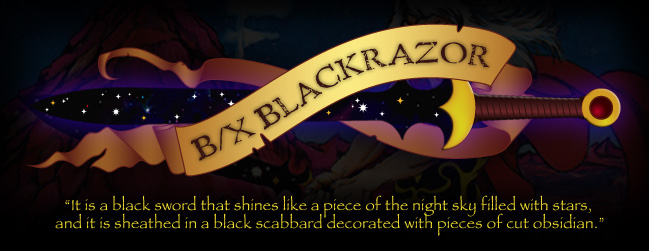
White Plume Mountain, and Keep on the Borderlands are just heartbreaking (or embarrassing, depending on your point of view). When you have one of the worst villain names in the history of D&D ("Keraptis" sounds a bit too much like "crap") you don't spend the entirety of the lyrics on the dude and his history in the module's "background" section, and nothing about the adventure itself (what? no mention of Blackrazor, Wave, and Whelm? Come on). Definitely NOT the song to lead off the EP. TKotB isn't quite as bad, and is fine sitting at the end of the album as coda...just wish it was more than adventure background. 

Ravenloft, like the adventure it's based on, is just gimmicky in tone. It feels like the worst of BOC and irritates me every time I've tried listening to it (it's a struggle to listen to the track for more than two minutes,)...and yet it's the ONLY track that has a decent musical interlude (sans vocals) in the middle. Unfortunately, while it may be the best composed track on the EP it has an incredibly annoying chorus. Ugh.

Should you buy this album? Mmm. There's definitely worse musical projects to throw money at. Like anything produced by Pitbull. AND if you're a fan of droning, stoner rock...especially if you're tickled by themes inspired by classic D&D adventures...then, sure, yes. Because chances are, that's the only way you'll be getting a chance to hear these tracks. I don't think you'll be hearing these songs on the radio any time in the near future. 

And as I come to the end of this review (marveling at how any sane person would ask me to express my honest opinion of their work knowing how caustic and negative I can be..."gutless?" really?) and I finish listening to Hex for what must be the 10th time, I find myself coming to the conclusion that the best track on the album, despite its flaws, is Tomb of Horrors and not Dwellers of the Forbidden City. Even though I prefer the rock hook and lyrics of Dwellers, Tomb is the better song...Dwellers is just too short, needing more time to unwind, gel, and melt into your mind. Plus, Tomb's got the better, hookier chorus; I'll probably be humming it the rest of the day.

All right. That's enough of that.

Loot the Body's new EP Hex is scheduled for release June 4th and can be found on Bootcamp and elsewhere.

Wednesday, July 8, 2020

Encumbrance

I've been meaning to write this post for at least a year.

As my new campaign setting and "mega-dungeon" (man, I dislike that term) aren't quite ready to kick off, I'm running my kids through White Plume Mountain in order to assuage their lust for play. Yes, once again I fall back on Old Faithful for cheap dungeoneering thrills, though I did convert the thing to OD&D to work with my (current) preferred system.

Of course, a one-off dungeon like S2 requires higher level characters than what the kids have, so we had to artificially advance some dudes to the requisite 5th-10th range. This is incredibly easy in OD&D as it simply involves rolling a few more dice for hit points, a moderate increase in spell selection, and me seeding each character with a couple-four appropriate magic items. Starting gold isn't anything we worry about in this case: I set the number of characters (including hench-folk) that are going on the expedition, and the players can choose any standard equipment off the list presuming they had plenty of gold (or a stipend from their wealthy employers) with which to "gear up."

And normally that's not a problem, but while going over the characters I noticed that my son's retainer, Richard the Valiant, was carrying five hand axes, a compound bow, quiver of arrows, battle axe, a mace, a sword, and multiple daggers in addition to his armor and miscellaneous equipment. It would appear Diego decided that (since his character's speed was already reduced by his plate armor) to max out his carrying capacity with useful armaments. We ended up having a discussion over just where the character would be strapping all this gear to his body, and how he would be maneuvering with all this metal strapped to his belt and banging against his legs. Just how does he intend to protect his master (a magic-user) and does he plan on hauling treasure in addition to enough weapons to outfit The Seven Samurai?

After a little thought, he ended up adjusting his gear in a way that was both reasonable and satisfying...to him as well as me. 

Encumbrance...the accounting of weight/bulk carried by a character...is absolutely imperative to running the D&D game. Imperative, as in of vital importance. Hell, it's downright necessary. Gygax wrote in the DMG (rather infamously) that

"YOU CAN NOT HAVE A MEANINGFUL CAMPAIGN IF STRICT TIME RECORDS ARE NOT KEPT." (page 37)

in his patented "yelling-at-the-reader" style. I won't say I disagree with the sentiment, but he should have used the same capital lettering to emphasize the importance of encumbrance to the game. If you'll allow me the indulgence of my own DMG addendum:

YOU CAN NOT HAVE A MEANINGFUL CAMPAIGN IF STRICT ENCUMBRANCE RECORDS ARE NOT KEPT.

It really can't be overstated. Encumbrance is the third dimension that provides depth to an otherwise two dimensional game that only accounts for "cost" versus "utility."

Throughout our history, humans have been limited by what we could carry. The invention of the wheel is not celebrated because it allowed us the creation of roller skates and motor scooters. It's celebrated because it allowed us to move "stuff" (equipment, goods, food, building supplies, people) far in excess of what our fragile bodies are able to carry. Prior to the building of the Erie Canal, the American midwest was just a resource rich territory isolated from the thriving manufacturing centers of the coast. After the canal was built...and goods could be exchanged/carried on floating barges both directions instead of via horseback over harsh overland conditions...the area became as populated as any on the coast, and the frontier was pushed westward. Canals, railroads, steamships, air travel...all these things have increased humans' ability to move and carry goods...the goods we need to survive and thrive.

Anyone who's gone on an extensive hike or camping trip that required considerable overland walking knows the importance of encumbrance to the human condition. Do you wear a pair of lightweight sneakers or the heavy, rugged hiking boots that provide your feet with protection and support? What do you pack in terms of extra clothing? What do you pack in terms of food? How much weight can you (literally) shoulder when it comes to "conveniences" like tents, sleeping bags, foam mats, camp stoves, propane, lanterns, batteries, shovels, etc? If you plan on hunting or fishing are you carrying rifles, ammunition, rods, and tackle boxes? How many miles do you have to cover from your parked car to your designated camp site? 

Don't forget you'll need to bring your own drinking water...depending on how many days you plan on "roughing it" those ten gallon tanks are a pain to lug down the trail. But it beats the risk of contacting "beaver fever."

All laughable, of course...most folks' idea of camping these days doesn't involve even this much "inconvenience." We drive our car (or SUV) to a rented camp site and unpack the trunk and set up camp. Often there are bathrooms, pre-built fire pits, sometimes even showers for use. Bundles of wood can be purchased at the site's entrance, or picked up on the road from a nearby service station that caters to campers who forgot the marshmallows back on the kitchen table. We are hardly the "pioneer folk" of our ancestors.

And yet the D&D wilderness is supposed to be far more unsettled and unsettling than the "real world" ever was.  Lewis & Clark never had to contend with a dragon or a pack of trolls when scouting the Oregon Trail. Their rifles were fine (barely) against the occasional grizzly, but how would they have fared versus a lich or vampire? 

Even so their journey was still perilous...despite having horses and using three boats (including a specially built 55' shallow draft keelboat) to carry their provisions, books, medicine, ammunition, and equipment. Burdened as they were, diligent in their mapping and surveying, the L&C expedition made about 15 miles per day, and probably wouldn't have survived the Rockies without the help of indigenous peoples encountered along the way (part of the party's "encumbrance" were gifts brought specifically to placate and make peace with tribes encountered).

But I'm digressing (as usual): I understand that there are folks who don't bother with (or actively spurn) encumbrance in their games. I understand there are folks who feel complex "bean-counting" takes away from...or distracts from...the real "meat" of the game. I'll freely admit that one of the main reasons I preferred B/X to AD&D for many years was the more abstract version of calculating encumbrance (listed as OPTIONAL in the B/X rule book!). Yes, yes, I could have simply imported B/X's encumbrance rules into AD&D; however, I've always attempted to play games 'by the book,' and what's the point of using an "advanced" system if you're not embracing the complexity and crunch?

[I think my aversion to AD&D encumbrance first came about when I saw the list in Appendix O of my DMG and noted that iron rations by themselves weighed damn near as much as ALL "miscellaneous equipment" in B/X...and standard rations weigh two-and-a-half times as much!]

*ahem* So, yeah, I get where folks are coming from when they say they dislike calculating encumbrance. You know what? Encumbrance IS damn inconvenient...in real life as well as the game. 

Tough shit.

Locally (here in Seattle...well, Edmonds specifically) we have this "travel guru" by the name of Rick Steves. I've met him, gone to some of his free seminars, bought some of his books. He's a nice, personable guy. He likes to say that a traveler only gets to choose two of the following three options: travel easily (i.e. comfortably), travel cheaply, travel heavy. You can travel heavy and easily, but it won't be cheap. You can travel heavy and cheaply, but it won't be comfortable. Or you can pack light and your trip will be, relatively speaking, both inexpensive and comfortable. 

I always try to travel as light as possible.

Assuming your enjoyment of D&D is based on immersive, experiential play then the game must have encumbrance in order to reach its maximum potential. Without encumbrance rules the game lacks the extra dimension that adds depth to the immersion. Doing a cost-benefit analysis between wearing a shield or using a two-handed weapon is an easy brain exercise. Factoring in how much in costs your character in terms of movement (maneuverability) and carrying capacity is a whole extra level of mental agility. Losing a hireling to a goblin arrow doesn't just represent the removal of a "meat shield" from the party; it's a diminished capacity to haul treasure chests and golden idols!

I'd guess most of the grumbling about the inconvenience of calculating encumbrance stems from not from the math (adding and subtracting is pretty easy for most of us), but from a perceived need for "attention to detail." Oh, I have to look up a short sword's weight. Oh, where's that table that shows the bulk for tiaras? Ugh, if every 50' length of rope is 2#, how much do I need to discard to fit these coins in my backpack? Nit-picky-ness. But I don't think it needs to be so exacting as to be burdensome. 

In real life, we only bother with our nice, neat packing when we have ample time to prepare...say before setting off on a journey. However, what happens when you wake up late and need to stuff everything in your bag just in time to check out and make your plane connection? Stuff still "fits" (even those extra souvenirs and books you picked up while sight-seeing) it's just that your bags are over-stretched, bumpy, and straining at the zippers. Kept in a such a state, they will eventually wear out, burst their seams and fastenings, cause straps to break, etc. but for the short-term, they'll make it just fine.

Treat your D&D encumbrance like that. Players can (and should be) exacting prior to game play (i.e. when preparing for their expedition). During play, don't sweat the small stuff too much. Packs and bags don't necessarily carry the exact weight listed. D&D encumbrance is a measure of bulk as well as weight. And different items made in different styles may encumber at different rates from "standard." Eyeball amounts. Have a rough idea of what each character can carry before movement decreases (that's part of your prep, O Great And Powerful DM). When the treasure carried (or goblin swords being looted for Lord knows why) start hitting...or coming close...to the break points in your notes, inform the players and ask them if there's any vital equipment they're willing to discard prior to being reduced to a crawl. Make them sweat the situation, without making them pull out their calculator app at the table.

Time enough for the exact count, in between sessions...presumably when the characters have made it back to town.

Exacting or not, you need some kind of encumbrance in your D&D game if you want any sort of depth or feeling of reality in it. Note: I said "feeling" of reality, not "reality." It's still a game, still abstract. But if you fail to include encumbrance, your campaign will eventually wind up feeling shallow and superficial, no matter how much magic and "wonder" you put into it. It requires that attention to the consequences of reality, in order to provide the game with contrast...in order to place magic and wonderment in context, a grounding in what we know and perceive of the real world, so that we can better enjoy the immersive experience it gives us.

I didn't always feel like this. I do now.

Monday, April 8, 2019

G is for Gnomes

[over the course of the month of April, I shall be posting a topic for each letter of the alphabet, sequentially, for every day of the week except Sunday. Our topic for this year's #AtoZchallenge? Revamping the Grand Duchy of Karameikos in a way that doesn't disregard its B/X roots]

G is for Gnomes. And dwarves, I suppose...but there aren't that many of those (comparatively) in Karameikos.

I've mentioned the gnomes before (briefly) when I was writing about the Elvenguard. Unlike the 'guard, the gnomish community of Karameikos has been established since the first light of publication, in the write-up of the duchy found in the B/X expert rulebook. Their description paints a fairly pastoral (if subterranean) picture of the demihumans:

NON-HUMANS


No solicitors, please.
Gnomes: Living in the hills, the gnomes are a quiet and solitary group. They make little effort to contact the outside world, but will deal with traders when such arrive. There are 620 gnomes living throughout this area. This number is divided between a large lair of 250 and several smaller outposts of no more than 100 each. A council of elders chosen by the gnomes, 1 from each outpost and 3 from the main lair, guides the members of the community in most decisions. This council will act as judges, handle trade, and distribute any money for the defense of the various outposts. However, any important decisions are decided by a general vote of the population. Strangers desiring to deal with the gnomes must first present their case to the elders for approval. Should this approval not be given (and the gnomes are extremely reluctant to involve themselves in the affairs of an outsider), the case will be closed. In the event that the council cannot decide, a general vote will be taken. If great differences prevent an outpost of the lair from agreeing peacefully on an issue, the dissident faction will leave and establish a new outpost in the area, In this manner, the gnomish lands are slowly growing, although disunity slows this somewhat.

[there are, by the way, no other species listed in the NON-HUMANS section of the expert set's Sample Wilderness text; they could have just headed the section "GNOMES"]

After this description is a paragraph about trade difficulties (already quoted in the aforementioned Elvenguard blog post), followed by a section marked Gnome Lair describing a sample...um, gnome lair (I love the use of the term "lair" by the way...this isn't a "home," "stronghold," or "warren," but a lair. Monsters have lairs, and in D&D lairs are meant to be explored...and perhaps plundered). The Gnome Lair section contains an un-keyed map of what might be a typical outpost or perhaps the main lair of the gnomish community (I always assumed the latter, but the text isn't explicit). It's decent enough with some evocative description, filled with pockets of trained ferrets that double as both pit traps and pens for the gnomes' hunting beasts.

The inclusion of gnomes is an interesting decision. Unlike AD&D, in B/X gnomes are not a player character race, but an NPC monster...though quite possibly a helpful one (alignment is listed as Lawful/Neutral). The monster entry for gnome in the Tom Moldvay penned Basic book is far more descriptive and outright different from any prior pass at the species; check this out:

OD&D: "Slightly smaller than Dwarves, and with longer beards, these creatures inhabit the hills and lowland burrows as opposed to the mountainous home which Dwarves choose. They are more reclusive than their cousins, but in all other respects resemble Dwarves."

Holmes: "Gnomes are similar to dwarves, whom they resemble. They are smaller, have longer noses and beards and inhabit low-land and hill burrows rather than mountains. They favor crossbows."

AD&D: Adds nothing besides notes on coloration, military formations, and AD&D mechanics (languages, magic resistance, etc.). Note their weapons are limited to short swords, clubs, spears, slings, and short bows; crossbows aren't even an option,

B/X (Tom Moldvay, B36): "Gnomes are a human-like race related to dwarves. They are smaller than dwarves, and have long noses and full beards. Gnomes have well developed infra vision (heat-sensing sight), and can "see" heat to 90' in the dark. They usually live in burrows in the lowlands. Gnomes are excellent metalsmiths and miners. They love gold and gems and have been known to make bad decisions just to obtain them. They love machinery of all kinds and like to use crossbows as missile weapons and war hammers in hand-to-hand combat. Gnomes like most dwarves, but war with goblins and kobolds who steal their precious gold. They will usually attack kobolds on sight."

[B/X also has a paragraph that details war parties, hit dice of chiefs, etc. similar to that of other humanoid species like hobgoblins and orcs. There is no mention of "leveled" leaders as gnome is not a character class in this edition]

Talk about going off the reservation! I'm not sure why they bother retaining the (earlier edition) AC of 5, when these "excellent metalsmiths" should probably be sporting at least chain and shield, if not better! The bit about their "bad decisions" based on greed speaks to their corruptibility, and their love of "machinery of all kinds" (!) can be read either as the primordial precursor to Dragonlance's "tinker gnomes" or something more sinister (like Tolkien/Lucas association of machines/technology with evil). For those who like to mix the SciFi with their fantasy, this is the perfect excuse to create a cyborg subterranean species, or a bunch of mechanical (rather than magical) automatons and "living statues."

Coupled with the politics and inter-clan relations described in the Expert set and you start to get this really interesting picture of what the gnome faction is all about...some sort of advanced egalitarian think-tank commune, an anti-Amish Amish group, something like a weaponized tribe of trapdoor spiders in humanoid shape...now just add some steampunk cybernetics to the giant ferrets and moles they routinely capture for experimentation, and you've got a vicious, powerful faction living within your borders.

I don't know why I tend to see gnomes as prone to evil...which is pretty weird considering I grew up reading (and loving) those Huygen/Poortvliet books. Maybe I've just seen too many "evil" depictions of them over the years: the insane followers of Keraptis (detailed in White Plume Mountain), the evil illusionist in Gygax's first Gord the Rogue novel...and who can forget their turn as a bat-riding, magic-wielding evil alien species in Marvel comics Star Trek (issue #16)? Certainly not me, True Believers; that story is indelibly burned into my childhood memories!

EVIL gnomes.
What it means is that I'm often writing up gnome assassins and assassin-illusionists with names like "Shoon Grinblade;" in my mind, D&D gnomes are always half-cracked/crazed and prone to psychotic episodes. Unless you're talking svirfneblin, of course; they are to my evil surface gnomes as the Drow are to their goody-good cousins.

*ahem*  ANYway, considering the potential of what can be done with B/X gnomes, the gnomes of Highforge (as GAZ1 names the community) is pretty banal. I mean, they mine silver for (and engage in trade with) the duke...and that's about it. Allston's GAZ1 increases the size of the community to 6500 (and adds a dwarf clan to the mix, perhaps to give the PCs an "in") and adds the following information:

Ruler: Dorfus Hilltopper, Gnome King of Highforge. Dorfus is a typical Gnome. He isn't too fond of humans -- though not impolite, he avoids dealing with them whenever possible; the annual Gnome Caravan is enough for him, and he doesn't even accompany it.
Population: 6500 gnomes and 1000 dwarves.
Laws: Within Highforge, the gnomes and dwarves ignore the Duke's Law and live by gnomish and dwarfish custom; they settle their own disputes, try their own criminals, and do not report law-breaking to the human officials. Additionally, they do not pay taxes to the the humans; they have their own economic system and only pay taxes when selling goods to humans. 

That's it for the gnomes; the only other notes are regarding the dwarves and their mines. No info is provided regarding the interconnectedness of the gnome silver and the the duchy's coinage. If it wasn't for the information in Mentzer's expert rulebook, one would never think the gnomes the source of the archduke's silver ore. One could even see Allston as working directly from the B/X source material...except that he sets up "King Dorfus" (a portmanteau of "Dork" and "Doofus?") in place of the egalitarian council of elders originally described.

Personally, I'd probably axe all of the BECMI/GAZ info on the gnomes...there's just not much there worth keeping. Not only does it set up potential adventures for B/X player characters (meeting and establishing relations/trade with the gnomes) but it allows the gnomes to be a powerful "wild card" faction in the region...for good or ill. However, here are some additional ideas you might want to run with:

Option #1: Gnomes as Escaped Slaves. Long time readers of the blog know I'm a big fan of adventure S2: White Plume Mountain...I even did a B/X conversion of it waaaay back in 2009. If I were to start a new campaign set in Karameikos, I'd probably set "the feathered peak" somewhere in the northwest Cruth Mountains. What if the gnomish community in Karameikos were descendants of gnomes that had revolted and escaped from the yoke of Keraptis (and their corrupt, evil brethren). They were probably evil themselves (once), having made "poor decisions" because of the gold and gems the evil wizard offered...but having repented their wicked ways, they've since sought a clean slate, far away. It remains their secret shame...one they do not want discovered as there are people who would consider them "war criminals" of the type that need to be expunged. What's more, they live in constant fear of Keraptis (or his lich or whatever) discovering their location and returning to claim them. Helps explain the reclusiveness and unwillingness to deal with outsiders.

Coming for YOU, man.
Option #2: Gnomes as Evil Racist Slavers. Racist towards humans, that is. The gnomes are the biggest customers of the Iron Ring slavers guild (or the secret powers behind the guild) requiring a constant influx of bodies to work their mines. Humans are a cheap, expendable resource, and the growth of the duchy has just meant lower prices. Plus, the gnomes have developed a taste for "long pig" (sure, make 'em cannibals, too) and used up slaves go straight into the cook pots. This becomes especially twisted if you decide to go with the BECMI idea of gnomes as the duchy's silversmiths: Does the archduke suspect how his silver is being mined? Is he complicit (or a secret participant) in the slave trade? Regardless, I'm certain the gnomes are "skimming" silver from the duke's shipments, using the extra for the purchase of gold, jewels, and (of course) more slaves. Evil, evil gnomes.

Option #3: Gnomes as Oppressed Species. Or perhaps it is the gnomes themselves that have been enslaved. Why have the gnomes become Stefan's silver miners? Because they have no choice in the matter! Having discovered rich veins of silver in the hills, and ready-made workforce on site, the Duke has used his army to put the gnomes to the task of mining the precious metal. Of course, it helps that the Callarii elves have a long history of bad blood with the gnomes...the Elvenguard was only too happy to aid in pacifying the "reluctant workforce." Let's face facts: gnomes aren't an adventuring species (like dwarves, elves, and halflings); to humans, they're a strange little species with a weird machine fixation. They're not that far removed from goblins or kobolds (probably related to both, seeing as how they speak those languages!) and there's nothing wrong with exploiting such creatures for the good of the duchy. Hell, the duke's being nice...he could have just put them to the sword (as he does with other humanoids)...they should be grateful he's giving them a chance to work his mines. Maybe if we upped their daily ration of gruel they'd actually whistle while they work.
; )

Tuesday, March 19, 2019

Random D&D Notes

The following thoughts are things I could probably wrap whole posts around, but I've been a little busy lately and (thus) don't know when I'll get to it. Rather than lose these in the ether, I figured I'd just jot them down, perhaps to examine more deeply in the future:

Some great replicas, but
this one was real.
Viking Treasure: had the chance to check out a great exhibit at the Nordic Museum (in the Ballard neighborhood of Seattle) on loan from Uppsala University in Sweden. Called "The Vikings Begin" it was a great collection with a lot of historical information. Didn't know that that the Norse didn't really have a currency before the 10th century or so; they collected coins from their travels, and would still use them for trading (as silver), weighing them with small (portable) scales. Also, silver coins? Really f'ing tiny (about the diameter of a nickel and thinner than a dime), though otherwise fairly uniform across multiple centuries and cultures; the exhibit included English pennies, coins from Charlemagne's Holy Roman Empire, Arabic dinars, and some sort of Russian coin, all dating from the 7th to 9th centuries). Norse people liked to use wealth (gold and jewels) to decorate their stuff, especially weapons and armor.

Viking Shields: really big. Something along the line of Alexis's rule for large shields is appropriate, if a little generous (the +2 versus small missiles in the original DMG might model better; your call, of course).

Magic Swords: I keep wanting to write about this and I keep finding it hard to make the time. Magic swords in Original D&D (and also continued in Holmes Basic) only added their magical bonus to attack rolls, NOT damage. As far as I can tell, this is simply a continuation of the rules for magic swords in CHAINMAIL, the tabletop war-game which doesn't record "damage" anyway: one hit = one kill. Miscellaneous magic weapons, on the other hand, add their bonus to both attack and damage, save in the case of certain weapons (like magic bows). This wasn't changed until the 1st edition of the AD&D Dungeon Masters Guide, where bonuses became universally applied to attack and damage rolls for ALL weapons (including bows), presumably for simplicity and consistency...I can find no other reason/information for the change I've spent the last couple-three days combing through every issue of The Strategic Review and early Dragon magazines leading up to the DMG's release (and afterward) to see if there was mention of this change, finding nothing.

Here's the thing: I actually LIKE the original rule better; I like how it models abstract combat in D&D. Armor does not reduce damage; it prevents damage being inflicted at all. A magical bonus to hit reflects the magic weapon's ability to penetrate the armor. I don't require the weapon to inflict "more grievous wounds" especially as a successful attack roll with a low damage roll can still indicate two parties grappling in fierce melee and thumping each other with fists and feet, while they try to get their blade in position to strike home. Adding a damage bonus to a sword attack means every blow is more likely to have been a killing stroke...and I just don't like that. Leave that to the axes and spears and arrows. I find this is yet another thing I really like about the original game and the Holmes version of Basic.

[also, for some reason, my D&D groups have always played that magic bows do not inflict their bonus to damage. I have no idea why this is, as both the B/X and AD&D rules are clear that magic add their bonus to both attack and damage. Weird....really don't know where we learned to play like that...]

Old School Advancement: And this will be the final thought of this post, as I've got stuff to do. In reading these old magazines, I've found a lot of info, much of it fascinating, insightful, or informative. No, not all of it is great, but there ARE kernels/nuggets of "good stuff" in there, one of which is Gygax's own thoughts and ideas on how advancement was supposed to look in D&D: a successful player who's character participated in 50-70 game sessions per year could expect to reach 9th to 11th level after the first year of gaming, and then another 2-3 levels per year thereafter. At the time he was writing this, his Greyhawk campaign had been going on for four years and Arneson's Blackmoor had been going for five, and he could "definitively" state that no character in either campaign was higher than 14th level...presumably (it isn't explicit) due to a combination of character deaths, energy drain, and retirement from active adventuring. By my calculations, this rate of advancement amounts to a (rough) average of 4,000 experience points per character per session over the course of a year, which seems a little high but perhaps he was still using the pre-Supplement I system when it came to awarding XP for defeated monsters. For certain the article was written prior to the publication of the AD&D books.

[the reason for the high level spells in D&D (which became part of the system with the advent of the Greyhawk/Sup1 booklet) then appears to be neat and/or legendary effects that can be found on scrolls or provided through the good graces (or by paying) of high level NPCs]

I have to admit this seems entirely reasonable rate of advancement to me, and makes old tournament modules like Tomb of Horrors and Lost Caverns of Tsojcanth really look like worthwhile "epic paydays" for adventurers. Tomb of Horrors, especially, finally starts to inspire ambition as it's potential treasure payout is 437,409 g.p. Given that destruction of Acererak is another 100,000 x.p. that's a pretty substantial chunk of advancement for even a large party of adventurers. It really makes me turn up my nose at the paltry 53,035 g.p. one might pull out of White Plume Mountain...though, I suppose the original idea was that players would find the (campaign-wrecking) power of the magical weapons to be reward enough for their endeavor (all later publications/variations of WPM have insisted that the weapons be removed from PCs possession following the adventure).

All right...that's really all I have time for today. Later.

Tuesday, November 16, 2010

Final Thoughts on White Plume Mountain


I have written more than once that S2:White Plume Mountain is one of my favorite adventure modules of all time, not to mention one of the best examples a “true” D&D adventure/dungeon. There’s almost no “plot” to the adventure, save what a DM might want to give it…really, it’s little more than an adventure scenario: go find some missing artifacts and bring ‘em back for a reward.

The small scale of adventure – 27 numbered encounters, a wandering monster table with 6 entries (and the dead ones stay dead), plus an optional “final encounter” – make it one that can be completed in a single looong weekend, or over just two to three evenings. Ours took longer (5 sessions) as we had many players that were new to the game (not to mention I was challenged to wrangle so many players). But a short adventure like this means a LOT less prep work for the DM.

At the same time, the players were plenty challenged by the encounters presented. The frictionless room, heat induction plates, ziggurat/aquarium, boiling bubble, and mud cavern all proved to be exceptional challenges for the players…not just their characters. And there were several encounters they missed completely…the floating river, the spinning corridor, and the riddle of the globes…all of which would have produced additional consternation I’m sure.

The “S” series of modules (Tomb of Horrors, Expedition to the Barrier Peaks, Lost Caverns of Tsojcanth) carry the designation of S for “Special” and they certainly are…all four modules are filled with unusual challenges and non-standard monsters. S1 and S2 are two of the shortest modules ever published by TSR, and yet there is plenty in each to make even the most experienced players pause for a moment.

Not that experienced players don’t have a leg up…the eight guys sitting at my table had a fairly easy-breezy time with some challenges; for example, all the riddles got knocked down quickly. Several times, one player found him idea stymied by the module, but a second player would offer an alternate idea that worked just fine. There was a lot of “brain power” at the table, and that made it possible for the PCs to do quite well over-all (well, except for that final challenge).

If anything, the characters’ own ability scores got in the way of their ideas. My inclination…or crutch, really…is to use ability scores (strength, dexterity, intelligence, etc.) as the equivalent of “skills” for adventurers. There’s no “grab the swinging chain” skill, so make a Dex roll. There’s no “underground direction sense” skill, so make an Int roll to see if you recognize this stretch of corridor.

Actually, I suppose I’m not THAT bad…generally, I allow any hare-brained scheme to work if it makes sense (the weird, rope pulley thing just took awhile for me to grasp). And anyway, the abilities are there to represent SOMEthing (the characters’ abilities…duh!).

However, players sometimes looked annoyed when I’d ask “what’s your strength” to try something and they only had an “8.” I suppose it’s tough to get in the mind of your Halfling character sometimes…especially when you yourself are 6’+ tall.

[interesting that I’ve also found the opposite to be true…my petite wife often had difficulty getting into the mindset of a hardy fighting man]

Regarding the challenges (and the monsters) in the adventure…I was constantly amazed at how different encounter strengths turned out to be the exact opposite of how I anticipated them. Partly this is probably due to memories of prior “runs” through White Plume Mountain. For example, I’ve always considered the Whelm section to be a pushover part of the dungeon, and here it resulted in a TPK (ok, technically there were “survivors,” but if we hadn’t been out of time the remaining three would never have made it past the mud room…).

But having no magical means of bypassing the mud cavern…no fly, levitate, dimension door/teleport, winged boots, etc…made the chamber a near-complete stumper for the party. The explosive geysers do a ton of damage (based on proximity) with no “to hit” roll or saving throw needed. There just weren’t enough resist fire spells to go around! In the past, parties have always circumvented this far easier than the frictionless room or the heat induction corridor.

And then Ctenmiir…wow! I have never seen him (or any vampire) kick so much ass. Of course, I’ve never seen any party stand toe-to-toe with him; in general, they would Turn the vampire, get the treasure, and leave. Our clerics both had the opportunity to Turn the creature, but neither tried (I’m not sure why…maybe they felt their chances weren’t good enough). Raise dead was actually an excellent spell to use, though looking back I’m sure Luke would have preferred to use Dispel Evil (it also destroys undead but singular targets receive a saving throw penalty). There was certainly some bad luck involved (Ctenmiir hitting Alster’s incredible armor class and dropping him to 5th level put a stop to the cleric as a threat, and his hypnotizing of Sexy Kevin sealed off any help from their “back-up cleric”). Without a cleric, vampires are dead-hard monsters in D&D…they WILL eventually hit you and that (ultra-fast in B/X) regeneration makes them a recurring nightmare.

[tell you what: I2:Tomb of the Lizard King looks a LOT harder than its “mid-level” range would indicate. If I were going to convert it to B/X play, I think I’d have to make it 14th or 15th level!]

Even fleeing immediately, the characters would never have made it across the mud cave before the flying, regenerated Ctenmiir arrived and cut their little rope line. Those guys were goners.

Anyway, contrast HIM with the giant crab. Sure, there was a timer-based “auto-kill” effect in play, but I figured the crab itself would kill at least one character (15 hit dice monsters tear through plate armor like tissue…and those claws averaged 10.5 damage each!). However, such was not the case…the monster didn’t hit all that much and didn’t do all that much damage (damn random rolls). I suppose in that situation the party had a little “good luck.”

Personally, I figured that Quentin and Blackrazor would be the real “party killer” of the three guardians, but he really wasn’t “all that.” Perhaps, if I had NOT allowed the scarab of protection to save Sweet Tito’s soul (and thus added the elf’s hit points and level to Quentin)…or perhaps if I’d allowed the extra levels to mean multiple attacks for Halfling (as they would have meant to an AD&D fighter)…maybe then the Halfling would have finished off the entire party. But that sure would have cut the adventure short! As it was, I was quite pleased with how that particular encounter resolved itself.

Boy, those halflings sure did prove to be resilient little cusses, huh? Like cockroaches…fairly impossible to stomp. The combination of good armor class and good hit points made them Tiny Tanks…and unlike the big fighters, they were far less often targeted in combat. The elves and clerics often suffered from a lack of hit points…there’s no minimum Constitution requirement for these classes (unlike Halflings) and several of those PCs were scarce in the HP total because of it.

And the thieves…whoa, poor little guys. Once again proving that they are NOT lightly-clad fighters. They are THIEVES…and hand-to-hand melee was a very bad idea for these chaps. Magic-users would have been even worse, of course…but none of the players played a magic-user so it’s hard to tell how THEY would have fared.

All in all, I have to say I was quite pleased with the over-all adventure, and quite happy that I had a chance to run it again with a new set of players. Even considering it a “fun house” adventure I think the module has a nice set of teeth, and certainly provided the group with mucho entertainment value. I don’t know the next time (if ever) that I’ll get a chance to run White Plume Mountain again…perhaps for my own children someday. But this was a lot of fun for a “one-off” adventure, and it sparked a ton of ideas…on the use of monsters, challenges, and intelligent artifact weapons…that I’m sure I can adapt to later adventures.

Hell, some of the stuff found in White Plume Mountain – Wave, Blackrazor, Ctenmiir, “Quentin” – would be entertaining things to have “pop-up” in other campaigns. Certainly, I could build an entire campaign setting around ANY one of the three magic weapons…if I’d had the chance, I think I would have given Whelm a cranky, dwarven personality.

Hmmm…many ideas to consider.
; )

White Plume Mountain – The Final Chapter (Part 3)

[continued from here]
Beyond the mud cavern was another corridor ending in another door, though this one seemed a bit more intricate. Gathering themselves and readying their weapons, Farnsworth once again raised a mighty foot and kicked in the portal. Darkness. Black, impenetrable darkness. The darkness seemed to smother the light from the fighter’s sword…his flame was all that was visible. Alster pushed forward with his shield (he had previously cast continual light on the thing), giving some slight illumination to the darkened chamber. [Alster rolled for surprise…success! Finally] A pale face loomed from the darkness grinning down at the party. “Does it look like a vampire?” asked Luke/Alster. Ridiculous. “Yeah, sure, it does.” “Does it sparkle like Edward?” asked AB/Farnsworth. “No.” The party rolled for initiative, got it. Alster cast Raise Dead on the creature. The vampire made his saving throw with a 17. Kevin, Bryan, and Dampwick started pulling garlic cloves out of their backpack. Baring his fangs, Ctenmiir the vampire, guardian of Whelm, hugged the cleric to his chest drinking deep of his lifeblood and draining him to 5th level. Farnsworth with Blaarthislaarv (“you know, Blackrazor would be handy in this situation,” comments AB for the 2nd or 5th time), Sexy Kevin with Wave, and Brian with a sword +1 (*ahem*) all attacked the vampire. Dampwick and Sly Jr. hung back, wishing they owned magic weapons. Ctenmiir stared deep into Farnsworth’s eyes, “You long to serve me…I am your master.” Farnsworth passed his saving throw and clubbed the monster for minimal damage while Kevin stabbed Wave deep into the creature’s back. Rounding on the cleric, the vampire tried the same tactic…and Sexy Kevin succumbed under the vampire’s control. Meanwhile, the others continued to pound the creature as best they could. Kevin turned his trident on Alster, even as the cleric fended off the vampire’s attack. “Get the trident out of his hands!” A cleric with a 13 strength and a +3 trident is a fierce opponent, but Sly and Dampwick rushed him and somehow managed to restrain their charmed friend… […somehow being “with the B/X Companion rules for grappling”] …meanwhile, Bryan, Farnsworth, and Alster were doing their best to mangle the vampire, stabbing and smashing it repeatedly, even as it (I believe) drained the heroic halfling down to 5th level. The creature was finally struck a telling blow and the creature vaporized…vanishing into mist as if it had never been. Sexy Kevin was hog-tied and left on the floor. “Master! Master!” “How long till that wears off?” “Who knows…” Alster immediately began searching the room, looking for a coffin or sarcophagus, which he found. Pushing back the lid he was somewhat surprised to find the thing completely empty…no Whelm, no treasure, and no vampire. He began searching the interior. Brian was carefully toeing Wave into the bag of holding, re-claimed from Alster (forgot to mention: the cleric confiscated the bag when the Halfling was initially trying his rope-a-batics); meanwhile Sly and Dampwick watched the door, Sly still badly hurt from his earlier fall and bashing despite being healed by the clerics. “Ho-hum…wonder what we’re watching for,” said Sly to the diminutive Dampwick. “Me,” replied the fully healed Ctenmiir, who fell on the thief ripping his throat out. The lifeless form dropped to the floor. [I blame Kevin Siembieda and Rifts: Vampire Kingdoms for the total smack-down on the players…I never realized how VICIOUS vampires were before reading up on vamp tactics. I suppose that, as a kid, I simply didn’t play vampires…when they infrequently appeared…as “all that smart.” Truth be told, I considered the Ctenmiir encounter the weakest “guardian” of the three in White Plume Mountain…however, once the clerics were eliminated, it was pretty much all over for the party. Especially considering that the creature could fully regenerate in less than two minutes…13 ten second rounds…it really was grossly unfair] Dampwick ran around panicked (I actually don’t remember what he was doing), as the Vampire flew at Alster, reducing the cleric to a lifeless husk. Farnsworth gave a roar and laid into the vampire with his flaming sword, while Brian tried to hamstring the creature. Now that I think about it, I believe Dampwick actually had Alster’s mace +2 at this point, the cleric having give it to the halfling upon finding the Lawful Whelm. The huge hammer (along with many bags of treasure) had just been found on a shelf BENEATH the sarcophagus prior to the vampire’s reappearance. Not that he ever had a chance to swing it. The characters were once more in a fight for their lives. Ctenmiir was all over Farnsworth, the vampire draining the fighter, and then draining him again despite his tremendous armor class. I openly cackled (I couldn’t help myself…sorry) as I realized how close to toast the once-badass fighter was…however, a 3rd level fighter with 18 strength and a flaming sword is still nothing to trifle with, and the remaining party members were able to drive Ctenmiir off once again, the vampire voluntarily transforming into mist. They wasted no time: Wave and Whelm were gathered into the bag of holding and everything else…including their friends’ bodies and the still-struggling Kevin…they left behind as they fled the dungeon with all speed. Two halflings and a 3rd level fighter clambered their way across the mud chamber (we “hand-waved” the spouting geysers and Strength/Dex rolls), wondering briefly what had happened to Boner (black pudding fodder), before charging down the hallway at top speed, thankful, at least, that they had removed the one-way turnstile when they had the chance. Through the bone golem room (still no attacks), hand-waving wandering monster rolls, not worried about pursuit from the flying, regenerating vampire, most definitely in full pursuit of the party…until finally, finally arriving at the three-pronged intersection, the place of the sphinx, the tunnel out of White Plume Mountain. And finding it blocked by an invisible force field. Here’s the text of the final encounter of White Plume Mountain:
A voice speaks to them from out of the air: “Not thinking of leaving are you? You’ve been so very entertaining, I just couldn’t think of letting you go, especially with those little collector’s items of mine. And since you’ve eliminated all of their guardians, why, you’ll simply have to stay…to take their places. I’ll have to ask you to leave all of your ridiculous weapons behind and let Nix and Nox escort you to the Indoctrination Center. I’ll be most disappointed if you cause me any trouble, and Nix and Nox will have to eliminate you. Don’t worry – you’ll like it here.” The force wall disappears but coming up the south passage are Nix and Nox, two efreet [stats omitted]. If the party can get past them, they’re home free!
Matt/Bryan says: “Well, I can use Wave’s invulnerability power right?” It only works once per day and Kevin used it. “But now I’m the new owner/wielder, right? So I can use it for today?” Um… Since it was already past Midnight and we all wanted to wrap up, we decided, sure, Wave can use its sphere ability (again) the two Halflings cling to the big (3rd level) fighter, and the party “hamster-balled” past the efreet. [Besides, the module says you can skip the final encounter if you feel the party is “too badly damaged.” Personally, I don’t think there’s such a thing in D&D…but that’s my opinion. Some DMs hold off on even killing folks, and where’s the fun in that?] Half-hearted “yays” and “we wins,” were (briefly) heard around the table…yeah, right. It’s just as well we decided we’d start a new campaign with our next session, as this group was pretty well demolished. Final thoughts will be in a follow-up post.

White Plume Mountain – The Final Chapter (Part 2)

[continued from here]
“Does anyone have a fly spell? Scroll? Potion of levitation? Anything?!” The answer was uniformly no…not one of the party members had a magical means of traversing the cavern. As they stood on the ledge, wondering and contemplating what they were going to do, a geyser of steaming mud exploded from the lake near the far side of the cavern. The force of the geyser was enough to knock the disks swinging wildly, and shower the party with scalding hot mud. Fortunately, they were far enough away that the splatter did minimal (1D4) damage…but it was enough to get them to retreat back from the ledge and into the corridor. They were still discussing this latest turn of events when the second, nearer geyser blew two minutes later. Being under cover, they received no damage…but to say they were a bit disconcerted would be (I think) an understatement. What followed would be the longest, and most worked and re-worked, brain storm of the entire adventure. [the players spent a loooong-ass time trying to figure out a way to conquer this particular challenge…yet another descriptive room with “not-a-lot-o-guidance.” Schick provides the dimensions of the cavern and the disk. He provides the timing of the geysers (the far one blows every 3 minutes, the near one every 5), the damage sustained from erupting geysers (based on proximity to the gusher), as well as the % chance of “hanging on” to a chain when a geyser erupts…again, based on proximity. There’s no discussion of how one might cross, what mechanics a DM might use for leaping from disk-to-disk, no information on damage should one fall into the lake of boiling mud…instant kill?...nor how long it might take to try to cross the disks. All this is left to the DM to “referee” which, while a pain in the ass, is actually pretty cool for two reasons: 1) It provides the DM with leeway to make the crossing as easy/hard, slow/fast as necessary (or appropriate) depending on the needs of a “good adventure.” 2) It prevents the DM from giving the players any “clues” as to how the chasm might be crossed. I mean, sure, it’s all well and good to say, “you can jump from disk to disk,” but landing on said disk is going to cause the platform to tilt and the chain to carom wildly. Also, how does one jump from one to the next with little to no leverage against which to push off? You’re really left just trying to grab the chain…each chain being approximately 9’ from the next, and slick with moisture and slime. With the amount of damage being dished out by the geysers, the lack of magical flying ability made the cavern a HUGE undertaking for the party!] The party made sure time out the geysers, roughly figuring that one was blowing every five minutes while the other was blowing every three minutes. I say, roughly, because folks were hitting the beer pretty hard and there were more than a few cocktails consumed (including several “rum and root beers” – don’t ask) and the counting and calculations weren’t as solid as one might’ve figured. However, they did eventually realize (perhaps because I told them) that the geysers would blow simultaneously every 15 minutes or so, and from this they devised Plan A. Plan A (my name, not theirs), consisted of casting resist fire on the thief, tying a rope around his waist, and having him try to leapfrog across the disks as best he could. I’m not sure what exactly he was supposed to do once he got to the other side, but that would become a moot point. I decided to have him make a straight Dexterity check to jump, land correctly, and catch hold of the chain for each disk. He failed on the second one. However, he only missed the roll by one so allowed him a second roll to catch the edge of the platform with his gauntlets of ogre power. This he did, and with a grip of iron, managed to claw his way up to the chain. Making it (I believe that was a Strength roll?) he continued his leaping. I believe it was the fourth or fifth disk where he missed both the first Dex roll and the second “saving” Dex roll. Having fed him only enough rope to have slack for his jumps, the length of rope between the party and Sly Jr. was only 30-some feet in length. Falling he swung nearly half the length of the cavern, before crashing into the cave wall thirty feet below the ledge on which stood his friends. Down to four hit points and with a definite sprain or two, Sly refused to try Plan A again. [actually, Sly was more like Plan B…Plan A was to see if Boner could make it across the cavern, but the party discarded that idea before giving it a shot. Boner just didn’t look like he had it in him…] The party now considered several different possible options: - Have the thief “climb walls” around the circumference of the cavern (yeah, right). - Sexy Kevin didn’t like the idea but thought maybe he could use Wave’s “sphere of invulnerability somehow to get across the boiling mud. - Fire an arrow to try to rig up some sort of “zip line” or shoot an arrow through one of the chain links on the far side, “threading the needle” (call that the “William Tell” maneuver). In the end, it was Bryan the Halfling who once again stepped up and volunteered his services; Bryan was so happy that there was another Halfling in the party they could “send down the holes” that he was feeling fairly generous with his life. Well, no not really…it’s just that Matt came up with some weird, convoluted rope insanity plan that he was totally stoked and enthused about. I say “convoluted” because it took him something like 40 minutes to explain it to me till I understood it, and most of the party STILL didn’t quite get it (though they were all amenable to Bryan braving the cavern). Remember…copious amounts of beer? The general gist (if I’m remembering correctly) is: - Bryan tied a rope around his waist that was 100’ long, then used a rope and grappling iron to hook and pull disks, still leaping from each to each. The cleric cast resist fire on him and he had his ring of water (mud) walking. - Sometimes he fell (probably two or three times) but because of the grapple, he was able to climb straight up to the disk from which he’d just dropped. He was thus able to continue making progress across the chasm without taking much damage (though shinnying up the rope cost valuable time off the resist fire duration). - Once across the cavern (on the opposite ledge), he had the other party members tie the REST of the rope…200’ worth!...onto the end of his rope, which he then pulled across, looped, and allowed them to pull back. The result: three lines crossing the cavern, one of which was taut, the other pair on a kind of “pulley system,” that allowed for swift transport of PCs. Which was great, because they NEEDED swift transpo. The spell wore off and Bryan started taking damage from geysers, even as Farnsworth hurried across the rope line. The big fighter knocked down the door on the other side and then the two were able to shelter in the corridor beyond, while still helping to “pulley” the characters across. I was, of course, rolling wandering monsters during this entire time period. The “Predator” monster showed up again [note to players…this was an Invisible Stalker, Keraptis’s main messenger and gopher guy, providing him on updates of the PCs’ progress] …but having faced violence from the creature, decided to leave it alone…and it left them alone, again. [I did make a Reaction roll for the Stalker, but it was a positive “9”] However, the next monster wasn’t quite so friendly…I believe Sly Jr. was the next across the rope bridge, followed by Alster (who first used his final resist fire spell on himself). Sexy Kevin was still pulling the rope pulley from his end while Dampwick watched their backtrail for wandering monsters. Somehow, the huge (10 HD) black pudding that cleans the dungeon managed to sneak up on them (surprise) and the two were in a fight for their lives! Dampwick attempted to shatter his lantern on the thing, but missed with a “1;” Kevin smote the slime with Wave, simply dividing it into two! Looking with disgust at Boner (who did nothing, having been left on the ledge with zero instruction from Farnsworth), they decided discretion was the better part of valor. “Hop on my back!” the cleric told the Halfling…then, activating Wave’s “force sphere” ability, the two hopped off the ledge, bouncing lightly along the surface of the mud, before “hamster-balling” across to the other side. From there, the rest of the party was able to haul the pair up via ropes (??)… [now that I think about it, they were pretty much out of rope at this point…hmmm] …and thus gathered together, continued on in search of Whelm. Having deciphered the cavern as the place of “water spouts double” from Keraptis’s riddle, they were sure the hammer must be close by!

Monday, November 15, 2010

White Plume Mountain – The Final Chapter (Part 1)

Here’s how it all went down, folks…including our “expedited” ending. Let me know what you think. Our Baranof group was reduced to only six players last Thursday as Matthew (aka “Gustav,” aka “Cod Sandwich”) had a family commitment and Heron (aka “Weasleteats”) had a dinner party. Only six intrepid adventurers were thus on-hand to brave the depths of White Plume Mountain, in search of the fabulous dwarven hammer Whelm…the actual weapon the party had been initially hired to procure. The group consisted of: Farnsworth (my brother, AB) – level 7 fighter with 18 strength, AC -1, and a flaming sword. Bryan Leftfoot (Matthew #1) – level 7 halfling with a bag of holding carrying the entirety of the party’s loot (including both Blackrazor and Wave). Alster (Luke) – level 7 cleric, Lawful. Sexy Kevin (Randy) – level 6 cleric (replacement for Sweet Tito) Sly Junior (Vince) – level 6 thief, wearing his father’s much coveted gauntlets of ogre power Dampwick (Josh) – level 6 halfling (replacement for Borgnine the Dwarf) Before we began the expedition proper, there was the slight matter of Wave to deal with. Although Wave had happily saved Bryan (a ready worshipper of Poseidon), the trident was now in complete control of the Halfling (the character’s Will score being determined by the sum of his Strength and Wisdom, both of which were a whopping “8”). Wave was ready to have Bryan use the party’s wealth to construct a shrine/temple to the Sea King, complete with a coral and ivory statue, 20’ high. Conveniently, it was discovered that Sexy Kevin was a cleric of Poseidon, and took Wave off the hands of the less-than-worthy Halfling. Having a Strength of 13 and a Wisdom of 16, the cleric was just willful enough to trump the weapon’s ego and retained full command of the item for the rest of his life (see below). With the matter of Wave settled (and Blackrazor still in the bag of holding), the PCs were ready to begin. The party got off to a “fantastic” start as they were unable to remember which of the three corridors had been left unexplored (they knew they’d been down two already). “We need to go down the left one; we always go left!” “But didn’t we go down the left one first?” “No we went down the center.” “Wait, wasn’t that the way we went last time?” In the end, they decided to take the left-hand corridor, figuring it was the most likely way they hadn’t discovered. …and discovered that it was in fact the first corridor they had explored (with the water mostly drained from the dungeon, they encountered the first pit…now just a big swimming pool…along with the holes where they had previously pounded iron pitons for crossing). After more heated discussion, they back-tracked to the initial crossroads and took the as-yet-unexplored right-hand path. After walking for 20 minutes or so, the party members all began to feel a “burning” sensation in their feet. Looking down they were horrified to discover they were covered in green slime up to their ankles…the creature had already burned through their boots and was now working on their feet! [this was yet another encounter with less-than-helpful guidance in the encounter description. A huge patch…8 hit dice worth…it remains “undetected” unless actively searched for, until the party has already passed through it and it’s started working on their toes. Should one “roll for surprise?” Make “to hit” rolls? How long does it take for them to realize the creature is on them? How much does it reduce their armor class when they’re bare foot?] Fortunately (for everyone…including the DM), Luke acted quickly to cast cure disease, wiping out the entire patch (can the thing only attack one player? If it is on multiple players is it now considered multiple creatures? Jeez!). I ruled that cure disease wiped out all slime within 30’ (the range of the spell), conveniently putting to rest all the fuzzy questions surrounding the encounter. “Don’t we even take damage?” asked Josh. Sure, I said rolling a six-sided. You each take…six points of damage. The rest of the players were none-too-happy with Josh. The next obstacle the party came to was yet another decision; the corridor branched left or continued straight ahead. Fortunately, this was an easy one and citing their “always go left” mantra, the party decide to turn up the new passage. The passage ended in a door that Farnsworth was happy to kick in. Beyond was a room, against whose far wall stood five golems made from the polished bones of a number of a multitude of creatures. [there are no “flesh golems” in B/X but there are bone golems of the same (8) hit dice. However, I did make them two-armed, rather than four-armed] The PCs stood outside the chamber, again heatedly discussing how to proceed. Eventually, Farnsworth decided he would simply “deal with them himself,” and entered the room. One bone golem stood forward, holding up his hand and commanding the fighter to “halt.” Speaking, it told Farns that if he could guess its riddle it would serve him and the golems would let his party pass. I used a riddle from the recent Green Devil Face that I thought was pretty tricky. Unfortunately, the party guessed it in (roughly) 5 seconds or so. Ugh. Not as tricky as I thought. Now accompanied by a walking behemoth (which the party, of course, named “Boner”) the party continued on…up a flight of stairs, around a bend and then face-to face with an old fashioned turnstile that, when tested, was found to only allow one-way passage. “Can Boner rip this thing out of the wall?” He could…and did upon the party’s command. Players were high spirits as they pressed onward, Boner leading the way. The next door opened up into a vast natural cavern…easily the largest “chamber” the party had yet encountered in White Plume Mountain, they found themselves on a man-made ledge built into the cavern wall. Fifty feet above them glistened a rough and natural cave roof, semi-shrouded in darkness…fifty feet below them was a lake of boiling mud. The slimy mud had a natural phosphorescent sheen that clung to and illuminated the whole of the cavern, and the air was oppressively hot and humid. On the opposite side of the cavern appeared to be a similar ledge to the one on which stood the party, as well as what appeared to be a doorway of egress. Between the two ledges hung a series of wooden disks…nine round, and slime-slick platforms, each suspended from the ceiling by a massive chain, anchored in the center with an iron staple. Each disk was about four feet in diameter with roughly three to four feet of distance between each. The platforms appeared to be the only way across the lake. You folks ever see the TV show, “Wipe Out?”
; )

Friday, November 12, 2010

B/X D&D - A Flaw of Design


Last night we finished our White Plume Mountain game. Despite anything I may have implied otherwise (when I was writing at 1am, after more than a couple beers), we all had a grand old time. Laughter (mine and others) was plentiful at the table, and that is always a good sign that people are having fun.

After cleaning up, we discussed next week's game: a new campaign, starting with all new 1st level characters. Whether we start with B2:Keep on the Borderlands or something new (like my Goblin Wars idea) remains to be seen...I plan on thinking about it over coming days and probably giving the players a choice/vote.

However, after playing B/X Dungeons & Dragons exclusively the last three months, I've discovered something that (at least to me) appears to be a serious flaw of game design in the system.

Which is tough to admit after having expounded on the virtues of this particular edition for so long. Personally, I prefer to play games "as written" rather than laying down extensive "house rules." But in this case, I may need to make an exception.

Because I like "long-term campaign play." And the particular issue I have directly relates to long-term campaign play.

The advancement system in B/X isn't good.

As written, characters advance in level through the acquisition of experience points (XP). XP is awarded for two things: defeat of monsters (based on monsters' Hit Dice plus the occasional 'exceptional ability" bonus) and the acquisition of treasure (1 XP per 1 GP value). The bulk of XP is awarded through treasure acquisition.

And it takes an extraordinary amount of treasure to advance even mid-level characters in level.

The absolute total amount of treasure available in S2: White Plume Mountain amounts to a total value of 65,100 gold pieces. That's for recovering every last scrap of treasure present in the module. For a party of seven PCs, that amounts to a little more than 9,000 XP worth of treasure per player. Characters of 7th level (the average level of adventure for whom S2 is designed) requires five to seven times that amount to advance.

Five to seven. And it took us five weeks to complete a module the size of White Plume Mountain. By extrapolation, it could take up to 35 weeks to advance 7th level characters to level 8?

Moldvay's own rules suggest three to four adventures (and "adventure" is defined as "single game session" in the Moldvay rules) to advance in level. He suggests upping the treasure level if the characters are taking too long to advance...but six times the treasure level of S2 would be close to half a million GP in value! That's a ton of gold!

Actually it's MORE than a ton, literally. If one uses the Encumbrance rules in the Basic set, 10 coins weighs one pound...and 400,000 gold pieces would weigh 40,000 pounds...or 20 tons. It would take 40 bags of holding to carry that much treasure...which would still weigh more than a ton when all full (each bag weighs 600 coins - 60 pounds when full, meaning 40 such sacks would weigh 2400 pounds...more than a ton by themselves!).

And that's just to get seven players to 8th level. The amount of treasure DOUBLES to get to 9th level...another 40 tons of gold, in other words.

After Name (9th) level, the XP needed to go up in level plateaus for all character classes...but that still means thousands and thousands of pounds of treasure need to be accumulated to advance! Holy crap!

And yet this seems to be the way the game is designed. Looking at Moldvay's own module X2:Castle Amber, the total treasure take is 252,560 (on average...there's a little variation for the final reward based on the number of surviving characters). A quarter-million gold piece worth of treasure...most of it coinage. And X2 is designed for 6-10 players of levels 3-6. For an average sized party (8 player characters) each character will earns close to 32,000...enough that even a 6th level character (the high end) will advance a whole level by the end of the module.

But how are eight characters supposed to carry a hundred tons of treasure? Ignore the encumbrance rules completely, I guess (which makes items like "bags of holding" completely unnecessary).

Even without discussing how such an influx of treasure would utterly destroy the "fantasy economy" of the game world (which would happen with even the least attention paid to such things) this appears to be sheer insanity. If X2 could be completed in 7 or 8 sessions (fairly easily, I'd imagine, despite its 70 encounter length...the challenges aren't nearly as "tricky" as White Plume Mountain), that leaves enough space to run eight such adventure modules over the course of a "real world" year...PCs would gain eight levels, and pull multiple millions of gold coins...enough to build several extensive castles even before reaching "Companion" levels (i.e. level 15+).

Ugly.

Why did I never realize this before? Well, first off, it's been nearly 30 years since I've played B/X this extensively. As a kid, you don't think about this kind of thing...but then, you're lucky if you can just keep track of all the rules. But back in primordial ooze of those early days, we didn't have extensive campaigns anyway...by the time we DID, we were playing AD&D.

White Plume Mountain is, of course, and AD&D module which probably accounts for the distinct lack of treasure compared to the (lower level) Castle Amber. AD&D includes the "Great Correction" of the XP system by adding two very important factors:

- XP for magic items (including SALE of magic items), and
- XP for monster hit points

Though AD&D advancement is roughly similar to B/X, by and large character classes require MORE XP in AD&D to advance. However, monsters and treasure troves are worth much more in overall XP than in B/X. A young sphinx in White Plume Mountain with HD 8** and 38 hit points is worth 1750 XP in B/X. The same monster in AD&D is worth 1930.

Larger monsters, and creatures with less exceptional abilities, however, have more discrepancy. The giant crab in White Plume Mountain, for example, is only worth 1350 in B/X...in AD&D it's worth 6450!

But magic items provide a ton of XP in AD&D. The B/X rules are very clear: experience points are not gained for magical treasure. In AD&D, each magical item provides an XP value for its acquisition...and selling the magical items provide even more XP based on its gold piece value (often 5-10 times as much as the XP gained from keeping the item). Giving XP for magical items cuts down drastically on the "over-flowing chests of coins" needed to advance PCs.

A bugbear with average hit points in B/X is worth 50, while in AD&D such a creature is worth 191, nearly four times as much. A goblin worth 5 in B/X is worth 14; three times as much. Considering that the basic classes of both B/X and AD&D (clerics, fighters, magic-users, and thieves) need the EXACT SAME number of XP to advance to level 2 that means the AD&D characters advance 3 to 4 times as fast...though probably faster.

When I was a kid playing long-term campaigns, we played AD&D. Characters advanced over time, growing in level and power and opening up more opportunities (more "content") based on their experience level...withOUT being burdened by millions of coins and tons of treasure. Without an adjustment to the rules as written, I don't see B/X can be played long term. Unless your dragons bleed molten gold or something. Perhaps this was a determining factor in early "Monty Haul" campaigns?

I don't know...all I do know is, I don't like it. I prefer characters to have regular advancement, and a level every 4 to 6 weeks of play isn't a bad rate of advancement in my opinion. Personally, I'm considering slashing all XP totals needed by a factor of 5 or 10 for B/X campaign play. As I gear up for next week's game, I'll be running some numbers to try to find a happy medium I can live with.
; )

Tuesday, November 9, 2010

And Now…Wave (P. 3)

[continued from here…I’ll wrap up and then discuss a bit about this final encounter]

Gustav and Borgnine were thoroughly dead and gone, and the others (with the exception of Bryan and Weas) weren’t out of “hot water” yet. Farnsworth and Sexy Kevin worth both protected from the heat of the water half-filling the 10’ by 10’ chamber in which they were trapped, but Allster did not and suffered a modicum of damage…though I did allow him to then cast resist fire upon himself (I suppose I could have been a hard-ass and said he was unable to “concentrate” while boiling alive, but what about all those prayerful martyrs of ancient times? I assumed his deity would give the cleric a break).

By the time the spells faded in potency, the heat of the water in which they stood had cooled to no more than a warm bath. However, there was enough water still pressed against the doors that the party members were unable to pull them open, freeing themselves.

[I had decided that it would take a combined strength of 45 to open the doors, and the trapped party members had just less than that]

Fortunately, Weasel was still “on the outside.” While the other party members stewed in their watery prison cell, the elf went back to the corridor he had initially fled. Although unable to push the doors by himself, he did have a scroll containing the spell knock. The magic of the scroll was enough to throw open the portal, unleashing a deluge of water that thoroughly soaked the elf’s fine doeskin boots.

Pounding at the second set of doors revealed the elf’s trapped companions behind it, and with Weasel’s help, the party was able to get the second set of doors open, more water emptying into the corridor.

Allster cast locate object, searching for Wave (or maybe even Blackrazor) beyond the 3rd set of doors, but nothing was found within range of the spell. Presuming the weapon had been destroyed (along with all the other treasure! Why had they let the Halfling carry everything?!), they turned dejectedly to leave the dungeon. They did not even attempt to open the third set of doors, knowing the boiling water being held back on the other side.

The party had gathered themselves and slogged as far back as the kelpie room, when they encountered the bobbing lantern of Bryan, gigantic Wave in his free hand. “Hey, guys! I’m still alive!” Thus reunited (the Halfling had run back to the dungeon as fast as his little legs would carry him), the group used the ring of water walking to traverse the kelpie pool and make their way out and down to Dead Gnoll’s Eye Socket, where they could rest and recuperate and recount their experiences.

[this is where we ended for the evening]

DM Notes:

If any Old School adventure called for the DM to put on his “referee hat,” White Plume Mountain is it. Descriptions for rooms like the frictionless chamber and the “boiling bubble” are extremely sparse: Schick tells you what’s in the room and how it acts, but after that there’s a lot of judgment calls on the part of the Dragon Master.

In this particular session, the metal doors are as described (the module states they are present to prevent a “bubble breakdown” from flooding the dungeon…kind of an airlock/failsafe mechanism), but no guidance is provided as to how this occurs. Will one set of doors suffice, while the others are their only for “back-up?” How fast does the water flood? How much damage will total immersion do?

The bubble itself is little better: the text states that a slash from an axe or sword will cause the thing to collapse in D6 rounds, though it doesn’t say what happens then. Presumably, being caught in the collapse results in instant death (i.e. “doing an Ali Baba”)…at least that’s how I interpret it based on the text regarding Wave’s ability to save the PCs. But aside from characters being scalded by a jet of water on a “miss” (that’s in the text) there’s no guidance for on-going rounds. Do jets of water continue to cook the party? I’d assume so…and don’t they end up standing in boiling water up to their armored greaves? What’s the on-going damage?

The resist fire spell is pretty clear that it prevents damage from heat and extreme temperature. The ring of fire resistance is pretty clear that it only prevents damage from fire (normal and magical). A kindly DM would probably have allowed the ring to prevent damage from the water, but I wanted to make sure ALL the characters were feeling a bit of danger. In the end, of course, it didn’t matter as Borgnine was drowned…but really the damage caused by the bursting bubble nearly saved him, as he was forced to retreat to the entrance of the chamber (and thus closer to the exit). Unfortunately, he was one of the few party members NOT wearing magical armor, and his movement rate just wasn’t enough to make it to the first set of doors.

There’s a lot of flooding and “water movement” in White Plume Mountain…including the inverted ziggurat…which can result in PCs being slammed and buffeted around the dungeon. However, the module gives no guidance as to what kind of damage or danger might result from this kind of water hazard. While this is cool for a DM…make something up instead of spending time searching for obscure “water buffet” rules…it does make me feel slightly guilty about my own rulings, especially when they result in character death.

Don't get me wrong: as I’ve written often enough, I’m all about killing PCs in a dungeon…that’s half the fun of running a D&D game as a DM (the other half is energy drain…). However, if I’m acting as an “impartial referee” and I make an arbitrary ruling on “how something works” and that ruling gets someone killed…well, it feels a bit like DM fiat and THAT’s a “death attack” for which there is no saving throw.

In the end, I just have to let things go I suppose. The game’s not a perfectly granulated model of reality, and I am not a perfect judge of how best to arbitrate abstract hazards. The players already complain when they get surprised by a pair of wights…and them’s in the rules!...I don’t think there’s a chance in hell I’d be able to satisfy them 100% with my arbitration.

Mainly, I simply strive to make rulings/decisions that make sense in light of the game at hand, while keeping the pacing steady. It doesn’t serve any purpose to strive for “fairness,” as what is fair is pretty much in the eye of the beholder. But I CAN attempt to be consistent, and use the rules already provided in the game. Hopefully, that will be enough to keep me from getting lynched by my players.

Regarding the players: how is it the Halfling ends up with all the loot AND both magic weapons? After all, this IS B/X…we are talking a standard Halfling warrior, not a Halfling Thief. I don’t get it…apparently his beneficent demeanor is above reproach. Pretty crazy though that they keep sending him into dangerous situations (with no thief present, the party wanted to task him with opening the chest and pawing through the loot, or diving underwater looking for Kelpie lairs). Matt has been fairly good about point-blank refusing crazy requests (like going down the lava chute), but I find it all fascinating: does the Halfling seem like the most expendable party member? Or does he seem like the most indestructible party member? And regardless, why are you letting him carry ALL the loot? What happens if he gets disintegrated or something?! Sheesh!

All right, that’s enough blather for one morning. Thursday looks to be Josh’s last week with us due to upcoming parental responsibilities, and Matthew (“Cod Sandwich”) is going to be taking a couple-three weeks off for the holidays starting this week. Just as well, I guess, that both their characters bit the dust. However, I have a bunch of time off myself this week (starting tomorrow!), so I want to be prepped and ready for our game Thursday…hopefully, we’ll be able to finish White Plume Mountain...one way or another.

; )