Showing posts with label indie. Show all posts

Friday, October 25, 2024

"Storygamers"

Oh, boy. A loooong one for a Friday.

"Storygamer" is a term that gets bandied about the internet a lot these days, generally in a pejorative fashion. I seem to see it a lot amongst those folks identifying themselves as "CAG (classic adventure gaming) gamers," generally setting themselves up in opposition to this particular type, or style, of player.

First allow me to reiterate (or explain) that this label of "adventure gaming" is simply meant to distinguish what I do from what is usually considered "role-playing" these days (i.e. in the 2020s). Up until the 2010s, I certainly would have called myself a "role-player," and these games I play "role-playing games" or RPGs. When it comes to running AD&D, I take the same approach I have (pretty much) always taken...generally speaking, the same approach I've taken towards ALL role-playing games I've run over the years.

That being said:
1) it is remarkably difficult to run most RPGs in the style of AD&D (and as evidence, I will point to the consistent LACK of my ability run other RPGs over the long-term; most non-D&D games...with some exceptions...have been extremely short-lived affairs).

2) the AD&D I run these days is a much more mature, calculated, and conscientious than the AD&D of my youth. Credit this with having grown as Dungeon Master, and the years of work I've done on self-analysis and self-development.
But just because I distinguish myself as an "adventure gamer" does not mean I consider myself part of a particular tribe. I'm less interested in being a part of any particular community, and more interested in the game itself...what it can do for me, what I can do for it.

[it is similar to my feelings of the "OSR" back in the day; as I've written before, I never saw myself as part of a "movement," so much as an old geezer that wanted to play old games]

So, while I'm happy to die on this hill of championing 1E play, I'm far less interested in digging a trench around said hill, and spiking it pickets to keep out the "storygamers." ESPECIALLY because I feel that, these days, we may be using too broad a definition of just what a "storygamer" IS.

Here's a good blog post defining story games from Ben Robbins (of Ars Ludi). It's from October 2012, but holds up today, echoing many of my own thoughts (from 2013 and now). Here's a solid quote:
"A story game is a role-playing game where the participants focus on making a story together instead of just playing “their guy.” The alternative–which I played 100% of the time for more than two decades–would be adventure games like D&D, where your character is your turf.

"Yep, I said adventure games. I’ve used the term “traditional games” a lot but in hindsight it’s a terrible term for the games we’ve loved for decades. Back in the 70s and 80s these same “traditional” games were frickin’ radical. I think “adventure game” is a better term. In an adventure game it’s the job of the players to beat the adventure the GM presents. Again, not my invention: “adventure game” was a common term for D&D etc. back in the day."
Yep. I'm not the first one to call my kind of gaming (i.e. Dungeons & Dragons gaming), "adventure gaming." And neither was Ben, as he readily admits. But I digress; we were talking about "story gaming;" and here ya' go:
"In adventure games your job is to play your character and make good decisions for them. If you mess up (or roll badly) your character can die and be removed from the game. In a story game any character you play is a facet of the shared story. You may even sabotage your own character or spin them into tragedy because it makes the story more interesting. It’s a shift from “what would my character try to do” to “what do I want to have happen to my character” and in the story at large."
Or, to put it another way:
"In an adventure role-playing game you can only accomplish something because your character can do it. In a story role-playing game you can make something happen because as a player you want it, not just because your character can make it happen. In an adventure game like D&D you decide what your character does, but your ability to succeed is a reflection of your character’s traits...

"In a story game...the character isn’t the limit of your power in the game. The rules give the players authority over things that are outside their characters’ control..."
Got that? A story gamer is playing a different kind of game (a "story game") with mechanical differences that support that type of play. Lots of examples abound, many of which came out of the Indie RPG (Forge) think tank. But what about all those folks who play D&D with funny voices? Check this out:
"Take D&D, old school D&D even. The players control their characters and the GM controls everything else. The characters’ chance of success is based on their character’s fictional abilities (good fighters win fights, poor fighters lose fights, etc.). But the GM could say to a player “Hey, tell me about the monastery your character came from.” Suddenly the player has some story game-style input into the fiction: their character didn’t create the monastery they were trained in, that’s the player making up things they want in the game. Or the GM could ask the group whether they want the next adventure to be more wilderness or dungeon crawling or political intrigue. Again, now the players are making contributions outside their characters. 

"Those examples are not that uncommon in adventure games. So hey, that makes them story games, right? 

"Not really. The important difference is that those contributions are arbitrary and non-binding. The GM is deciding when to ask the players for world input (if ever) and if the GM doesn’t like what they propose she can decide not to use it. The GM holds the veto. In an adventure games rules system, story game-style participation is an ad hoc privilege, not a right, and it can be rescinded at any time or never extended at all. It’s not a system.

"On the other hand, if you’re a player in an adventure game and you can always decide to make “bad but interesting” decisions for your character but the penalties can be pretty brutal. Yep, it was awesome and dramatically moving to have your paladin take off his armor before the big battle to show his unshakeable faith in his god’s prophecy, but in game terms it meant you had a terrible AC and got cut down in a few rounds. Oops. Now sit and wait while everyone else finishes the fight. The adventure game doesn’t have a method to reward your decision because that’s not what it’s built to do. It doesn’t expect you to play that way."
I am quoting heavily from Robbins's blog post because he echoes my understanding and feeling on the matter. What he is calling "story games" I (as a Forum alum) would probably call "story now" games...games designed to tell a story and unconcerned with aspects of exploration of challenge. They're nice parlor games, but not anything designed for long-term play (i.e. play of more than a handful of sessions). And they're not bad! At least they have an objective of play (tell a nice story) and mechanics to support that.

But Ben was writing in 2013. In 2014 we see the advent of 5th Edition Dungeons & Dragons...and shit starts to hit the fan. Because the publishers of 5E (i.e. Hasbro/WotC) had absolutely zero concern whether or not their game is coherent, instructional, functional, etc. nor even if consumers have any idea/consistent standard of how the game is meant to be played. Instead, their sole concern, was reestablishing market dominance, i.e. reclaiming the market share they'd lost to Paizo/Pathfinder after the debacle that was 4th edition. They did not Give A Shit how or why people played D&D, just so long as people were playing D&D...and they were going to do their damnedest to make sure THAT would be the game RPG folks were playing. Everything to Everybody.

SO...the  "brutal" consequence of trying to do "story" while playing an adventure game? All that had to go out the window. Characters have to be EXTREMELY hard to kill (if not impossible). Players have to "give consent" for negative consequences to affect their character. Creating character backgrounds and establishing stories for PCs became part of the actual chargen process. "Balanced" character archetypes ensure that no matter what a player's particular preference of "flavor," the characters will be on equal footing. Screw asymmetry. Thus the ascendance of My Guy/Gal syndrome and let's-tell-our-precious-little-stories-about-ourselves.

*sigh*

After my last post about the Euro OSR, I had a private conversation with an individual who discussed some of the issues they've had with their players, despite running a 1E game:
"...my players do not want to be motivated by gold, they find the notion of upkeep and training costs silly from an in-game perspective. 

"We ran indeed into a conflict...I wrote in a short reflection on the state of the campaign and their player skill that "saving the NPC is essentially a pretense for adventurous play - as adventurers, you want to loot treasure as much as possible while on the mission" and they were offended. ...They do not play to level up (and perhaps to a small extent even are used that the GM just awards level up after 'successfully' finishing an adventure without the tracking of XP)...
And:
"To a large extent my players are able to formulate their own objectives of play, especially during a long term campaign (i.e. unfinished business, taking revenge etc.), although in practice I seed the world with adventure locales...

"They pick perhaps also to some extent in line with their character motivations, or - at the same time - what they as players find interesting and then retroactively, if at all needed, formulate a motivation for their character. Especially this 'thinking meta as a player and bending my PCs' motivation to what I want' is very foreign to players invested in their characters..."
This, in my estimation, is NOT "storygaming." There is a disconnect between the players and the DM, but it isn't a bridge too far to span. In fact, it would seem to require only a step sideways by the DM to make things work: these players are still interested in "adventure" gaming, they just need some facilitation.

Among many (most?) D&D players who look down on old style play, there is a perception that killing and looting is too simplistic, too coarse, too dumb an activity to engage in. "Kill monster, loot treasure, repeat, how boring!" Most of these players...at least the ones that haven't jumped on the YouTube train of playing D&D like Improv Night at TheaterSports...still want adventure, but they want meaningful adventure, if not grandiose. Just like a fantasy story they've enjoyed reading (or watching on a screen). Collecting gold, doesn't seem "meaningful"...it seems mundane. And they want to be transported...the "fantasy" of fantasy adventure gaming is, essentially, an escape from the mundane hum-drum of the normal world.

But when we look at the classic adventures that everyone still adores...Hommlet, Against the Giants, etc...we'll see that none of them are bereft of story. Good adventures are scenarios: they have a premise, an idea or concept that gives them meaning. There's a reason players are there. 

And the characters' "story?" They build that through actual play, the longer they survive. It is inevitable in campaign play: the PCs will build friends and enemies, allies and rivals. They will have ambitions and victories and setbacks and comedy and tragedy...the longer they play. 

DMs want our players to live in the world we're building. We want them to want to spend time there. And most players who want to play D&D (and, yes, I'd even include modern 5E players) want a fantasy world worth living in. It's the DMs job to create that world.

When we sit down to play D&D, we all need to agree with the core concept of the game: players are adventurers in a fantasy world. "Adventurers" are individuals with a certain skill set that use those skills (and their wit) to risk danger as their occupation. That's their job. They are not town guards, or bakers, or kings-in-waiting, or court jesters. They are adventurers.

And because they are adventurers, we "keep score" (in this game we've agreed to play) by measuring how successful they are at their job (i.e. how much money they make), with some bonuses (x.p.) earned for defeating opponents with violence...because violence is inherent to the adventuring profession. They risk danger with their skill sets, i.e. sword and spell. Again: this is the game we've all agreed to sit down and play.

That doesn't mean the players can't choose to buck the premise. One of the great joys of D&D is that players have agency to operate outside the strict parameters set by (for example) a video game or a Fighting Fantasy novel. They are here to live in this world...not follow a script (and if the players assume they're supposed to follow a script, it's the DM's responsibility to disabuse them of this notice up front ASAP! That's not the game!).  

And living in a world requires some means of supporting yourself. 

It is the DM's responsibility to run the world...and that means providing consequences both for action and for inaction.  Players...because they have agency...have their choice of how to deal with the dangers of the world and the costs of living there. The DM has to make sure that there ARE "dangers" and "costs" so that the players are properly motivated to engage with them. The players can choose not to seek out treasure...and they will eventually be out of cash to feed themselves or their horses, reduced to living like penniless vagabonds (and treated the same by the locals). They can choose not to stamp out the monstrous ogre tribe that's moved nearby...and they'll see the village where they're staying dwindle as people move away (or are eaten), shops close, beer barrels run dry, etc. 

It all comes down to the DM's world building.  The (1st Edition) game already has rules for handling most pertinent situations that arise during the game. But it's up to the DM to build the world in which those rules get used...and it's up to the DM to present the world in a way that engages the players.

The players have no interest in investigating the caravan raids that have been halting trade with the southern jungles? That will affect the local economy. The players aren't interested in the giants expanding their territory into civilized lands? Civilization will start to shrink. The players aren't enticed to break up a slaver ring that's preying on the innocent? More people will continue to disappear in the night. 

It is UNIMPORTANT that the players wish to create mannerisms for their character, or write up a backstory. That's FINE if they want to do that. Most 1st edition PCs already have a "backstory" of sorts: they have a race. They have a class. They have a name. You can already tell a lot about the character's pre-game "history" just from these things (and more if you want to use secondary skills). It doesn't make them a "storygamer" to want to do these things...nor even if they want to "self-sabotage" (like the paladin removing his armor before a fight). 

That doesn't make the player a "storygamer," because we are not playing a story game. We are playing an adventure game. If it means anything at all, it just means they're not a very good adventurer (certainly in the case of the dipshit paladin)...and that doesn't mean they can't get better!

As the Dungeon Master, YOU have all the power. You create the world; you run the campaign; you arbitrate the rules. Any issue or disconnect here really falls squarely upon the shoulders of the DM. At least it does for those of us running old edition D&D. Choosing to DM this older version of D&D means choosing to take up this mantle of responsibility.

Old edition D&D is not "collaborative" in the same way a story game is. Players looking for a collaborative game...one where they provide input that impacts the game in spite of the rules and the results of the dice...would be best served to look elsewhere. Because old edition D&D doesn't support that kind of game play. It never has. Yes, you can glom on rule additions (hand out "narrative change" points to players or whatever), but the more adaptations you make, the more bits you're likely to muck up (requiring more changes), the farther you get away from what works WELL about the D&D game, and the more you'd (probably) be better served by finding a game that already has the objective of "creating a story."

Or, you know, such players could simply write their own fiction...either solo or in collaboration with others. Just saying.

Those players who stick around are signing up to play an adventure game, regardless of whether or not they are giving their characters fictional "motivations." That's FINE if they want to do that. A motivation rooted in fiction ("The six-fingered man killed my father; one day I'll have revenge!") is nearly as good as a motivation rooted in game play ("I want to find a fireball spell...and get to a level where I can cast it!"). Motivations are good, because they incentivize action. Doesn't mean they're ever going to be fulfilled or come up in play (that magic-user might die before 5th level...). Them's the breaks.

As DMs we are not true "storytellers," because all stories have an ending to them, and our responsibility as a neutral arbiter to the game prevents us from having an attachment to ANY possible ending. We create adventures (scenarios) with which the players interact. These scenarios make sense in terms of the fantasy world we've created. Our world is run to the best of our ability with the help of the rules. It is a world of adventure: a world with monsters and treasure, dungeons and dragons. The better we build it, the more players will want to adventure within it, and the more adventures they will have. Until their characters die or retire. And it's only then, when a PC has ended, will we be able to say "Okay, hear's the story of Stoutheart the Grim..." Or whatever.

DMs are world builders; D&D players are adventurers. The interaction of these roles (builder and explorer) is the game. Not a "story game." An adventure game. And, if YOU (DM) are running an old version of D&D...like 1st edition AD&D...you have nothing to worry about when it comes to "storygamers." Storygamers will find story games to play in, and that will be a 'win' for everyone involved.

Build your world, run your world, love your world. Do that and all the other "noise" will cease to matter.
: )

Wednesday, January 25, 2023

YOU Are The Story

Jeez Louise...so many topics to get to (none of which are OGL-related, thank goodness!) and so little time. I'm trying to write a damn blog post about an orc (not just any old orc, but a SPECIFIC orc), and then THIS comes up. Sheesh.

But it's (kind of) important. 

So, Adam (Barking Alien, for those in the know) posted a comment on my last post (Boring Old D&D) saying:
"It's posts like this that confuse me in regards to what it is you enjoy and why you enjoy it. You don't go in for the Story, Narrative driven games but 'it's not just about killing monster and taking stuff'. How does that work? 

"How do you have no story but it's not just a video game with paper and dice?"
For the record, this is (perhaps) the thousandth time BA and I have danced this little dance. He is very much of the (now old) New School of RPG game play...the kind that came out of Dragonlance and 2E-era D&D, the kind that in the '90s led to White Wolf games like Vampire and all its many imitators. Games that wanted to explore story and genre until birthing (and being killed by) the rise of the indie, Story Now (or Narrativist-oriented) games. For those of us who've been around since 1981 (and followed the evolution of the hobby), its pretty easy to recognize the foibles of 5E D&D as the second coming (and rebranding/marketing) of 2E AD&D. 

[that's probably a whole 'nother post. What'd I say? Too many topics these days. However, here's a hint: WotC/Hasbro's quest to "more monetize" the D&D brand has direct parallels with post-1985 TSR]

ANYway. Adam is no 'spring chicken.' He's been playing RPGs nearly as long (or perhaps longer) than I have. He came in with Basic...Holmes, if I remember correctly...long before Dragonlance. Certainly long before 2E. One might jump to the question, "Hey, why isn't this guy on the same page as JB? He's an old geezer...doesn't he have the same sensibilities?" Just remember: the story-centric "role playing" that followed Wargamers Gygax/Arneson initial creation was created by folks OLDER than us. The Hickmans are OLDER than me...they were married adults in their 20s when they were writing epic Dragonlance modules.  This is not an issue of age, generation, or "wargamer background."

[in case anyone's wondering, I don't have a wargaming background]

The way I see it, the problem here is one of confusion and misunderstanding. There is a (LARGE) segment of the hobby that sees RPGs as vehicles for "telling stories." That "telling stories" is the OBJECTIVE of play. "This game [insert name] allows you and your friends to tell stories, just like [insert favorite book, film, or genre one wishes to emulate]."

Before going any further, in this post you need to BREAK that presumption. Even if the game instructions SAY that's the objective of play, you need to nip that right in the bud because there's a good chance that A) the game writer had a poor understanding of what was going on, AND/OR B) was simply emulating prior games description of 'what an RPG is' when they wrote it.

BREAK THAT PRESUMPTION. DO NOT PRESUME THE GAME IS DESIGNED TO TELL STORIES.

Okay. Are we clear? Blank slate everyone? Now we can advance.

There ARE games on the market that are specifically designed to tell stories. Once Upon A Time is a good example. Story Cubes are another. The Adventures of Baron Munchausen is yet another and also includes some elements of 'role-playing' in it. 

There are ALSO many RPGs (and pseudo-RPGs...like Fiasco) that have been published over the years that have the objective of telling stories, using recognizable RPG elements, that can somewhat succeed presuming everyone is on board with genre emulation. The Dying Earth RPG. My Life With Master. New Fire: Temikamatl. OrkWorld (maybe). Dust Devils. Prince Valiant. Maybe Amber Diceless. Christian Aldridge's Maelstrom (i.e. Story Engine) The degree to which the telling stories is supported by the game's mechanics (rules/systems) varies between games, but they are GENERALLY supportive of creating stories...in their particular genre...and they don't do much else. 

[there are other examples...really, too many to list]

Then there are...the other games. Games that are based on D&D concepts, mechanics, and play dynamics. "Role-playing games" they are called...games run and moderated by a game master while the other participants play the role of a single character. Games with explicitly stated (or else assumed) objectives of "telling a story." Of creating a narrative with a point to it. Because OTHERWISE the act of play is deemed to have no point or reason to play. 

Or, to use Adam's words, "How do you have no story but it's not just a video game with dice?"

This is coming at the game from the wrong angle. It is starting with the presumption that playing the game must be about something (it is), about something meaningful (it is), like creating a narrative with a plot a climax and heroic...or at least worthy...protagonists (it is not).  

Dungeons & Dragons was...originally...never about creating stories in the way an actual story telling game is designed. That doesn't mean stories didn't result from the antics of the players, stories that might emulate much of the genre books that inspired D&D (i.e. the infamous Appendix N). But any story creation was the by-product of play, not the point of play. The point of playing Dungeons & Dragons was playing Dungeons & Dragons.  And any textual statements to the contrary should be chalked up as either:
  1. a failure to understand/grasp the appeal of a very new, very unusual game by the original authors, AND/OR
  2. blatant lies and/or terrible attempts at marketing a game that was poorly understood even by its own publishers.
Later RPGs tried to take the "magic" of D&D into their own genres, settings, with tweaks to the system (as TSR did with Top Secret, Boot Hill, Gamma World, Star Frontiers, etc.). But for a number of reasons (which I might get to in a later post) these were LESS successful...and not just because people prefer elves and swords and magic. 

[like I said...needs its own post]

But SOME folks really still wanted elves and swords and magic but with something MORE. For the Hickmans, they had very specific design goals: they wanted objectives that weren't limited to pillaging and looting, they wanted an "intriguing story" that was "intricately woven into play itself," and they wanted scenarios that could be finished in an evening's play. When the Hickmans were hired by TSR, they incorporated these design priorities into their adventures and when those adventures were successful, the design priorities of the (for profit) company shifted to match.

And all the imitators of D&D followed suit.

Again, realize that creating a story was NEVER the "point of play" for the D&D game. The systems (i.e. rules) it has are there to facilitate playing D&D, not to facilitate "telling stories." People like playing D&D (it's why the game is so successful...and will be explained in that later post), just like people enjoy playing baseball or soccer despite there being no real "point" to the game. The point of play is the play of the game. You are not creating stories...you ARE the story. 

Some of the biggest name designers in the story-oriented RPG industry never understood this. Here's Mark Rein-Hagen, designer of Vampire: The Masquerade:
"I have always been in love with roleplaying. Slap-happy mad over it. Ever since that first Sunday afternoon when my father and I sat down with the church intern and played Dungeons & Dragons, it has been my passion....

"In short order we'd created our characters and begun our adventure. I rolled up a Dwarf and my father made a Cleric...we were prepared to encounter all manner of fell beasts and sinister mysteries, but not to be caught up by it the way we were. The adventure was called In Search of the Unknown. How apropos that title was I was not to realize until much later.

"After a few hours of play we found ourselves hopelessly lost due to a magical portal...(description of adventure follows)...I was so excited that I couldn't sit still whenever the gamemaster rolled the dice...and when we finally got out of the dungeon with our treasure and our lives intact, I raced around the house screaming with relief and exaltation.

"It was wonderful. It was exhausting. It was miles beyond any other experience I've ever had.

"In that afternoon I was transformed, elevated to a new plane. I had a profound, almost spiritual experience. My entire goal in roleplaying has been to once again visit that mystical garden in which I so enjoyed myself, and discover a means by which I might remain there...it is the sort of thing that changes a life.

"But the trouble is, it didn't happen every time I played. In fact, it didn't happen for a very long time...(long description of seven years of gaming, going from dungeon crawling to wilderness crawling to PVP to min-maximing munchkinism)...sure we had fun, but it wasn't exhilarating, it wasn't transforming, and it wasn't what I really wanted....

"Eventually, it grew altogether too wearisome, and I began to roleplay less and less. Roleplaying became a hollow experience, a sad reenactment of the rites of youth. 

"Then it suddenly happened again, while playing Runequest and exploring the ruins of Parvis. An experience just as intense and transforming as the first. All of a sudden I realized what I had been missing, and I was horrified. A skilled and intense gamemaster had brought back the magic.

"These two experiences are what, for me at least, define what roleplaying is about. Is is what attracts me, and continues to compel me."
[all excerpt taken from The Players Guide for V:TM, essay: "A Once Forgotten Dream," copyright 1991]

That's not the end of Rein-Hagen's essay, as he goes on to explain his thoughts about how to create that exciting, transformative experience in your own games. He arrives at the wrong (practical) conclusion despite having the right answers. He gives four simple points to follow, none of which require one to play a "deeply personal," "intense," "story focused game" like Vampire: The Masquerade:
  1. Make you mind as open and receptive as you possibly can
  2. Believe in the world and scenario created by the game master
  3. Identify with your character (the character is your avatar for interacting with the world)
  4. Exercise (grow/develop) your imagination
Of course, all that is just player-facing advice (this is the advice section in the PLAYERS Guide, after all). The part that he glossed over...or ignored/forgot/discarded...was the most important revelation of his essay: All of a sudden I realized what I had been missing, and I was horrified. A skilled and intense gamemaster had brought back the magic.

It's not about creating a story...it's about experiencing the fantasy. And to do that requires a skilled, intense, and committed GM...and players who are open, receptive, and committed to operating in the GM's world. When THAT happens...whether you're playing D&D, RuneQuest, Vampire, whatever...THEN you're getting the point of play. The point of play is the experience of playing. YOU are the story.
: )

Thursday, September 16, 2021

The "Drift"

[a necessary interlude]

From the comments on Tuesday's post:

GusL wrote:
In general I agree that 5E, Critical Roll and all the other contemporary forms of design and play feel new. I've tried to understand them, and frankly I don't get it. I'd like someone who does to tell me what it's about, but I haven't seen anyway really explain the joys of that playstyle...
and Jojodogboy wrote:
...modern players has moved away from rpgs as game to rpg as event. 

Resource management was part of the original design, as logistical planning was taken from other games at the time. That means encumbrance and bookkeeping. Same thing with xp. It is a way to keep "score". This is also a game element requiring bookkeeping. A third game element was the concept of player selected difficulty, meaning that players set levels of risk by going "deeper". Higher risk, but more reward. Finally, as an example, wandering monsters were a game element added to create a time and resource pressure on the party. 

Each example small piece above were hand waived or ignored over the years, for a variety of reasons.As each of these pieces (and others, such as asymmetrical class progression and sandbox play) were removed, D&D moved away from being a game and more towards becoming an experience.
Perhaps unsurprisingly, none of this is really "new." 

From The Forge: Provisional Glossary (Ron Edwards, 2004):

Drift
Changing from one Creative Agenda to another, or from the lack of shared Creative Agenda to a specific one, during play, typically through changing the System. In observational terms, often marked by openly deciding to ignore or alter the use of a given rule. 

Creative Agenda
The aesthetic priorities and any matters of imaginative interest regarding role-playing.
Emphasis added by yours truly. Please note, that I'm not using the old (since deemed obsolete) terms described as GNS (Gamist, Narrativist, Simulationist). Instead, think of "creative agenda" as an individual or group's "priority of play."

Edwards's 2003 essay A Hard Look at Dungeons & Dragons is also a helpful starting point. However, the most important thing to take away from that article (for purposes of this blog post) is:
Prior to AD&D2, the available texts were reflective, not prescriptive, of actual play. Their content was filtered through authors' priorities which were very diverse.
[evidence to support this statement, especially the first sentence, can be found in a multitude of interviews with the original developers of the game that are available on the internet (especially from Ernie Gygax and Mike Carr, DMG editior). A common theme is "we were writing up the rules as they were played." Evidence of the different priorities can be seen in the recounting of different styles of play between such individuals as Gygax, Arneson, Ed Greenwood, Bill Willingham, etc.]

Edwards (along with others) was attempting to formulate some grand theories of RPG design; something that (at the moment) I have exceedingly little interest in doing. But to do so, he had to take a look at Dungeons & Dragons, how it developed over time (if only in passing), and how later RPGs were derived from it and the early hobbyists. This he did all the way up to the D20 (3rd/3.5 edition) days. For my purposes, digging out the pertinent D&D stuff is a damn chore, made harder by the lack of importance he attached to the game other than as an interesting point in the evolution of role-playing...but the digging can yield some results.

And here's the thing one finds: the development (whether for the good or the bad) of the D&D game is a damn repeating cycle. Wargames provided a systemization of war; Braunstein injected story-centered elements into the system. D&D provided a systemization of those individual stories; mid-80s D&D added "meaning" (story again) to the campaigns that D&D developed. 3E and 4E tried to add back (or re-emphasize) system/mechanics for D&D; 5E added backgrounds and story-oriented mechanics (like insight, advantage/disadvantage, etc.) back to those mechanics. 

Every time D&D gets around to nailing down how it wants to be a game, someone's imagination gets fired up and says, "gosh, it's too bad the rules get in the way of us doing this..."

Reading that quote from Jojodogboy, I was struck by how much this was directly reflected my own experience in the 1980s. We did play with all the rules, but we gradually found ways to sidestep (or ignore) rules that "detracted" from the (non-bookkeeping) play at the table. Encumbrance getting you down? Make sure you have enchanted armor and portable holes. Don't want to count rations? The party finds a new magic item: a bag of food, that makes sure you're always provisioned. Need to stop worrying about training costs and general leveling? Just introduce new characters already leveled to an appropriate number for the current scenario (like pre-gens, except they then become permanent PCs or NPCs)...especially ones with (*shudder*) backstories that linked them into the ongoing campaign.

All of which is to say: we (my group) started drifting play to something other than resource management, challenge driven Dungeons & Dragons. Something far more interested in character interaction, and far less concerned with dungeon exploration...even though we weren't playing Dragonlance or 2E or anything (this was circa '86 and '87). What do high level characters do? They plot...often against each other, when other actors (patrons, nemeses) aren't present in the campaign.

But this type of play isn't expressly present in the AD&D (yes, Jeffro, it can be inferred from hints found in the DMG, but it's far from explicit). And it's not even close to being supported by the rules (Quick! What's the dowry for a French baroness? How much arable land do you need to grow enough grain for your standing army without starving the peasantry? What's the cost to build a working mill and how many assistants does the miller need? Can they be goblins? At what point does a patriarch achieve "saint" status? Etc.). Played over a long enough period of time, events arise that are far outside the scope of the instructional text...and often these things take hold of our imaginations with far more "grip" than the study of pole arm differences.

And when the "bean counting" of the actual rules get in the way of these "more interesting things," well, what do you suppose happens to them? They drop away, of course...shunted to the side. So it goes. And folks start asking "why can't my wizard use a sword?" And perhaps you invent a mechanic for it (martial weapon proficiency feat, anyone?). Or perhaps you don't. Perhaps you don't care that a beer run may be beneath the dignity of 8th level characters. Maybe you just think a beer run (with necromancers) sounds like a fun side trek. D&D is the "anything game," right? And you can certainly drift it however you like. Folks have been doing so decades before the current edition of D&D was published.

So what's the difference? Here's the difference: while "drifting" of play has existed since the primordial days of D&D (in part because of the way the original, incomplete rules spread in incomplete fashion), the decision whether or not to drift play (and how play drifted) was confined to individual playgroups. A new group, going to the store and picking up a rule set would start with an instructional text (mentored by veteran players...or not) and then go their merry way. In isolation.

Now we have the internet. 

NOW we have "social media platforms." Now we have streaming videos. Now we have talking heads discussing their drifted play theories developed (perhaps) as a personal style/preference and promoting it as the true or correct method of play. And we have players learning how to play from these sources because:

A) a laissez-faire attitude from the flagship publishers (hey, play what you like...just pay us), 
B) an instructional text that is not written for accessibility (too large, too padded, for a fan base that...let's face the reality of our times...aren't super into reading instructions).
C) a system of rules that...since at least 1989...has been largely facing issues of incoherence. That's another "Forge-y" term (apologies) which, in this context, I'll define as "outlining a priority of play without providing a system of rules that support that priority."

FOR EXAMPLE: stating D&D is about creating and telling stories without providing you with tools (rules, game mechanics) that allow players to address premise, create and control plot arcs, or that are overburdened with simulation minutia (how many coins does a backpack hold? how much damage does a long sword do?...as opposed to deciding whether a fight - and the outcome of the fight - furthers the story being told at this particular moment). 

Incoherence in design ends up leading to drifting a system into "something else" (see the definition of "Drift" above: not just disregarding rules that are "inconvenient" but also ignoring or "fudging" dice results that don't support the preferred outcome...whether that be "fun" or "telling a good story" or both!). And while an individual table wishing to drift their game (as mine did, BITD) is FINE (if a bit silly...there are other games DESIGNED to do these things), holding up drifted play as "proper play" (and promoting it as such) is problematic, in a number of ways:
  • It confounds as confuses newbies (not a way to grow the hobby)
  • It fractures and polarizes the gaming community.
  • It stymies actual innovation (there ARE other games to play).
  • It promotes an attitude of rule-breaking (this has carry over to other arenas).
  • It disregards what the system does well.
And, for me, that last point is what I hope to address in my next post: getting back to what actual D&D is, and some of the elements of the game that we should be championing.

[one last point: the rise of the internet and the ease with which individuals can now publish their own gaming material...specifically adventures and supplements...is also a major issue, when the publications are based on poor understanding and/or drifted play. These modules and supplements provide part of the text by which players and DMs learn the game...following the examples of others!...and if these are written in incoherent fashion, it can lead to even more frustration and misunderstanding]

More later. 

Wednesday, January 8, 2020

Random Wednesday World Building

The in-laws left last night...finally. Dropped 'em off at the airport along with the wife, who had to take a last minute biz trip (just a day shot to San Fran...no bigs). So to celebrate, I kicked up my feet (after putting the kids to bed) and settled in to watch something the Mrs. wouldn't normally dig on (as I am wont to do). In this particular case, I chose The Witcher.

This, by the way was partly due to curiosity, but mainly due to the recommendation of my old buddy Steve. I'd already got a bit of a taste of the show from Fr. Dave's blog (he did not recommend it), but Steve-O really sold me on it as "something you would like, Jon." He told me it's "just like D&D" far more than Game of Thrones with all that intricate political scheming and weepy plot/non-fun stuff...just badass monster kicking. While his read of what I like in a D&D game is pretty far off, I was intrigued enough by his enthusiasm to flip it on.

I fell asleep pretty fast. I tried to stay awake, and drifted in and out of consciousness through about three episodes, but my overall impression wasn't good enough to really maintain interest. Like, at all.

Maybe I'm being unfair to the show and I should give it another shake in the light of day, but the impression I got was indeed that the show was "just like D&D"...but bad D&D. The kind of D&D I'm not interested in playing. The kind where heroic (or anti-heroic) characters with little risk to survival, posture and weep through silly backstories of their own creation. Dungeons & Dragons by way of World of Darkness with a setting even more ridiculous that your usual high fantasy Tolkien riff.

Which, by the way, is not to say that a setting for a GAME needs to be a masterpiece of world building, because the game at its best is about the experience of playing, not the resolution of story. But for my FICTION, I want a little more robust world building, even if it does have insane demographic anomalies. And for both fiction AND role-playing, I'd like to see a little less trope when it comes to the main character. Damn, I am soooo tired of action heroes these days, especially outside of the superhero genre. Even the WB and Disney do better at assembling ensemble heroes.

[by the way, I won't say it's a terrible thing for a VIDEO GAME (such as the one on which The Witcher is based) to have an over-the-top badass of a protagonist who looks like a Targaryan-skinned Drizz't the Drow. One player CRPGs are generally exercises in mental masturbation anyway, with no serious challenge and just an interest in playing out some creator's particularly constructed story line in an awesome fashion...they are guilty pleasures and I've played my share over the years. But it's embarrassing for a TV show or film, and shameful in most tabletop games]

So it was around 2:30am or so that I finally dragged myself conscious enough that I could turn the damn thing off, mercifully cutting short some elf bitching and moaning about how humans gave their race a raw deal (gee, never heard that kind of thing before) and thus "we hates 'em forever" ...whereupon I discover the TV show behind the Netflix to be Alien Resurrection, a film I've never before seen, despite generally enjoying the franchise (at least enough to watch the first three films more than a couple times). Not only was it interesting enough that it brought me fully awake, but after 5 minutes of watching I enjoyed it enough that I restarted the movie (ahh...the magic of On Demand television), only forcing myself to turn it off an hour in so that I could get SOME sleep before starting the Wednesday routine (ahh...the curse of On Demand television).

Not that Alien Resurrection is a fantastic piece of cinema by ANY stretch. Spoiler Alert: it shares the same plot as pretty much every film in the franchise (humans underestimate xenomorphic entity and bloody massacre ensues within a claustrophobic labyrinth of a setting). Film doesn't even have the interesting bits found in the earlier franchise installments...loving attention to technophile detail, subverted genre tropes, brilliant character acting...instead being, well, a pastiche of the genre and about what you'd expect (it DOES have great character actors...including Ron Perlman, Dominique Pinon, and Dan Hedaya...but they're largely wasted in a mediocre script).

However, at least there's an ensemble cast of characters, each on about equal footing in terms of both competence and fragility, and that piques some interest...even if it's only of the death pool variety.

And seeing this, and comparing and contrasting the two (the film and the TV show) in terms of what they both build, and mulling it over last night and this morning, I find myself calcifying some thoughts I've been having a LOT the last couple weeks.

First is this: I am just about done with heroic fiction. I intend to watch the last Star Wars film (for the sake of completeness) but I am about ready to give the whole thing up. Finally. The same way I gave up Star Trek circa 1988...I'm just not interested in it anymore. Arnold Schwarzenegger has ruined the action genre for everyone. Yes, I realize this paragraph makes little sense...it requires a very long, detailed, and intricate rant. One of these days.

Second is this: While I've long been in the "loathe" category for RPGs that seek to emulate the heroic action play style typified of popular computer RPGs (i.e. stuff like late edition D&D), I have now come around to being done with "story type" RPGs of the indie school. I'm just not interested in group storytelling at all except, maybe, as the occasional one-off at a convention or something. Probably not even then: if I want to tell stories, I'll tell stories, thank you very much. While I'm not saying I'm capable of creating my own decent fiction without help, I have zero interest in collaboration when it comes to story-telling: you tell your story and I'll tell mine, thank you very much. And let's keep BOTH our stories off the gaming table, because that type of action is NOT what I want to be playing at. My escapism requires a little more direction.

Third is this: in making a list of RPGs that I would still want to play, I'm finding the list shrinking rapidly to a handful of games all of which are of the EARLIEST variety. Advanced Dungeons & Dragons. Classic Traveller. First edition Gamma World. First edition Top Secret. Etc. It's not that later games (or editions) don't do good things when they come along, clarifying and streamlining rules, fixing systems that are broken and such. It's just that:

  • Much of the time, the kernel of the game (or the thing that made it great) gets lost in an update. See the transition from 1E to 2E Gamma World or 1E to 2E Heroes Unlimited or 1E to 2E AD&D for blatant examples. 
  • Many of the changes are ones that don't NEED to be fixed; this is especially true with much of AD&D (I would argue that 2E's reworking of the default XP system is the main rule change that "broke" D&D). Many designers, kowtowing to the whining of the masses ("why didn't you include a skill system?") inadvertently ruin their own, mostly solid, games. 
  • Most of the updates are things I could do myself and/or could probably do better. And even in cases where a game's writers are more elegant in their design than myself, I'd still prefer to make these changes myself because they're for MY game and MY needs...the needs of MY table. Plus, I'm more likely to remember and use design changes that I implement myself.

But really, it's just that it's hard to the originator of a subject or game, even when the original game suffers in execution. Would you really try to "out-Tolkien" Tolkien? I probably wouldn't, but even if I did, I hope I wouldn't try to make a buck off it (looking at you, uber-popular genre writers who shall remain unnamed). Yes, 1E Gamma World is ridiculous, but it is coherent and sensible and theme-oriented within itself, and I can adjust its level of ridiculousness to suit my tastes, which may not be to the taste of others; I don't need every new edition that comes out doubling down on the sheer absurdity of the game just to provide "more of the same."

[I've been thinking about GW a lot lately...probably another post needed]

Fourth (and final) thing is this: In any tabletop RPG, the world building is immensely important. It may, in fact, be the most essential element that a GM needs to handle and something to be approached with care and a serious mind (regardless of the seriousness of the game/genre). Knowing the rules, running the game...these things are, of course, super-duper important things to a GM, but you always have the rulebook (and possibly knowledgeable players) to help with that aspect of GMing. World building rests squarely on the GM's shoulders; even GMs incorporating input from players needs to act as final editor of what is included in a world and how it interacts with the rest of the setting. And without a viable world, you lose the ability to have satisfying, long-term game. World building is absolutely essential.

I'm just sorry I haven't prioritized it higher in the past; I'll try not to make that mistake moving forward.

All right, that's enough for now.

Monday, October 16, 2017

Our Last Best Hope

One thing I'd like to get back to one of these days is the dozen-or-so, half-finished drafts sitting in my blog's memory. I mean some of them are still pertinent. However, for the sake of "just doing something" (baby steps, right?) I'll write about something more current:

The last month or so, I've been dipping my toes back into the Magic: The Gathering world. The reason for this is pretty simple: my son has discovered Magic cards. Back in June, he be can collecting and trading Pokemon cards, and was gifted with a huge stack of the things from an older kid (11? 12 years old?) who'd moved onto MtG. While we played these earlier in the year, what's become a big part of the fun for my first grader is trading cards on the playground (before and after school), and Magic cards became the currency of choice sometime around the 2nd week of September.

I have a fairly substantial collection of MtG cards, most of which were purchased off an old roommate back in 1999 or 2000. We...myself and my housemates of the time, including my spouse (before we were married)...found the cards enjoyable for casual play, especially down at the Baranof, over breakfast, while nursing our tremendous hangovers (ah...wasted youth). But casual play was all we ever did with them. While it was fun to build decks and tweak them with the nickel cards you could pick up at Gary's (back in the day), none of us wanted to invest substantial amounts of money in them. For us, it was just a cool substitute for Rummy or Cribbage...something fun to play while relaxing with a beer (or whatever) in the evening.

While I did end up amassing a couple thousand cards, they got boxed up and (mostly) forgotten sometime around 2000 or 2001...after my wife and I moved out of that house and "grew up;" getting married, buying cars, and houses, etc. But as with many of my gaming products, I kept the cards (still in shoeboxes), figuring some day they'd get brought out again. And now they have.

[just in case anyone's wondering: I am a packrat, but I wouldn't call myself a hoarder. I have been known to part with things, even things of substantial nostalgic or symbolic value (my old electric guitar, for example). And some things...like my 2nd Edition AD&D books...I found exceedingly easy to discard. I don't hang onto EVERYthing, folks!]

However, after a couple-four weeks of deck building and playing and attending one local, MtG competition (at a local shop with a substantially younger crowd), I find myself kind of sour on Magic, again. The cards are still neat and I really dig on the newest series (it's all inspired by South American-flavored pulp: lost world dinosaurs, Aztec-ish vampires and conquistadors, plus various South Seas pirates)...but I don't want to invest in a paper product that disintegrates in water, and certainly not to the extent that I could compete in a competitive environment. And just beating up on my six year old is kind of a dumb exercise in gaming. At least when we play Rummy he can win a hand or two.

But the boy still likes the cards and I picked him up a booster pack for him this weekend, as well as a new RPG for yours truly: Our Last Best Hope, a GM-less story-game by Mark Diaz Truman, inspired by the disaster movies of recent years that focus on world-threatening melodrama. Films like Armageddon, Interstellar, The Core, The Day After Tomorrow, and any of various zombie-apocalypse films that have graced the screen...stories where a small band of heroes must work together and overcome various obstacles to save the human race from extinction.

It's a well-known trope these days, and I'm kind of surprised at how familiar I am with it, considering these types of films bore the shit out of me. I mean, the formula's pretty tired, the drama pretty contrived...and yet these stories remain popular and (probably because there are so many of them) I've seen more than my fair share of them. Heck, some of 'em (like Armageddon) are a lot of fun, even...or especially...when they are at their most ridiculous. Regardless, the game is exceptionally well-crafted, and playing within such a recognizable genre gives players a real chance to ham things and have a great time.

Underrated classic
Hell, you could use it to model a lot of high stakes, crisis-type situations. Something like the 1966 film Fantastic Voyage...which I just re-watched with my kids a couple weeks ago (despite its age, I still find it a great film)...would be perfect for Our Last Best Hope. Even though humanity isn't on the brink of destruction, The Fate of the Free World is!
: )

I won't get into the specifics of the rules here except to say that compared to other "Story-Now" indie-games, it's very concise and focused with excellent practical in-game resources and a lot of new-tech support (including QR codes throughout the book that you can scan with a phone app for video examples of specific rules). But for me, it shows that there ARE real reasons for playing other RPGs, and other systems. You could not use (for example) the D20/Pathfinder system to emulate the large-scale disaster drama with the same kind of laser-focus that Truman brings with Our Last Best Hope.

It really warms my heart. Damn, there are some designers doing good work out there.

Anyway, Diego's not old enough to play (he's still a little young, even for D&D), so it'll probably be a while before I get a chance to try Our Last Best Hope. But it's definitely worth keeping on the shelf for some future, rainy day. Unlike the Magic cards, I doubt it'll take sixteen years for me to find an excuse to play it.
; )

Wednesday, October 2, 2013

Fantasy Objectives (Part 2)


Okay, so where was I? Oh, yeah…objectives.

Dungeons & Dragons, regardless of its wargaming roots or its role-playing features, meets the definition of game because it has an objective of play. People sit down at the table asking, “What are we supposed to do in this game?” and the referee/DM can answer them succinctly. Specifically:

You’re looking for treasure; don’t get killed doing it.

Other early RPGs, too, have (relatively) clear and explicit objectives of play…though perhaps only because the design was informed by the D&D/wargame model. In Top Secret you are given missions and receive cash and XP in direct relation to the actions accomplished, especially as relates to your character’s “bureau” classification. In Gamma World characters search the post-apocalyptic ruins of ancient cities and installations, looking for treasure in the form of “artifacts” and, yes, gold. Boot Hill generally boils down to a number of gunfighting scenarios where the object is the simple kill or be killed…all roads lead to the same destination in BH.

However, once RPGs start getting away from the wargame/D&D paradigm, we see games start to lose any type of concrete objective of play. And losing that concrete objective means losing the very thing that makes the game a “game.” This problematic flaw of design (I’ll call it a “flaw” now, though I’ve used more derogatory language in the past) persists for a couple decades until the advent of the indie RPG “movement” and the creation of those “Story Now” games that tend to be relegated to the back shelf of the game shop.

[we’ll get to that in a moment]

Non-RPG games have objectives of play…and these objectives are explicit in their instructions. The instructions, the rules, give the parameters for achieving those objectives. Now some folks might ask:

JB…are you saying all these RPGs need to be as competitive as card and board games? That they need “victory” conditions of some sort? Like Monopoly or Magic: the Gathering or Chinese checkers? And if they don’t have a winner than they can’t be considered “games?”

No, a game can be a game without an objective that involves beating someone’s ass. Games can be cooperative, and not just in a “my-team-versus-your-team” kind of way. The object of the card game Once Upon A Time is to create a story using the cards dealt to the players; yes, the game has a “winner” (the person who drains their hand first), but it is explicitly emphasized in the rules that this should be a secondary consideration to the crafting a good tale. In Jenga, all players are working to build the tower with the object of not knocking down the blocks…the game doesn’t have a “winner” only a “loser,” though really EVERYONE loses if the blocks get knocked down, since this stops play (games like Twister are similar). In the classic party game Telephone players take turns whispering a particular sentence from one to another, with the explicit object being to perfectly “pass” the phrase all the way down the line. Of course this almost never happens, resulting in much fun and hilarity…but the “rules” and “objective” of the game are clear, with the play itself resulting in a fun “win” for everyone.

The object of a role-playing game doesn’t have to be killing things and taking their stuff. That works for the somewhat thuggish, treasure-hunting premise of D&D but is decidedly inappropriate for other flavors of fantasy role-playing. But as a game, you still need some objective. You need something as an object of play.

I wrote previously that “to have fun” is not an objective of play; fun is an expectation of play, and we play games expecting to have a good time. Here’s another thing that’s NOT an objective of play:

Creating an imaginary character and going on adventures.

The phrase isn’t the object of play, it simply describes play itself…the action that should, in theory, lead to the objective (if the RPG were written with objective firmly in the cross-hairs of the designer). Without creating the “roles” for players to play, no “role-playing” can occur. And since the act of character creation isn’t itself the game (all apologies to White Wolf and Pathfinder), the adventure – i.e. the exploration of the imaginary world by the characters – is a necessary part of game play. Without it, you simply have some nice concepts written on paper: beached whales longing for the open sea.

[yeah, that’s a weird analogy]

So the game play of a role-playing game has “imaginary characters going on adventures,” with the specific systems (“rules”) differing from game to game. But for a game to be a proper, functional game it still requires an objective of play…and it’s downright incredible to me how many games fail in this regard.

Yes, yes, yes…I know there are plenty of people who have played and enjoyed these “flawed” games. Hell, people continue to play and enjoy them. There are couple reasons why, even in the absence of a specific objective, such games can “work” (I use the term only to mean that there is functional play that occurs, regardless of the quality of that play):
  1. Long-time gamers incorporate previously learned suppositions into the game play of otherwise objective-less games; for example, creating site-based adventures (i.e. “dungeons”) into fantasy games like Stormbringer or Star Frontiers (the introductory module for Star Frontiers includes an actual cavern complex…with numbered encounters and monsters…for exploration).
  2. Games based on specific intellectual property (or IP with the serial numbers filed off) rely on participants’ knowledge of the IP or genre to create pastiche play aping the designated concept (see ElfQuest, Star Wars, Serenity, etc. for examples, as well as most RPGs of the “space opera” or “superhero” genre).

I would argue that gameplay for 99% (or more) of objective-less RPGs falls into one of these two categories, which basically means the participants are injecting their own objectives to account for a flaw of game design.

What if you took a game like, say, Risk or Monopoly and deleted any part of the rule book that pertained to the object of the game? You’d still have some rules available to you…how to set up, the order of play, etc…but you’d be missing a key part to the instruction, right? If you could find a person or two who’d played the game before (or who’d played a similar game) they’d certainly be able to help you out…but if you had no knowledge source to draw from? You’d be left grasping and guessing as to what it was all about. But then, maybe you just enjoy the accumulation of plastic army counters or fake paper money and that’s enough to satisfy you.

There is a conceit shared amongst many longtime gamers that all RPGs play pretty much the same…that the systems change, the themes and genre change, but that gameplay is “pretty much the same.” Here is a game about undead cowboys. Here is a game about pulp-era explorers. Here is a game about intrepid fantasy adventurers delving dungeons. Here is a game about steampunk time travelers in zeppelins.

Change character generation, change setting, change rules for “doing stuff,” change “reward system” (usually understood to be the method by which the imaginary avatar of “character” increases its in-game effectiveness)…but still doing the same old, same old. The only thing that causes one game to be played over another (besides group consensus at the game table is):

-        Interest in the new/different setting and characters
-        Interest in the new/different system of doing “that stuff we do in all RPGs”

Only as intense as you make it.
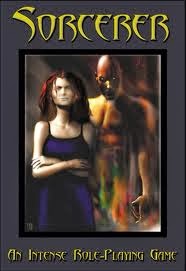
Now in recent years (the last decade or so) that’s changed a bit as the indie-game movement (especially folks interested in those damn Story Now games that facilitate a “narratavist” creative agenda), have made some inroads into returning RPGs to real games…i.e they’ve included objectives of play in their design, that have been so badly lacking in most “new” RPGs since the early 1980s. Games like Sorcerer and My Life With Master and InSpecters and Baron Munchausen (itself a hybrid game with a competitive edge) have distinct goals of play that the participants work towards over a session…much like an Old School D&D party works at digging the treasure out of well-guarded and hard-to-reach caches. Not every indie game does, of course…some (like The Riddle of Steel) fall prey to the same “flaw of design” found in other RPGs. And I don’t think the intent behind including objectives was to make the games more “game-like;” I think they were just trying to really define WHAT IT IS THE PLAYERS ARE DOING IN-PLAY WITH THE AUTHOR’S SYSTEM.

Specificity. Don’t fear it.

Now people who enjoy the hell out of “universal” RPG systems like GURPS and RISUS and whatever hate this kind of discussion, because the whole point of universal systems appears to be “give the players the tool kit they need to do anything they want.” They take umbrage with the idea that GURPS (for example) isn’t a “game” simply because it doesn’t include an in-play objective. “Bloody Hell!” they shout “That’s the whole damn POINT! I want a system that doesn’t tell me what I’m supposed to do, I want to create my own objectives of play.” Fine and dandy…GURPS isn’t a game; it’s a tool box to help you design your own game. (insert objective and) Enjoy it.

[actually, the snarky side of me would say GURPS IS a game with an actual objective of play; however, that objective is “to create a workable game using the GURPS system,” and that the play is in the design of the world/setting…i.e. the GM prep work…not in the actual play of the RPG itself]

Okay, that’s enough stomping on people’s feelings for now. More later.

[to be continued]

Wednesday, August 14, 2013

Confessions of an Insecure Game Designer


Hi, allow me to re-introduce myself.

I’m JB…at least, that’s my handle in the blog-o-sphere. I live in Seattle. I have a regular 40 hour job that gives me very little stress and makes zero demands on me outside the office. I have a wife and child that I love a lot, though we don’t always get along as well as we should. I have two beagles who wake me up between 4 and 5 every morning and who contribute to my general state of endless fatigue…on the other hand, I am probably their favorite person in the world (I feed them, more often than not), and despite their idiosyncrasies, I have immortalized them by naming my game company for them.

Game company? Well, that’s kind of a stretch but I needed some type of title for this hobby thing I do in my spare time. I’m a gamer…I enjoy playing games. My preferred types of games do not involve 21st century technology. Cribbage is good, as is Hearts. Yahtzee is good. I like cards and dice…I’ve got a streak of the degenerate I guess. I used to smoke, too, but I decided I liked life too much to keep that particular habit.

Role-playing games are good because I have a pretty active imagination and most RPGs are “adventure oriented” and I like adventure. In fantasy anyway. I’m not much for heights, or extreme-type sports, or enlisting in the military, which cuts out a lot of “real life” adventures I might have.

A good RPG (to me) has a rich fantasy world to fire my imagination, a slim and/or easily managed set of rules, and a few objective means of system resolution (things not requiring a whole lot of GM fiat). Dice rolls are good for this type of thing. And I like dice.

["rich fantasy world" does not necessarily mean "complex setting." Boot Hill has a rich fantasy world because A) there's a LOT of history/fiction available on the "Old West" and B) pretending to play a cowboy is an obvious fantasy!]

I have a lot of opinions on games. It comes from liking them, playing them, thinking about them. The advent of the internet and free blogs (like this fine blogger machine here), allows me a platform to vent my opinions into the internet world. Sometimes those opinions have been bounced back by others. Sometimes those opinions have been changed or transformed by things I’ve read. Over time and life, I continue to evolve…or rather refine…my point of view. Somewhere along the line, I got the idea to start contributing to this thing I liked – gaming – in a way more than simply venting opinion. Creating something…something folks could hold and enjoy, something folks could use for their own amusement…became not just an interesting idea, but something important.

I have called myself an “artist” in the past with regard to music and acting. But I’ve never created anything lasting, unless you count the occasional fond memory. That’s nice, of course (nice to have your ego stroked by someone 10-20 years after the event happened)…but that memory will die with that person. An experience can’t be truly shared with a person who wasn’t present at the time. It can be described, it can be used to teach or amuse, but in the end it’s all just hearsay mixed with the jumbled thoughts and memories of the person telling the tale.

A book, though, is different. It can be held, it can be kept, it can be shown, it can be lent. It can be bought and sold and traded. It can be mined for ideas (like an experience), but it exists independent and concrete of the person doing the mining…it can benefit more than just a single person. And yet it is still an expression of one’s creativity – like a song or a performance – as well as a physical commodity.

And so I’ve discovered a deep satisfaction in the act of publishing. Self-publishing, of course, because I’m a bit of a control freak, not to mention shy with my creativity. On stage, there is a distance between yourself and an audience. Working closely with other people in the act of collaboration? That’s tough.

[hmmm…now that I think about it, it’s always been tough for me to collaborate with my stage-mates as well – whether you’re talking about a band or the cast of a production. Maybe I should have studied painting instead…]

Anyway, that’s me. I understand that I’ve embarked on a different type of artistic endeavor in writing and publishing books…even game books. I understand there’s a honing and refining of one’s craft that’s needed if I’m going to continue and hope to create useful, constructive art. I also understand that there is much I have to learn and that the best resource for that learning is from others who have gone before me.

That being said…

There were a LOT of game designers present at Dragonflight this year. Much more than I remembered from my last stint (in 2010), but it’s possible I was just overwhelmed by the entire experience previously. It was, after all, my first gaming convention (or “fun-type” convention of any type). This time I was much less whelmed by the venue, and was able to concentrate on observing my surroundings. I met and had the opportunity to speak with several designers. Some offered me advice. Some offered me information. Some offered me encouragement. Some just desperately, desperately wanted me to buy or play or support their pet game. Those were the toughest ones to deal with.

I saw a lot of games in binders…binders with a nice illustrated title page tucked in the front of the binder. Huge-ass binders, each one representing someone’s fantasy opus. Some of these had many players at their tables. Some of them had none. One person waved a handful of loose papers at me as I was leaving (early) Saturday evening. “I have pre-gens!” he cried.

I looked at a lot of character sheets. A LOT of character sheets. Instead of sitting down at tables, I’d just circle the groups while the young (or not-so-young) designer was giving “the spiel” and I’d look over shoulders at character sheets. I saw archetypes like “cleric.” That particular game actually had quite a few players at the table.

I saw a LOT of new games I’d never heard of: ones that had no connection to the OSR as far as I know. I might be considered a part of the “Old School Renaissance,” but my game is a lot farther from D&D than some of these games. I saw a lot of games that incorporated phrases like “D20 sensibilities” in their description.

This might be a good time to talk about Pathfinder, as I’ve had (what I think is) a profound change of opinion on that game based on what I saw at Dragonflight XXXIV. On Sunday, during one of the several breaks in my activity, I wandered into the 2nd floor hall that had been set aside for the Pathfinder Society. The hall was too big for the number of people actually present…at the last convention it had been used for Warhammer (and 40K) matches and it seemed fuller because each table was usually only occupied by a pair of combatants. Even so, there were at least as many people playing Pathfinder as all the people in the downstairs “role-playing hallway” combined. Each table was round and had anywhere from six to eight players. Each table had a pile of books and a battlemat in the center occupied by a number of miniatures. The participants (both players and DMs) were from a wide range of ages, young and old. All (as far as I could tell) were having a great – or at least pretty good – time.

Pathfinder is not the devil. Pathfinder is a fun and popular game. As long as it remains well-supported by its publisher (as it is currently), I believe it will enjoy a long and fruitful life and bring great joy to a number of people. I don’t know if I call it role-playing or not…heck, I’m personally inclined to give up that term altogether [the only reason I was running 5AK in the “RPG” section is that it didn’t seem to fit anywhere else]. But regardless, Pathfinder's grown into its own self-sustaining entity…one that I don’t begrudge in the slightest. That is to say, NOT ONLY am I not going to fight Pathfinder (i.e. take a “live and let live” attitude), but I’m not going to actively discourage folks from playing Patherfinder, either. By which I mean, I’m not going to denigrate the game or its designers or attempt to “show it up” with regard to other D&D editions or OSR clones, including my own. In the past, I was inclined to do this because I was of the opinion (rightly or not) that Pathfinder was, well, bad somehow. And I’ve decided it’s not. It’s just a game…a game that plenty of people like and enjoy playing. I myself played a lot of 3rd edition D&D which I consider to be about the same thing as Pathfinder.

Having said that, I’ve also come to the conclusion that I have absolutely zero interest in Pathfinder. The people who enjoy the game are getting an enjoyment of a type I’m not interested in having. It’s like Settlers of Catan or Axis and Allies or Magic the Gathering. These are popular games that plenty of people have plenty of fun playing and with which I’ve had fun with myself (save for Settlers which I’ve never had much interest in trying). But I don’t have any desire or interest to take part in those games. That’s the main thing I realized as I wandered through the Pathfinder tables. All these people having a great time, thoroughly enjoying their game play, and registering absolutely zero on my “interest scale.” And I’ve played the game! It’s like when I walk into Gary’s Games or Café Mox/Card Kingdom and people are playing Magic at the tables…it doesn’t bug me at all. It just doesn’t pique my interest.

SO: no more raining on the Pathfinder parade. For me, they’ve entered the realm of GURPS players. I just stand in wonderment that I had any real resentment towards the game at all.

Back to the basement where “the other role-playing” was taking place…here was a land that, in contrast to the “Pathfinder Society,” seemed to have some type of shame or sadness attached to it. Maybe it was just the area they set aside for us. Maybe it was the number of tables that had scheduled to host events and that had zero players (I wasn’t the only person getting stiffed at the convention). Or perhaps, this is just me looking at the event through the lenses of my own self-consciousness.

As I wrote in my other post, I spent a lot of time in the Story Games Lounge, playing indie-games. Not indie in the sense of “independent designers;” there were lots of those on display in the RPG dungeon, as noted. No, I’m talking about the Forge-type, Story Now games: non-traditional “RPGs” designed to explore premise, or do something other than “fantasy adventure,” or do fantasy adventure in an unconventional fashion.

Sitting in those games…whether as a participant or as a quiet observer…I found myself feeling incredibly self-conscious. It’s not just that the people playing were intelligent individuals (plenty of gamers have the high IQ thang). No, they weren’t just smart: they were clever. And quick-witted. And funny. And creative. And incredibly UN-self-conscious about their own geekiness or their gaming hobby. They were completely good natured and un-judgmental.

I found them disconcerting. Being in their presence, I found me judging myself. Even if they would not.

Ridiculous. I’m the guy who likes to bring non-gamers into the hobby and put them at ease. I’m the guy who runs the game that tries to get everyone involved without judging their choices (with regard to character or action)...at least at the table. I’m the dude that likes to create an open, safe environment for players to imagine and “role-play” and have a good time in the imaginary, virtual world.

I felt small. With those folks, I didn’t even bother to bring up the fact that I’d just published Five Ancient Kingdoms or anything about it. These people didn’t give a shit about deconstructed Dungeons & Dragons…why waste their time?

*sigh*

This kind of thing is my personal hang-up, I realize. We all have our foibles…mine is a combination of “not recognizing my own self-worth” (in more than a couple categories) as well as “thinks he’s smarter than most people.” Maybe I’m an intellectual bully. No one’s ever accused me of that, and maybe that’s too harsh anyway, but perhaps that describes something of my make-up. Gaming with people who do a helluva’ lot more gaming than myself, and who couldn't care less whether or not there’s a new edition of D&D on the horizon (and are too busy having a fun to worry about spitting in someone else’s good time anyway) and just, well…*sigh* (again).

Yeah, I’m probably being too harsh. Like I said, the people who’d come into the Story Games Lounge (a constantly rotating cast of characters) were all very nice, and seemed perfectly happy and encouraging of my “showboating” play style (I’ll talk about Dresden in a separate post…perhaps). There was certainly no undermining that occurred and the facilitator asked me to hit him up on Facebook sometime. Who knows if I will or not. Certainly, I’ve yet to even email the folks who gave me their email addresses with a request to forward them my “web site information” so that they could check out my games. I mean, what am I supposed to do…give ‘em my blog? That’s the only “web site” I have besides a couple gmail accounts.

Ugh…self-conscious game designer. Did I mention that yet?

Actually, as I wrote yesterday I already had a chance to “decompress” a bit with Tim during our rides to and from the convention (Mr. Morgan is a self-published game designer himself, in addition to the long-time manager of Gary’s Games in Greenwood). Tim, bless his heart, talked me off the ledge I’d (mentally) worked myself into after two days of stress, foul-ups, and “semi-professional" failure. I DO have some faith and confidence in myself (duh), and I fully intend to press on and all, but man-o-man sometimes I really get the shakes…at least internally.

Self-respect. That’s what I’m currently learning.

And publishing, of course…creating that concrete thing that can be passed on and shared with others. A tangible creative expression designed to help others find creative self-expression in game play. That’s what I’m shooting for. And as long as I keep my focus on the objective, the shakes seem to subside to a negligible level.

Eyes on the prize. Don’t look down. All that jazz.

So regarding the publishing thing…or rather, the marketing thing…I did pick up a couple-few useful ideas from Dragonflight, which I’ll be sharing in my next post. Maybe a little bit of “what not to do” but…well, you folks will have to decide whether or not it’s useful to you. It’s stuff that’ll be useful to me, assuming I’m able to keep my shit together and make it out to another of these things!
; )

Cheers!