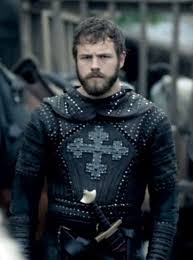
Monday, April 1, 2019

A is for Archduke Stefan III

[over the course of the month of April, I shall be posting a topic for each letter of the alphabet, sequentially, for every day of the week except Sunday. Our topic for this year's #AtoZchallenge? Revamping the Grand Duchy of Karameikos in a way that doesn't disregard it's B/X roots]

A is for Archduke Stefan III. Yeah, that guy. Best to start at the top.

The much beloved archduke (later king in the 2nd Edition AD&D setting, following events in the Wrath of the Immortals box set), has his history described in detail beginning with Allston's setting Gazeteer for the Grand Duchy. In brief, Stefan was a Thyatian nobleman who traded his ancestral lands to the Emperor of Thyatis in exchange for independent rulership of the "undeveloped" Traladara territory (Traladara having been conquered and claimed by Thyatis some 70 years before). Taking its main city (Specularum) for his capitol, the 22 year old Stefan renames the land for himself (Karameikos) and puts down the armed insurrection that follows. Over the next 30 years, the now-Archduke parcels out land to his (Thyatian) followers, builds roads and a strong military, and works to establish his Grand Duchy as a maritime power and resource rich exporter, while uniting the mixed Thyatian and Traladaran people in a shared "Karameikan" identity. He does this by using his natural charisma, being an "exemplary leader," recognized throughout the region for his "fairness and honor" and while there is some resentment to his rule (and some outright plotting against him by certain nobles), he is generally considered an "even-handed," "stern but fair ruler" whose main flaw is being "baffled by raw evil" (like his cousin Ludwig von Hendriks). In game terms he is Lawful and good, caring most for his family, his people, and his legacy...in about that order.

Sheesh.

Let's talk a bit about conquered people, shall we? Historically, folks are pretty averse to being conquered and ruled by a foreign power, especially when there's any perceived social injustice like, for example, the invaders being in the nobility and the indigenous folks being stripped of their lands. It's not something that a people with any type of national identity (say, a shared language, religion, and/or cultural values) gets over easily. One might say, well it's been a hundred years since the Thyatian Empire first marched into Marilnev (the regions main community) and renamed it Specularum...that's four or five generations to get used to Thyatian (i.e. fantasy Roman) supremacy, yeah?  Sure...and I can see the Palestinians being okay with this whole Israeli state thing one day, too, huh?

You can see how well that kind of thinking worked in Latin America and Africa and Asia over the centuries. India was effectively ruled by the British from the 18th century until achieving independence in 1947....they never really "got used to it." I'd imagine there are still plenty of "north Irish" who would rather just be Irish, just as there are still Scottish folks who would prefer to be their own country. I have good friends in the Basque region of Spain who absolutely hate being associated in any way with Spain (who they see as attempting cultural genocide) and still hope someday...and work toward...having an independent Basque country. And the Basque region was annexed in the 15th century!

Are folks familiar with Maximillian I of Mexico? He was an Austrian nobleman who gave up his lands and titles in Europe to become Emperor of Mexico. This was with the help of the French (and Napoleon's army) in the 19th century.

["Cinco de Mayo" commemorates the Battle of Puebla (where all Volkswagons in North America are manufactured) when the Mexicans won a small victory against the French forces during this time period]

Historians write that Maximillian genuinely cared for the Mexican people, helped institute reforms to help the people, enacted institutions to help the poor, abolished child labor, broke monopolies held by the wealthy, and worked to make a strong, modern Mexico. He was fought tooth-and-nail by a people who had already thrown off the yoke of Spain in their war of independence, and after "reigning" for about three years, he was overthrown captured, and executed by firing squad. Mexico has only been ruled by Mexicans ever since.

Duke Stefan, per GAZ1, survived a single armed revolt and a single assassination attempt and then...nothing. For thirty years (forty, if you count the 2nd edition material). Just schemers working behind the scenes to undermine Stefan's authority.

Doesn't really wash for me. Even if Stefan was the "bestest ruler in the world" it's hard to see a conquered people (even one that's not particularly "oppressed" - though what constitutes "oppression" is probably a matter of opinion) celebrating Stefan's rule or simply content to go quietly into the night. The Traladarans are supposed to have a proud history, legends of being enslaved by "beast men" and of eventually throwing off that slavery to become free, independent people. And now they're just going to go about their business? With Thyatians in their castles, taking the bounty of the land? It's not like Stefan has been systematically exterminating them and pushing them onto tiny reservations...they should be taking advantage of his (written) naiveté to arm themselves and organize!

[maybe it's just that archduke has the indiginous demihumans on his side...but why? Were there centuries of antagonism between the demihumans and Traladarans before the coming of Thyatis?]

It's important to note that the character of Stefan Karameikos, his personality and background, changed substantially with the advent of 1987's GAZ1 (the Gazeteer detailing the Grand Duchy of Karameikos). Very little, in fact, was said of the archduke (even in B6, the adventure module detailing Specularum); until the publication of GAZ1, he seemed to be nothing more than a high level fighter who had carved out his own dominion. Even Aaron Allston's own adventure module X12: Skarda's Mirror (published just prior to GAZ1), paints a different portrait of the character:

"A distinguished military commander and adventurer by the age of 20, he was offered a baronial title if he settled in and developed the unclaimed wilderness west of Thyatis.

"Stefan Karameikos III built himself a seacoast town, a village which he named Specularum, and began settling his followers all through the region. Eventually the region became the Barony of Karameikos, then the County, and finally the Duchy. Now, 30 years after the initial landfall, the Duchy is flourishing, and the Duke is a powerful and well-liked ruler, the father of strong heirs."

See? That's a perfectly acceptable elaboration on the character's original portrayal in the Cook Expert rulebook. There's no conquered peoples, no political machinations, no Thyatian noble-class ruling over displaced Traladarans. At this point, "Traldarans" were only a primitive, degenerate human subspecies fighting endless battles against the Hutaakan beast-men (to be discussed later) in a lost valley (see B10: Night's Dark Terror). The earlier, pre-GAZ Stefan was just an adventurer made good...just one of us, you know?

Which is how I prefer it, mainly because it's "more B/X." Still, things are not all rosy in Karameikos. There are still ravening hordes of humanoids (goblins, gnolls, frost giants(!), etc.) to contend with throughout the area. And then there's that darn Black Eagle Barony over on the western border about which the Duke seems wholly unconcerned. What's up with that exactly?

Welp, as with the good Baron Ludwig, I can think of a number of different ways to "re-skin" Duke Stefan explaining his lack of progress after a couple-three decades sitting on the throne. Here's a few of them for your enjoyment:

Couldn't find a good
pic of Duke Avan.
Archduke as Absentee Adventurer: Duke Avan Astran of old Hrolmyr is a good example of an adventuring noble of the most doomed sort; of course, most (all) folks who travel with Elric of Melnibone are doomed to a horrible end eventually.

Archduke Stefan as Duke Avan is a fairly easy re-skin: the explorer/adventurer who just can't settle down, even after a life of achievement. He keeps getting on that damn boat and setting sail, looking for lost cities, legendary shorelines. and forbidden knowledge...all when he should be back minding his duchy. Instead, he is gone more often than not on a life of perilous adventure, leaving his dominion to be ruled by henchmen and underlings while his noble wife tries to raise/shape children grown restless with an absentee father. Perhaps, the player characters will end up accompanying him on some random quest or other; more likely he'll disappear and they'll be tasked with finding his remains. Lots of possible adventures in a land left un-ruled by a glory hound and thrill seeker.

"More wine! And where's
my armor stretcher?!"
Archduke as the Life of the Party: who doesn't like a little wining, wenching, and feasting? Robert Baratheon is a great possibility as an archduke resting on his (ever expanding) laurels.

Once a formidable warrior, years of the good life has allowed those muscles to atrophy and those jowls to drop. But it's not a bad life. Who needs to worry when you've got that Black Eagle fellow shoring up your western border? And the elves and gnomes to your north? And that...well, there is a haunted and mysterious forest to the east, but there are hardly ever any monsters popping their ugly mugs out of it. Besides, young adventurers are always happy to go on a quest, and knighthoods are cheap to grant. Maybe they'll take some of my (illegitimate) kids with 'em...show 'em the ropes.

Sure wish the duchy wasn't in so much debt...

"What of it?"
Archduke as the Scheming Legacy Builder: or maybe your debt is just a means to an end. Tywin Lannister is a different kind of warlord: one who is ambitious, ruthless, and utterly dedicated to furthering the fortunes of his family and ensuring its legacy.

Stefan as Tywin would be perfectly happy to allow an equally ruthless warlord to rule the western marches...so long as the tool could be sufficiently controlled. Of more importance would be growing his own family, ensuring his own estates were secure, and building political alliances with other, rival nations. The infrastructure of the interior? Low priority compared to keeping up appearance in duchy's capital. A powerful naval force. Plate armored cavalry and perfectly drilled infantry. Evidence of pacified natives. And an open invitation to extra-nationals seeking to exploit the rich resources of the territory's interior.

No petty baron would do as a marriage partner for the ducal offspring; the archduke's children would be yet another resource to exploit and sell and help build the family's dominion and legacy.

"My followers were chosen as carefully
as the disciples of Christ."
Archduke as Bloody Handed Conquistador: But perhaps we'd like to use the native Traladarans...or some sort of indigenous prior inhabitants. Duke Stefan as Hernan Cortes could still be a B/X style adventurer...just one not conflicted about carving an empire out of an existing civilization.

This could be an archduke motivate by religion (slaying or converting the heathen pagans), riches (harvesting timber, mining precious metals), glory (etching his name on history), or bloody savagery (an excuse to kill). Truth is Cortes was a little bit of all those things, and while I've never met or read anything that ever praised the man or his actions, the fact remains that he made an indelible impression on the history of Mexico...and his descendants survive (comfortably) to this day.

Archduke as Chaos Cultist: AKA "Something Rotten in Specularum." Last one, and then I'll get this posted (man, I'm hopeful the next post in this series will be shorter!). Here's a quote direct from the 1st edition of Realms of Chaos: Slaves to Darkness...though with some [words] replaced:

"[Stefan] was regarded as the finest military commander that the [Empire of Thyatis] had produced. His abilities were faultless, and eventually the Emperor granted him the title of [Archduke]. This was a high honor...

"Before [Stefan] could travel to [the Thyatian capital] to receive [additional reward] he fell ill [in] the [primitive territory] of [Traldara]. This was his undoing. During his convalescence [in Specularum] he was inducted into a secret warrior's lodge, which proved to be little more than a coven. A change of character became evident in the [archduke] - he had been possessed by a Daemon. [Stefan's] membership of the secret lodge was not unusual; Imperial soldiers were often encouraged to join warrior societies of this type..."


Late stage cultist Stefan.
Stefan Karameikos as Warmaster Horus may seem a bit of a stretch, but individuals in the Warhammer Fantasy setting fall prey to Chaos worship for all sorts of reasons (though, sure, it's usually tied to some sort of lust for power). Here's the great thing about it though: Chaos cultists usually strive with all their might to keep their allegiance secret. No one's going to pay taxes or follow the laws of a mutant scion of evil! And in a feudal society with a rigorously enforced social caste system, it's actually fairly easy to hide such worship...at least until your arm turns into a tentacle (then out will come the witch-hunters and the torches). See Shadows over Bogenhafen, etc. Anyway, the point is, an archduke that's fallen to Chaos has a lot more things to worry about then whether or not the roads are getting built...

All right, that's enough. More tomorrow!

[EDIT: I promise I'll come back and polish this post at a future date...when I have more time!]


Sunday, March 31, 2019

A-Z Blogging Challenge 2019

Once again I have decided to sign up for the A-Z blogging challenge (somehow I accidentally signed up three times in a row; I've had problems for years with my Google Drives being in Korean, and I can't figure out how to change the lingo since *duh* I don't read Korean...).

ANYway, I know that I wrote last time (2016ish?) that the thing was a damn grind and I felt my posts were neither enjoyable nor particularly inspired and I didn't suspect I'd participate again. So what's changed? Um...maybe the bad memories have faded? Maybe? Maybe I'm just a sucker for a challenge...or punishment.

[actually, that's not really true. I'm lazy about challenges: I prefer to pummel my opponents at no cost to myself. I like my sports teams to win comfortably, not "edge" the opposition. Real challenges cause STRESS, and I prefer less of that particular juju]

It helps though that I have a theme already thought out for this year's masochism:

Revamping Karameikos for B/X

Yeah, I've been blogging/thinking about Karameikos anyway (see my prior entries here, here, here, and here) and I feel like there's more to blog about...it's just fertile ground for my thought-box. Plus, because of all the dumb fantasy names in the setting, I can be sure to have entries for every letter (should I go with the immortal "Zirchev" for Z, or minister of state "Zogrev Yarol?"). See? Easy-peasy...just like I like my challenges.

Hopefully, this won't be too painful and I'll be able to knock them out in timely fashion. April's actually an extremely busy month for me, but I don't think I'm going to be doing much traveling (for a change) and my plan is to write these posts in the early morning hours. Commitment and follow-through is, of course, good practice for self-discipline and I can always use more of that.

Besides what else do I have to do with my spare hours? Finish my 2018 tax return? Find a damn job? Sheesh...that stuff can wait!
; )


Yeah, it's the 10th anniversary, but this
is only my 3rd time doing it...big whoop.

Friday, March 29, 2019

Re-Working The Black Eagle (P.2)

Before I continue, allow me to take a moment to address the question "Why bother?" Am I simply writing to denigrate these products of 20-30 years ago? To show how I could have "done it better?" No, not really. I actually believe you can still get use out of these products...they provide a ready-made campaign setting to start with (as my friends and I used the Greyhawk maps in the past: we kept the geography and city names and made up all the rest). But more than that, there WAS a lot of thought, effort, and creativity that was poured into these books (the Gazeteers especially), and while I might not have the same taste for the material that I once had (if I ever did), I can at least APPRECIATE the work that was done even as I mine what material I can from the writings. At least these booklets are spurring my imagination; they're making me think.

[and some people, upon reading these ideas, might actually WANT the Disney-ish cartoon villains for their own campaign...perhaps they, like me, have small children they want to introduce to D&D. If any of this encourages people to go back and acquire these old books, maybe even run an older edition of D&D...well, so much the better. And if they still want to adapt the material to their own 5E or Pathfinder campaign? Well, at least I'm encouraging folks to read and think and explore and experiment and we definitely need more of that in our world, IMO]

So picking up where I left off: here are a few ideas I've had for re-skinning the "Black Eagle" to make the character more interesting to me. I write these down to record my ideas (so I don't forget) and to offer possibilities for others. They may be just as trite and tropey as what TSR did back in the day, but at least they're different...and I like these ones better.

Baron Black Eagle as Vlad the Impaler: Karameikos has a certain "Hollywood Transylvania" vibe going on with its nosferatu lords, misty forests, and forbidding mountains. Why not go whole hog and model Ludwig after the voivode of Wallachia himself, Vlad Tepes? I've read more than a couple books on Vlad over the years (fiction and non-), but I find his most colorful portrayal in the film Bram Stoker's Dracula. The man was indeed cruel and bloodthirsty, with a penchant for torture and brutality; Ludwig's "depredations" positively pale in comparison.

Blood drinking? Sure.
Vlad ruled Wallachia during the 15th century, a border territory of the Holy Roman Empire that changed hands with the Ottoman Turks multiple times. He spent most of his adult life in battle, mostly on the side of Christendom (as a youth, he had been a political hostage of the Turks, from which he learned their language fluently and achieved his first reign in Wallachia at the head of a Turkish fighting force). There are many posited reasons for his terror tactics, but from his own words a good portion of this was to inspire fear in a tremendous enemy against whose might he stood little chance (also fear in his own people, who might well have preferred religious conversion to destruction and bloodshed). He was killed in battle with the Ottomans, who hacked his body into small pieces.

It would be very easy to reskin the "Black Eagle" as the "Young Dragon," using the monstrous humanoids of western Karameikos as a stand-in for the Ottoman Empire.  A strong warlord would be considered a necessary evil by Archduke Stefan, and model why Ludwig is allowed to operate in the fashion he does. Keep in mind the reason (in B/X) that a fighter is granted the title of "baron;" the character must be of sufficient level (9th) and be able to keep a territory controlled and cleared of monsters. As the Halag was awarded to Ludwig/Vlad as a fiefdom, he must have demonstrated sufficient ability to the duke.

Baron Black Eagle as Aethelwulf: now that it's available for streaming (and my wife's gotten into the show), I've finally been able to get back to watching the television series Vikings. Despite some historical inaccuracies (mostly the specific timeline of events; for example, Ragnar's first attack of Paris in 845 was basically a "walk-in touchdown" while the famous siege when Count Odo successfully repelled the Norsemen was 40 years later against the historic Rollo) I find the show both fascinating and interesting, especially the way it dramatizes the events of the 9th century in light of the politics and (especially) religion/faith of the time.

Banner still has
a black eagle.
Aethelwulf, son of the scheming King Egbert, is another excellent inspiration for a Black Eagle reskin. In this case we have another brutal warlord, faced with repelling invasions of humanoids (this time a stand in for the Norsemen), but here we have a motivation based as much on piety and faith as on the need to stem the invasion. Only humans can become clerics in B/X...this is a little explored concept in most campaigns. While Ludwig/Vlad is a sadistic tyrant fighting for his life, Ludwig/Aethelwulf sees himself as a holy crusader, battling the enemies of the Lord. Note that he is no "paladin" (such do not exist in B/X anyway), but a devout soldier tasked with a bloody mission. While Vlad would be a tool of the archduke, Aethelwulf is a tool of both his sovereign and his church...and which side will win out in the end (if either)? Note also that demihuman characters (dwarves, elves, halflings) would fall into the "nonhuman" hatred of such an individual...the refugees found in Luln would be demihumans driven from the Barony and their human friends ("sympathizers"). The Black Eagle would see himself as a "good" person, doing God's will, and even if he had the ambitions of Egbert, he'd more likely be going about them in the usual fashion (i.e. making political alliances through marriage to the Archduke's daughter, rather than open warfare).

Baron Black Eagle as King Haggard: as I've written before, I love Peter S. Beagle's novel The Last Unicorn, and for whatever reason I am particularly fond of the animated version of King Haggard (voiced by Christopher Lee). I wouldn't mind adopting the character wholesale to replace Baron Ludwig, age and all. Halag would become Hagsgate; "Fort Doom" could keep its name (a fitting euphemism for Haggard's dire keep), though it would retain the witch's curse from the novel. Heck, I'd probably add the Red Bull and adopted son Lir to the mix. I like a little fantasy whimsy (as I've written before), and King Haggard is plenty callous and dangerous without making him all mustache-twirly. He should be more of a "force of nature" in the campaign than an outright antagonist.

Described as "seventy
years old, or eighty,
or more."
I'd probably put him back about 10-15 years before the events detailed in the novel. Lir would be around, but only a small child; Haggard and his retainers would still be old, if maybe not quite so ancient. Hagsgate would look more like Nulb than a post-apocalyptic, almost-ghost town. And, of course, Haggard would still possess his "magician's magician" Mabruk, replacing Bargle in the campaign. Perhaps Mabruk would still possess the power to delight the grim lord with his magic. In such a scenario as this, the dynamics between the barony and the capital would probably need to change: I see Haggard as having come to the region many years before Archduke Stefan (though probably still from Thyatis)...an appointed governor/sentinel/warlord who chose to live far outside the bounds of the more populated Specularum due to his particular misanthropy.

Will not be driven away
by halflings. He eats halflings.
Baron Black Eagle as Gregor Clegane: this one is pretty easy, though the stat line will need to change a bit (I'm fine modeling "The Mountain" as a 12th level fighter, but Strength 18 is definitely required...possibly more). Once again we go back to the "brutal but necessary" warlord protecting the Grand Duchy's border, but here's a villain that everyone can really hate, as he's so hateful. In this incarnation, Duke Stefan plays the role of King Robert "Look the other way" Baratheon (or Tywin Lannister if you want your Archduke to be a scheming manipulator). Clegane is the worst kind of robber knight; he is a man without code or honor, with no sense of duty, paying only lip service to liege and faith as it allows him to do that which he wishes to do. He has no loyalty, not even to his own family or retainers (he murdered his own father to assume his title; he killed his own man for snoring too loudly). Clegane lives only to fulfill his basest passions and momentary whims. He slays his warhorse, a very expensive piece of horseflesh, in a flash of anger at losing a joust.

And yet, Ludwig/Clegane has the title and power and fighting prowess that allows a man of such horrible character to not only survive but thrive in a savage, brutal world. Other lords and would-be kings WANT him on their side, because of the terror he instills in their enemies, because of the threat he poses, should they decide to let him off the leash. Like star athletes that have committed despicable acts off the field, people still want The Mountain on their team; definitely better to have him on your side than fighting against you! However, he has no designs on the throne...I prefer this option for the Black Eagle if there are other vying factions in Karameikos (allowing Ludwig/Clegane to act as wild card). He's a man of "simple pleasures," after all.

Beloved by all...except
the French.
Baron Black Eagle as Black Prince Edward: finally, we have the idea of the Black Eagle as an actual, honest-to-goodness hero (or whatever passes for one in a pseudo-medieval period)...a warlord trying to be chivalrous even as tries to be a strong leader for his people. All those rumors about the Black Eagle? Slander. "Fort Doom?" Called that because every prior-appointed baron met their deaths fighting humanoids. Reputation for cruelty? He is hated and feared by his enemies because he is O So Good at what he does. The "black eagle" is simply his banner...or perhaps the baron is a black (i.e. dark skinned) man who happens to use an eagle in his heraldry. Ludwig the "black" Eagle...get it?

In this scenario, Baron Ludwig gets his bad press from his rivals at court (i.e. other barons, nobles of Karameikos) who are vying for the attention/largesse of the Archduke. Alternatively, the rumors could be spread by Duke Stefan himself, keeping in mind that he's ruling a conquered people who have no great love for him (oh, wait...I haven't gotten to that post yet). Maybe the Black Eagle is descended from Traladar nobility or perhaps he is "half-blooded." Maybe he has married into a once-noble Traladaran house, despite his Thyatian roots, "going native" and earning the epithet "black eagle" (like "black sheep") based on the Imperial crest of Thyatis. Such an individual might be loved (or better respected anyway) by the indigenous people of the region, and a focal point for rebellion and the eventual overthrow of Duke Stefan. Being from Luln, the player characters might have more reason to discern truth from the scandal (Lulnish refugees either being from other areas of Thyatian control or victims of humanoid raids and looking to the Black Eagle for protection). That would make for a more interesting campaign then simply overthrowing "Bargle's boss."

But then, I find ALL these alternatives "more interesting" (which is why I bothered to write them down). Derivative? Sure...but fun in a way that "Bwahaha! I'll throw you in my dungeon and feed you to Bargle!" just isn't. Not for me, anyway.

[hmm...I don't think any of these guys are the type to even use dungeons. Torture, sure, but generally "to the death" and in spectacular, public fashion. Only Ludwig/Haggard is likely to drop a character in an oubliette...and then just to forget about him]

Thursday, March 28, 2019

Re-Working The Black Eagle (P.1)

In my prior post on the human communities of Karameikos I provided the only description of Baron Ludwig "Black Eagle" von Hendriks found/detailed in the B/X rulebooks.  With the advent of Mentzer's Expert rules, this character begins to morph into something very specific: a caricature in the same vein as any mustache-twirling cartoon villain. The first thing that changes is the basic description itself, with subtle semantic differences. No longer does it state the "the Baron may have possible connections with evil slavers and disreputable mercenaries;" instead it says "the Baron may have connections with evil slavers and mercenaries" (possible has been removed and the deletion of the adjective implies the mercenaries are evil as well). No longer are his troops used to "quell (subdue, silence) dissent," instead he uses them to "stifle (suffocate, choke) dissent." Finally, the Baron's garrison is no longer used to "crush attacking non-humans" (the barony exists as a buffer zone between the capital and a combo of lycanthrope-plagued Wereskalot, goblin foothills, and marshy coastline), but instead simply to "crush attackers," implying the Black Eagle has no specific beef with non-humans.

The rest of the Mentzer expert set makes it clear that the Baron is up to nefarious behavior, as his "spies and agents" include Bargle the Infamous, unrepentant murderer and villain from the Mentzer basic set. Much internet ink has been spilled about this particular "bad guy" and I will, too...in a later post.

1984s Mentzer Companion set provides a war-game scenario involving the Black Eagle as a means to test its mass combat rules. Here, Baron Ludwig, chafing under "the yoke of restraint" from the Archduke (oh, boy) decides to march on Stefan, fielding a force comprised of 200 Black Eagle guardsmen and 400-1000 monstrous humanoids (the exact number being variable as chosen by the DM). As the Companion rules are meant for high level characters, the scenario and presumed result (the "fall of the Black Eagle") is not accounted for in later publications...the inference is that DMs keep the Black Eagle barony a source of villainy for low- to mid- level PCs campaigning in Karameikos.

1986 is the date GAZ1 is published and here we get the culmination of the character in Allston's description of Baron Ludwig as the "aggressive and theatrical first cousin" of Duke Stefan, who pretended to be an "upright, eager, and very lawful follower" of the Duke, right up until he was awarded his barony in the newly colonized (conquered) Duchy. Here are some excerpts:

From GAZ1 (with Bargle)
"...von Hendriks is about as unlikeable human being as you can find. He's arrogant, easily enraged, easily soothed or distracted; he's a casual killer but fond of formal torture; he lies so often and so profusely that he cannot remember the truth, he is, in short, insane."

"Ludwig would be a handsome man if not for shifting eyes, oily mannerisms, and arrogant sneer. He dresses entirely in black (even his armor is enameled black)."

"He seized Halag, the largest village...by force [even though this was unnecessary]...once it was conquered, he celebrated by announcing to the population his appointment as its new baron. He renamed the village "Fort Doom" to suit his sense of the theatrical, dubbing the barony the "Black Eagle Barony" after his ancestral coat of arms."

"The Black Eagle Baron is an archetypal villain...whenever you need an untrustworthy, dishonorable, compelling villain, you have Ludwig von Hendriks."

Ludwig II, architect of the
Disney Castle.
Personally, I don't find much "compelling" about this NPC...he is a Disney character stuffed into a Bavarian doublet (the Black Eagle symbol was a symbol of the German kings for centuries; the character echoes some elements of Ludwig the Mad). The 1994 (2nd edition) campaign setting Karameikos: Kingdom of Adventure mostly copies and repeats the information in GAZ1, only advancing the timeline 10 years and overthrowing the Baron through an invading hobbit army, driving the guy into exile, and making him more ridiculous (I'll get my revenge against you, Stefan! And your little halfling thugs!).

*sigh*

First off, while it's not a bad (or even "contrived") idea to set up rival political factions within a region, this idea of one (or a handful of) good, benevolent ruler versus one bad apple is just a little too "small time" for me. Even in a world of demonic high priests and supernatural evil, it's too black-and-white...at least for humans.

Plus, it's boring. We've all seen it before. It's Alan Rickman as the Sheriff of Nottingham or Basil Rathbone as Guy of Gisbourne. It's Jafar from Disney's Aladdin or Scar from The Lion King. It's been done...the relative/close advisor who's just waiting for their chance at the throne. And it's silly: does this guy really want to rule over a territory of orcs and goblins? Is this Baltar from the original Battlestar Galactica, content to be hated by his own species and hang with the robots? Do we need another fantasy fascist? We've seen fantasy Nazis before (it's called Star Wars...or any pulp film set circa WWII)...but in a pseudo-medieval setting like your average D&D campaign it's kind of anticlimactic. I mean, most feudal warlords were cut from the "crushing iron fist" cloth.

And that, by the way, is true across eras and cultures. The average peasant-type, whether you're talking Europe or Asia or Mesoamerica, was just happy to survive...when you weren't worried about the planting and the harvest and the winter, chances are you were hoping (and praying) that your lord wouldn't be going to war...with anyone! You'd rather have the back-breaking tribute and taxes then have to worry about raids and battles screwing up your life (let alone conscripting your strongest laborers for a certain death). In a time before there were train timetables to worry about, life was a lot harder, and governments far more tyrannical, than those found in your average fascist regime. Hell, even your religions were brutal, unjust, and merciless!

[we'll talk about the "benevolent" and "beloved" Duke Stefan in a later post]

The BECMI era of D&D could get away with this particular spin of antagonist because of the time in which it was written, the mission of TSR at the time, and the demographic for which it was written. For me...a middle-aged, armchair historian with a taste for B/X and a little more grit...it ain't enough.  I don't need the "grimdark fantasy" of Warhammer where every town street is a river of filth, horse dung, and emptied chamber pots, but I do require something more interesting than what Karameikos is serving up...and because I'd like to go back to Luln as the PCs' starting place (rather than the idyllic town of Threshold), this character of Baron Ludwig character needs an overhaul.

I have a few specific ideas/concepts in mind, but as this "preamble" has already run long I'll roll them out in a new post.

[to be continued]

Tuesday, March 26, 2019

Round and Round We Go

I plan on getting back to the Karameikos subject this week; this is just an interlude.

Over the last ten years I've been posting to this blog, there are some subjects that I've spent an inordinate amount of time on. One of my main areas of speculation/musing has been combat rules, specifically as they relate to the B/X system, and my various ideas, proposals, and thoughts on how best to tinker them to better model what I'd like to see.

Mm. Mm-mm-mm.

This post is a "placeholder" of sorts, so that when I am (once-again-sometime-in-the-future) wondering about my past thoughts on the subject and going through this blog by "tag," this particular post will come up FIRST and save me a bit of time. Here goes:

I like the B/X encounter ("combat") rules as written. For the most part, they model exactly what I want.

Variable combat damage by weapon? Yes, exactly as written. Two-handed weapons losing initiative? Yes (though among the missile weapons this only applying to crossbows, not bows). Armor class and ability score adjustments? Yes. Shields? Yeah, with some liberal interpretation of the "cover rules" when it applies to shield walls. Initiative and surprise? Yep. Hit dice and hit points and healing? Yes, though I reserve the right to change the way monsters heal damage, should the issue ever arise in play.

After all the "thought experiments," "practice runs," and actual table play, I am fine and dandy with the way the rules model the basics of combat. Every variation or adjustment I've made has all ended up being for naught....the simple, abstract system as it exists perfectly replicates the way I want my combats to run, right down to ten second beats (rounds).

Now this doesn't mean there aren't some existing "holes" in the system; there are, and they could sure stand to be plugged. Here are things that will (probably, eventually) need to be worked out and adjudicated in the long run, as they aren't found in the B/X system:

  • Disarming
  • Grappling
  • Long-term injuries, maiming, scarring
  • Partial or piecemeal armor
  • Required space for maneuvering (long weapons)
  • Stunning, knockouts
  • Take-downs (overbearing, tripping, etc.)
  • Weapon breakages

I'd also like to add some simple rules for multiple attacks (for fighters only) as B/X proper does not include any of the other editions' options. I can also see limiting the damage of a "normal sword" to 1d6 unless it is used with two hands...but probably not. Much more likely is simply giving a +1 bonus to attack rolls when using any melee weapon two-handed but...again...probably not (I don't want to be giving a low-strength character an advantage for using a heavy, two-handed weapon).

But other than "plugging holes," I have come to terms with all aspects of the Encounter rules (Chapter 5) of the B/X rulebooks. Other aspects of the game (evil clerics, alignment language, equipment costs) still need some adjustment, and I will almost certainly fiddle with monsters and magic items (if only to make the game a bit more interesting and campaign specific). But as far as combat goes, I'm just going to consider the matter SETTLED. It functions...both practically speaking and as a model. And after nearly a decade of tuning it, I am satisfied. Finally.

The ultimate justification for 18 strength receiving
a damage bonus is B/X...

Friday, March 22, 2019

Human Lands of Karameikos

From the Cook/Marsh Expert set (page X60):

HUMAN LANDS

Specularum - Originally a trading port founded when this area was first explored, the major city of the Grand Duchy of Karameikos. Approximately 5,000 people live in or immediately around the city. The Duke maintains a standing force of 500 troops and may raise an army of 5,000 from the surrounding countryside in times of war. A small fleet of warships is maintained in the harbor.

The city is primarily noted for its excellent harbor facilities and shipyards. Walled on the landward side, the city is also protected by 2 breakwaters that extend into the harbor, restricting passage to a narrow entrance. Overlooking the harbor is the Duke's castle, providing ample defense of the harbor.

Black Eagle Barony - This area of the Duchy has been given as a fiefdom to Baron Ludwig "Black Eagle" von Hendriks. The central town is Fort Doom, a forbidding structure. It is rumored to have dungeons filled with those who have displeased the Baron, an extremely cruel and unpopular man. The Baron may have possible connections with evil slavers and disreputable mercenaries. The Baron maintains a garrison of 200 troops, using them freely to quell dissent and crush attacking non-humans.

Luln - Composed primarily of persons who have fled Black Eagle Barony, merchants who have come to trade with the Baron, and some non-humans who have left the wilderness, Luln is a base town for adventurers exploring the Haunted Keep, also called Koriszegy Keep and the surrounding land. Somewhat lawless and open, the town can provide most of the basic needs to any group of adventurers. The town is poorly defended, relying on the goodwill and capabilities of both the Baron and the Duke for its defense. Approximately 500 people live in the town.

Before continuing, I want to mention "the Haunted Keep," AKA Koriszegy Keep as it is renamed. This adventure site first appears in the Tom Moldvay edited version of the Basic rules (the "B" in B/X) as an example of dungeon design; it is meant to be a first dungeon for new players. For the sake of completeness, I'm adding the Keep's description here, as it contributed to the "lore" of Karameikos (and because this background is later changed in GAZ1):

"In the distant past, the Haunted Keep was the castle of the Rodemus family. It was abandoned many years ago when the family mysteriously disappeared. It is now rumored to be haunted. Strange lights and sounds are often seen and heard in the ruins by passing townspeople.

"Recently, a tribe of goblins has been raiding the countryside. On their last raid they captured a dozen prisoners. The prisoners are all relatives of the player characters, who have banded together to rescue their relatives. The party has tracked the goblins to the Keep or castle, right up to the only door to the east tower..."

What the players do not know is that the Rodemus family has become a family of were rats, and still live in tunnels under their old castle. The family has joined the goblin raiders and are using them to find the strengths of the surrounding countryside. If the raids show the country folk to be weak, the family plans to raise a goblin army and attack...

[excerpt taken from page B55. I've cut out some of the descriptive info of the Haunted Keep and some of its DM notes]

The 1983 (Mentzer) Basic set does not include the Haunted Keep, instead using the ruined castle of Mistamere (one-time stronghold of the wizard "Gygar" and now the lair of Bargle the Infamous) as its introductory scenario. Personally, I find Mistamere to be both too hard and too pedestrian as an adventure (even as an introduction), but I have run it multiple times (with everyone dying in the first encounter: a carrion crawler). I've never run the Haunted Keep as its only coded level is too small and I never felt like filling out the rest of it...however, it's not a bad start and it has some interesting features, the best of which is the Lovecraftian "Rats in the Walls" vibe that's going on.

The original "Haunted Keep" from B/X;
details (and wererats) to be added by DM.
The 1983 (Mentzer) Expert set did retain Karameikos and most of its text (including the stuff in my previous post) is copied verbatim; however, there are differences, some subtle and some not, that point to a very specific direction of development. Here we have the first mention of Duke Stefan's "Elvenguard;" here also we have the gnomes providing the silver that the Duke uses for minting coins (despite the difficulty of trade with the community, retained from the earlier edition). The "somewhat lawless" town of Luln is no longer the presumed base town for the player characters, instead being replaced by idyllic Threshold and its benevolent Patriarch Sherlane. Baron Ludwig no longer uses his troops to crush "attacking non-humans" but simply "attackers," and he is set-up as an antagonist with a "network of spies and agents" including "Bargle the Infamous."

"Koriszegy Keep" is no longer the proper name of the Haunted Keep but is instead the proper name of the family that once ruled it, replacing the Rodemus family (despite the fact that a stronghold need not be named for its owner, or even its surrounding lands: see Mentzer's own example of Tarnskeep, castle of Patriarch Sherlane in Threshold). This become especially irritating in GAZ1 when Moldvay's rather horrific rat-hole of giant, subterranean caverns is transformed into "Ravenloft Lite;" a rather bland little ruin of eight encounter areas with a single crazy vampire (he's cursed to stay within the confines of his castle for the last two centuries, so he must be insane, living off summoned bats and having nothing to do but write on the walls).

The "updated" Keep; coffin and treasure
of vampire is in area #9 (*SPOILER*)
If you haven't figured it out yet, I'm a little disdainful of the changes that were made to Karameikos and its inhabitants (good and bad alike). It's not ALL terrible, of course...several of the ideas (especially from Allston's GAZ1) are worth using/stealing, and some are positively inspiring. Others...like Cardia's (Flying) Carpet Service airline...I find to be pretty cringe-worthy. I feel a lot of Mentzer's ideas tend to be of the "juvenile fantasy" vein; Harry Potter-esque years before Rowling was a published author. But his wilderness maps are a bit more readable than the originals, and I really appreciate him locating the various modules' adventure sites within the territory (it's nice to know just how far The Keep on the Borderlands is from the nearest civilized town).

I do have more to say on the subject of Karameikos...specifically some of the changes and "spins" I'd put on the country. But I'll save that for a later post. As usual, comments are welcome (especially from folks who've spent any amount of time playing in or running the Grand Duchy).
: )

Thursday, March 21, 2019

Revisiting Karameikos

Sometimes (often?), when I have a blog idea that really gets me jazzed up, I end up doing a bunch of "research"on the subject, that can distract or derail me for days (or weeks) on end. Such is the case with this post, which has been sitting in "draft form" since January 18th. While this info doesn't matter all that much to the subject at hand, I feel like folks might be interested in the fact that I'm not (always) pulling these missives out of my ass, and that when I have a delay in posting it's (sometimes) due to me trying to get more info for my readers' benefit.

[BTW: I put "research" in quotes, because a lot of my study is simply culling and collating stuff from various places on the internet...it's hardly locking myself in some shadowy corner of the library. Not trying to put on airs, people!]

GAZ1; Published 1987
The Grand Duchy of Karameikos is a campaign setting that's been around (in published form) at least as long as I've been in the hobby. As I mentioned the other day, Aaron Allston did the bulk of the work fleshing out the Duchy in the BECMI supplement Gazetteer #1 of the same name. I won't go over too much of what's covered in the Gaz; interested folks can get a brief overview of the setting from this podcast (which draws from multiple sources post-1983, i.e. after the advent of Mentzer's BECMI edition).

[there's another video review specific to the Gazeteer itself, but while longer it has a lot of extemporaneous nonsense, ranging from opinionated asides to factual errors regarding both the setting and the game's development...I gather Mr. McCoy is more of a 2E/Forgotten Realms enthusiast, so his musings may be pertinent to folks interested in his perspective]

Karameikos first appears in published form in 1981, both as a territory of "the Known World" in module X1: The Isle of Dread, and detailed as a "sample wilderness" in the Cook/Marsh Expert set (the "X" rulebook of B/X). As has been noted by others, the Known World setting was originally created by Tom Moldvay and Lawrence Schick for their home campaign and in that setting (per Schick's old notes) Karameikos appears to have been little more than a Thyatian city-state existing on a skinny peninsula.

Besides changing the city to a Grand Duchy (and much larger territory), the Expert rulebook offers the following details of the land of Karameikos:

"The Duchy is a large tract of wilderness and unsettled land claimed by Duke Stefan Karameikos the Third. Although he claims control of a large area of land on paper, large portions of it are held by humanoids and monsters. The two main settled areas are the coast near the main city of Specularum and the Black Eagle Barony on the Gulf of Halag.

"The weather throughout the area represented...is generally temperate and mild with short winters of little or no snowfall and long summers. Rainfall is ample but not heavy and easterly winds blow cool breezes from over the sea.

"The mountain range running along the north edge of the map is known by different names by the peoples of the territory including the Black Peaks, the Truth Mountains, or the Steach. The two large river systems that provide drainage from the area are left for the DM to name.

"Due to the climate, large sections of this map are heavily forested. Humans engage in lumber operations near the edges of the forests, but are loathe to venture too deeply without good cause. Timber, both hardwood and softwood, is a prime resource of the area, and is either exported or used to build ships in the shipyards of the port of Specularum."

- D&D Expert Set, Page X60

In addition to this overview of the territory, the book (briefly) describes the three areas primarily inhabited by humans (Specularum, the Black Eagle Barony, and Luln) and the gnome community residing in the foothills of the mountain range (north of the coastal capitol). The map shows three inhabited castles (not counting the Duke's fortress), two ruins (Wereskalot and the Haunted Keep from the Basic set), and several humanoid areas within the Duchy: two forests of "elves," three different tribes of "goblins," some "orcs," and a region of "frost giants" (!!) in the mountains of the northeastern border.

I'll discuss the "human lands" in a later post. What's most interesting to me, in light of the development that has occurred in the years since its first appearance, are all the things that are NOT mentioned in the description here that became later "plot points." Missing is any mention of a Thyatian connection, nor is there any discussion of conquest or of an indigenous (Traladar) people. There is no discussion of native religion, mythology, or history...the Lost Valley (site of the 1986 adventure module B10: Night's Dark Terror) isn't even part of the territory (being located over the northern border). No familial connection is made between Baron Ludwig and Duke Stefan, and the baron isn't portrayed as quite the "scheming villain" he becomes later in the Gazeteers (also: no mention of any mage named "Bargle"). The gnomes are not the Duke's silver-smiths...they don't even seem to be allied with Karameikos at this point, though this appears to be a possible adventure opportunity (building an alliance with the community). For folks only familiar with Mentzer's Expert set, there is no mention of Threshold at all...it's not even on the map (and I'm inclined to believe it was entirely a Frank Mentzer invention).

Mainly, Karameikos is presented as an underpopulated area ripe with adventure opportunities; a place to be explored and (at higher levels) settled by the player characters. Specularum appears far more of an Old West style "border town" than a place rife with intrigue and feuding merchant clans (as detailed in B6: The Veiled Society and GAZ1). For me, a guy who mostly ignored BECMI when writing my "what-could-have-been" B/X Companion, I find myself intrigued by the possibility of re-inventing (re-imagining?) Karameikos along my own lines...something a little less "good two shoes" with its O So Noble Archduke, his pleasantly banal family, and the mustache-twirling Baron of "Fort Doom." While I did play a good deal of BECMI in the past, my players never spent much time in Karameikos (at least, after exploring the various scenarios in Threshold and the Keep on the Borderlands), instead spending most of their time in Glantri, Darokin, and (to a lesser extent) Ethengar. I think that the Grand Duchy, even with slight twists to the existing "canon," could be a pretty neat setting for a campaign.

I'd definitely like to dig a bit deeper into it.
: )