Thursday, November 12, 2015

Monk Dissection

[I know I've been writing a lot today. It's been productive for blogging...and not much else. If you missed my earlier loooong post on the origins of the monk, and my initial analysis, you can find it right here; hmmm...maybe I should schedule this one to post later tonight. Nah...]

[pulled some interesting images from Google with that title, BTW]

As I did with druids, sometimes it's easiest to simply deconstruct the whole damn thing (tear it down) in order to (re-)build a better mechanism. Personally, I really like how the druid turned out...that's a character class I wouldn't mind playing (which is something I could've said before). I'm hopeful I can get similar results for the monk.

First, though, the cleric...here's what a cleric looks like mechanically:

  1. Prime Requisite: Wisdom (better saves with my Holmes house rules).
  2. No required ability scores.
  3. Restricted to humans.
  4. May be any alignment.
  5. Armor: Any + Shield (should be pretty good AC, approaching Holmes max).
  6. Weapons: non-edged (house rule for evil clerics: no restriction).
  7. Hit Dice: 6-sided.
  8. Turn Dead (good clerics only).
  9. Spells (beginning at level 2).
  10. Some magic staffs restricted to clerical use.
  11. Possibility of clerical scrolls (mentioned in the magic section, but in the treasure section states spell scrolls "can only be read by magic-users." House rule needed).
  12. No special abilities like those described in Supplement II (Blackmoor).

I'm pretty sure that's it. Now we'll look at our monk subclass, consider it's theme/concept, and see what needs to be adjusted. Let's do it by the numbers.

1. Prime Requisite: pretty safe to say this remains as wisdom. I'm not a big fan of screwing around too much with prime reqs (requiring multiple high abilities or cutting out a class's XP bonus completely). For a Holmes game, I'd certainly want to keep it simple...the monk earns bonus experience for having a high wisdom score.

2. Required Abilities: Blackmoor originally required wisdom and dexterity of 15 and strength of 12, none of which has much impact on the character. Monk skills are, for the most part, tied to level...an experienced monk has more powers than an inexperienced monk. Wisdom helps speed rate of advancement, but I don't think we need that...monastic orders will probably accept anyone, but poor students (i.e. "unwise ones") will progress at a slower pace. On the other hand, a certain amount of physical skill is needed for their hand-to-hand combat skills, though we won't need it high enough to get bonuses. Call it a minimum of 10 in STR and 11 in DEX.

3. Restricted to Humans: much as I like my Hin Warrior Monks, I'll stand pat.

4. No Alignment Restriction: I like evil and chaotic monks (see the main villain in Iron Monkey). However, I doubt a Chaotic type would have the patience and discipline to progress far. Eh...let it stand for now.

5. Armor: Here's where it gets interesting. It ain't a monk if you're wearing armor. However, Holmes armor class works a little different from other editions, being based on actual armor worn. While I can see a monk toughening their flesh by taking "sand baths" and whatnot, they're still only AC 9. I think that I'd prefer to handle a monk's increased defensive value in the same way Holmes handles magical armor: by subtracting the bonus from an opponent's attack roll. In the case of the monk, we'll go ahead and give him a +1 bonus per two levels (rounded up). Since my classes are only going to go 12 or 13 levels, that's not too crazy. And I like the smaller AC range of Holmes.

6. Weapons: I would neither add nor subtract any weapons from their (alignment dependent) list. Neither would I add the Blackmoor half-point-per-level damage bonus. As for unarmed attacks, there I would do an increased damage progression, though not on the scale of Blackmoor...we are talking about the human body, which is never going to inflict more damage than a well-swung battle axe. Call it D4 for the first three levels, D6 for levels four to six, and D8 thereafter (have you tried punching steel gauge armor?). Likewise, no multiple attacks (yet)...the attack roll takes into account multiple swings and kicks, etc. Level determines your success at landing a (damaging) blow(s), and the damage roll gives you an idea of how effective the blow was. That being said, I'd consider some kind of stunning attack (subtract four points of damage from a successful attack to force the opponent to make a saving throw; only works on man-sized opponents of fewer levels/HD than the monk).

7. Hit Dice: 6-sided dice seems like a good number. Monks with high constitution (and, thus, bonuses) might represent those guys doing "body hardening" exercises, while a lower CON might be a frail, "elderly master" type.

8. Turn Dead: the province of good clerics. The monk's a little too "inward focus" to have this effect on walking corpses.

9. Spells: I am extremely tempted to turn the monk's special abilities into spells. This makes the most sense, mechanically (think about D6 Star Wars and "force powers"), but would necessitate me (*sigh*) doing yet another spell list. It might be worth it. It would certainly be shorter than, and very different from, the standard cleric list.

10. Magic Items: like the druid, I'd probably restrict monks to "those magic items that can be used by everyone." However, unlike Blackmoor, I would probably not restrict the total number of items possessed, unless I was going to do some sort of "poverty vow" thing. Even so, wouldn't they keep found items in the Order as sort of "communal property?" I'll consider that issue.

11. Cleric Scrolls: even if cleric scrolls exist in Holmes, even if monk abilities end up being "spells," they are NOT going to be the kind of thing that gets written down and read off a scroll. Haven't you seen Kung Fu Panda? The scroll is blank!

12. Monkish Abilities: let's take a quick gander at what we've got (besides things mentioned above). Surprise bonus. Some thief abilities. Speak with animals and plants. Feign death. Resistance to ESP. Self-Healing. Immunity to suggestion/hypnosis. Resistance to telepathy (is this different from ESP?). Immunity to Geas/Quest. Quivering palm (death attack). Saving throw to dodge missiles (even magic missiles). Saves reduce half-damage attacks to zero. Even failing saves only results in half damage starting at 8th level. Uber-fast movement based on level.

Hmmm...that's not all that many, all things considered. Let's take a look at what they get in later books. 1E adds immunity to disease and slow spells. Adds charm to the hypnosis resistance. Grants resistance against mind flayers' mental blast. Immunity to poison. No bonuses to AC for DEX or attacks for STR...but Holmes doesn't grant those anyway.

3E adds slow falling, attacks that hit like enchanted weapons (ki attacks), a dimension door ability (!), spell resistance, eternal youth, the ability to speak with all living creatures (hello, C-3P0!), ethereal travel, and a gradual transformation into an ascended-style supernatural being with damage resistance. Ok.
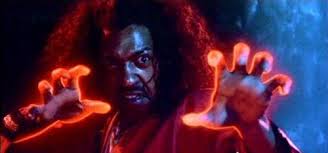
I've got your ki attack right here, sho nuff.

And, hmm...I don't find a monk in either of 4E's two Player Handbooks.

All in all, not that much, and most of it can be easily cut. I can go with only be surprised on a 1 (like my Holmes ranger). Unarmored characters already double their movement. I might allow the "move silent" thief skill for the cleric changing out their armor for silk robes and slippers, but the other skills?  No.

The mental resistances would warrant no more than a saving throw bonus, and maybe I would couple that with the immunity to disease if the monk had the paladin-like poverty vow (there are benefits of giving away your possessions to the poor, Peace Pilgrim!). All the other saving throw bonuses and missile dodging? No. This isn't Kung Fu. Immunity to poison? Have you seen Crouching Tiger?

The speaking with creatures (and plants) is pretty weird...did Remo Williams do this? It seems there might have been some confusion between Franciscan monks and the Shao Lin variety. This gets axed, along with the feather falling (already took away the climbing sheer surfaces, Remo). All the 3E stuff gets cut...if you want to hit a supernatural creature, get a magic weapon.

Meanwhile, the self-healing, feign death, and (possibly) quivering palm can be rolled into a new meditation skill that has multiple effects, depending on level. But is that enough to make a cleric give up their armor, turning, and spell-casting ability? Because it really doesn't look like there's enough here to warrant that "monk spell list" I was thinking about way back in Item #9.

Maybe I do need some sort of "flurry" or "whirlwind attack;" God help me.

All right, getting all this written out helps my thought process. Comments and suggestions are, of course, welcome.
: )

[this will definitely be my last blog post for today]

Prepping for the Monk

Well, we got the druid knocked out (if you missed it, here's Part 1 and Part 2), which means it's time to move on to that other cleric subclass, the monk.

Hoo-boy.

I have only ever created one monk character (other than a sect of itinerant halfling monks for a short-lived D20 campaign...that's another story). Or maybe two. Hmmm...I know that I had one, for sure, that had the name "Soft Treader" (which makes me wince as I write the words). I also had one for whom I did a number of "character sketches," generally depicting an individual with a cloak and hood that obscured the character's face (like one of those Assassin's Creed dudes), armed with a variety of monk-eligible weapons (crossbows, daggers, quarterstaffs). Were these two characters the same? I honestly can't remember. Neither one was played more than once. Neither became major NPCs in our old AD&D campaign (of the late '80s), which is what often happened with unplayed PCs. Yeah, aside from the wince-worthy name and the illustrations of the other, I really can't any accomplishments of this (either?) character.

And as far as I can recall, I've never ever seen a monk in ANY D&D game before or since. Zero. That's even including a brief stint with 1E Oriental Adventures.

According to wikipedia, the monk class/concept was created by Brian "Buckshot" Blume, inspired by the Destroyer series of novels. Not familiar with those? Have  any of you children of the 80s seen Remo Williams: The Adventure Begins (starring no less than Fred "Timerider" Ward)? Well, that's the movie based on the books, and due to its disappointing receipts at the box-office, it never morphed into the film franchise it was intended to become. ANYway...

The inspiration for the monk.
The monk first appears in Supplement II (Blackmoor) for OD&D which mentions not Brian Blume even one time. Blackmoor states it's written by Dave Arneson ("with special thanks to Gary Gygax, Tim Kask, Rob Kuntz, and Steve Marsh for suggestions and ideas") and so I've simply assumed the subclass was an "Arneson Original" regardless of what Gygax says in his preface to Oriental Adventures (as far as I can tell, Blume never had contact with Arneson, unless they met at GenCon in Wisconsin). On the other hand, I could find no reference of any kind to "monks" in Arneson's First Fantasy Campaign (from Judge's Guild), and the "character list" therein (page 51) includes only the following:

Fighting-Man, Clerical, Magic-User, Ranger, Paladin, Assassin, Merchant, Sage

[and, no, there are no write-ups for "merchants" and "sages"]

The assassin definitely appears to be an Arneson creation; based on its inclusion in Supplement II, the stuff in the FFC, and his well-known love of pulp, I think it was probably inspired by the assassin caste of the Jon Norman Gor books. Of course, assassins are the next subclass of this series...

By 1975 (when Blackmoor was released) there were plenty more besides the Destroyer books to inspire a martial arts monk. Bruce Lee had finished the entirety of his film career (and died) by 1973, kicking off a Hong Kong action craze in the U.S. The popular television show Kung Fu ended its three season run in April of 1975 (combining martial arts and western tropes, I can see Blume being a fan...he did co-design Boot Hill). If the class had been written up during the '80s, it probably would have incorporated multiple ninja elements...mercifully, we missed that.

Originally (and this is different from every subsequent version of the class, with the exception of its "mention" in Holmes), the monk was a subclass of cleric. This is fairly important because, as a subclass, it is presumed the character has the same abilities of a cleric except when contradicted in the text. For example, Supplement II is explicit that the monk has no magical abilities (spell-casting) like a cleric; however, it does not say the monk cannot turn undead if Lawful (there is no alignment restrictions for monks in Blackmoor). It says monks may have no permanent followers and must treat treasure "as does paladins;" it does not say they don't receive divine aid to help construct their "modest stronghold" when the time comes to do so,

It makes sense for clerics to be a subclass of cleric, given their Blackmoor description of "Members of an Order [who] seek both physical and mental superiority in a religious atmosphere." As I wrote the other day, an individual in a pseudo-historic/ancient environment would have spent many years training in their expected profession (rather than attending elementary and secondary school), and the monks training would have been in a religious capacity supplemented by martial arts. At least ones similar to the Shao Lin temple-style monk.

[contrast this with the chivalrous knight ("paladin") whose training is in combat, riding, and warfare and only supplemented by religious tutelage in the churchy virtues]

A class has a focus...a subclass has a divergence from the "usual" training, but retains the focus.

However, beginning with 1st Edition PHB, the monk became its own class.

And I can see the (very sensible) reasoning of doing so. Despite a religious upbringing, the monk has almost nothing in common with the cleric. It wears no armor. Its weapons (at least in Blackmoor) were completely unrestricted. It has no spells. It has no followers. It possesses a variety of unusual powers learned as the character advances upwards. It has a level limit. It has restrictions on advancement beyond a particular level of experience. It uses D4s for hit points for God's sake, while clerics use D6s!

[this last may actually have been a typo, by the way. Supplement II lists the assassin (subclass of thief) using 6-sided dice and the monk (subclass of cleric) using 4-sided dice, whereas the ACTUAL variation (first presented in Supplement I) gave clerics the D6 and thieves the D4. It is conceivable that the editor of Supplement II missed the fact that the thief subclass should share the same HP progress as its parent class, and the cleric subclass share the larger die type. Things were a little "amateur hour" back in those days, as one can tell from reading the original books]

There are so many differences between the parent class and the subclass that it makes sense mechanically to divorce the two from each other, even when there's a thematic connection. Yes, you read that right...it makes sense to keep 'em the same and it makes sense to separate them. Both options make sense based on the mess we have here (thematic parallels with perpendicular mechanics). How to reconcile this?

Probably by throwing one of the two things away. And since Holmes has already designated the monk as a subclass of cleric (and we're doing this exercise in "Holmesian" fashion) I think we're going to need to keep the THEME of the class ("religious order") and chuck the mechanical kitchen sink of thing. In other words: overhaul the hell out of it.

Here comes the "flurry."
Sorry, monk-lovers. I know that in the early days of the hobby it was all about "including what feels fun" and whatnot, but over here we try to hold ourselves to a slightly higher standard. I've got few sacred cows about D&D, and that holds doubly true for a class that's been such a non-entity in thirty years of play. Plus, the monk class as written is brutally stupid (sorry, Brian). A 6th level monk strikes twice/round for D12 damage and (on a roll 5+ over the target number) has a 75% chance of stunning the guy 30-120 minutes and a 25% chance of outright killing 'em? And at maximum level (a lofty 16) the character strikes 4 times per round for 4D10 damage?! That's an average of 88 damage per round (well, presuming the character hits)...what fighter with a magic sword can hope to match that? The PHB nerfs this a little...but not much.

[as a quick example, fighters in the PHB receives their highest attack rate...2 per round...at 13th level, achieved at 1,750,0001xp. An AD&D monk achieves 14th level with the same XP total. At 14th level, the monk has a natural AC of -1, receives three attacks per round, and strikes for 5D4 damage: average of 38 points of damage if they hit with every attack. If the fighter had a halberd and 18/00 strength, they'd still only be looking at an average damage output of 23 points per round (more if the weapon was magical, but certainly not over 30)]

And here's the thing, folks: I like the idea of the monk. Some people might be surprised to hear that, given the general feeling that "Eastern and Western fantasy shouldn't be mixed;" that the martial arts monk is out-of-place in the pseudo-Camelot style D&D campaign. And maybe I was that way, too, once upon a time (I can't remember if I was). However, that was before I was introduced to the Scarlet Brotherhood. Once I got a whiff of that particular concept, I could see half a dozen ways to fit monkish orders into a fantasy campaign...at least one with a pulpy, sword-&-sorcery vibe to it (which is how I like my game).

SO...since this post is getting long (and its my third post of the day; my poor readers! Their eyes are melting!), I'm going to sign off for the moment. Next entry will be reviewing the monk-ish character's abilities line-by-line to see what can stay and what definitely needs to go-go-go.

Is it still cultural appropriation once
 it's already been appropriated?

(Belated) Happy Veterans Day

Ugh...so sorry I missed this yesterday (Paraguay's on a different holiday schedule from the U.S.), because I meant to wish folks a happy one. Really, I did.

Happy Veterans Day to all the men and women who spent (or continue to spend) time serving their country. There may be more nobler ways to serve your nation (and the human race) than risking your life in its defense, but there aren't many.

Some folks might be unaware that Veterans Day was originally Armistice Day in the United States (until 1954), and is still observed as such in many (mostly European) countries. Armistice Day marks the anniversary of the cessation of hostilities with Germany following World War I (the Great War). The armistice was signed on the 11th hour of the 11th day of the 11th month of 1918 and, it was hoped that this would prove to be "the war to end all wars." It was a Congressional Act, approved in May of 1938 that led to Armistice Day becoming an official, legal holiday, making November 11th:

"A day to be dedicated to the cause of world peace and to be thereafter celebrated and known as Armistice Day."

A little sad that World War II would begin in Europe less than 16 months later.

Anyway, happy Veterans Day to all those Veterans out there. I hope you'll joining me in dedicating the day (heck, the month) to the cause of world peace, even as we celebrate your service to our great nation.


Holmes Rules: The Druid (Part 2)

[the write-up for the druid subclass can be found here...go and read that first, if you haven't already done so. This is "spell section" for the character]

Druid Magic

The magic of the druid subclass differs very little from magic of the cleric besides the actual spell effects. There are no "reverse" spells for druids; all druids have the exact same selection to choose from. Druidic magic is neutral in nature, and its effects will detect as neither good nor evil. Druids do not make, nor make use of spell scrolls.

The following spells are available to druids:

FIRST LEVEL DRUID SPELLS
1. Animal Charm - This spell is the same as the 2nd level cleric spell snake charm, save that it applies to all normal animals.
2. Detect Pits and Snares - The spell is the same as the 2nd level cleric spell find traps, save that it may only be employed in natural environments (outdoors or subterranean caverns, for example).
3. Divination - By studying her surroundings and "reading the signs" the druid is able to gain some insight into the wisdom of a particular course of action. The player may ask the DM a single question, and the DM should provide a suitable answer (yes, no, or maybe).
4. Entangle - Range 60 feet; Duration 1 turn. Causes the vegetation in an area 40' x 40' to ensnare and trap any creature that passes through the area, holding them fast; creatures are allowed a saving throw to escape being caught, though their movement will be slowed.
5. Obscurement - Duration 1 turn per level. Creates an opaque cloud of misty vapor measuring 10' x 10' x 10' centered on the caster.
6. Predict Weather - Allows the druid to predict the weather up to 12 hours in advance and to know if the current weather has been modified by magic.
7. Resist Cold - This spell is the same as the 1st level cleric spell.
8. Speak with Animals - This spell is the same as the 2nd level cleric spell.

SECOND LEVEL DRUID SPELLS
1. Circle versus Animals - Duration 3 turns. Creates a zone of protection (5' radius, centered on caster), that no animal can enter or pass through. Includes all normal beasts and birds, as well as giant-sized or enchanted ones, but not fantastical monsters (like basilisks and chimeras).
2. Heat Metal - Range 30 feet; Duration 6 rounds. Causes ferrous metal targeted (as much as that worn by a man-sized target) to become searing hot over the course of the spell's duration. The first two rounds the any metal worn becomes uncomfortably hot; the next two rounds it is hot enough to cause blisters and inflict D4 points of damage per round; the final two rounds the metal becomes searing hot, inflicting 2D4 damage and causing crippling injury to hands holding metal items and unconsciousness (and lasting scars) to individuals wearing helmets. Soft materials (padding, etc.) exposed to the metal will smolder and burn and will not prevent damage. Fire resistance magic will prevent this spell from having any effect.
3. Hold Animal - As the 2nd level cleric spell hold person, save that it only applies to animals.
4. Plant Door - Duration 1 turn per level. The druid may temporarily merge with a tree, like a dryad; the spell ends when the caster leaves the tree. The druid is aware of everything that occurs around the tree; if the tree is destroyed she must exit the tree or be killed as well.
5. Plant Growth - 160 feet. Causes the vegetation in an area 20' x 20' per level of the druid to grow into a thick, dense jungle that blocks sight and which creatures must hack down to force their way through (at a rate of 10 feet per turn for human-sized creatures, double for larger).
6. Resist Fire - This spell is the same as the 2nd level cleric spell.
7. Speak with Plants - As speak with animals, but applies to plants and plantlike beings.
8. Warp Wood - Range 60'. Causes wood targeted (as much as a pole arm shaft or half dozen arrows per level of the druid) to become twisted and useless. Can be used to hole a wooden boat.

THIRD LEVEL DRUID SPELLS
1. Animal Summoning I - Duration 10 turns. Summons one large animal (elephant, rhino, etc.), three medium animals (lions, bears, wild horses, etc.), or six small animals (wolves, lynxes, badgers, etc.). The animals should be native to the local; they will obey the druid for the duration of the spell.
2. Call Lightning - Range 720 feet; Duration 1 turn. This spell only works outdoors, and there must be storm clouds present. The druid calls lightning from the sky to strike any target in range; each bolt does 6D8 damage to a target (or half with a successful saving throw). The druid may call down one bolt per minute (every six rounds), for a total of ten bolts over the course of the spell.
3. Change Shape - Druid may take the shape of an animal, from a small as a bullfrog or bat, to as large as a black bear (no more than double the caster's weight). The transformation heals the caster 50% of damage sustained (if any) prior to assuming the new form; otherwise, the animal shape has the same hit points as the druid. The spell lasts until the druid chooses to regain her original form.
4. Circle versus Plants - As circle versus animals, but prevents of plants and plantlike beings, even magical creatures (golems made of wood, shambling mounds, etc.).
5. Hold Plants - As hold animal, but works on plants and plantlike beings (dryads, treants, etc.).
6. Pass Plant - The druid enters a tree (as with plant door), but may exit another tree of the same type up to a quarter-mile distant. If there is no other tree within range, the druid simply exits the tree entered.
7. Produce Fire - Range 40'. Creates a sudden conflagration in a circle of 12' diameter. Anything in the area takes D8 damage and (if combustible) is set alight.
8. Resist Lightning - As resist cold or resist fire save that it applies to lightning and electrical attacks.


FOURTH LEVEL DRUID SPELLS
1. Animal Summoning II - As animal summoning I, but double the numbers.
2. Commune with Nature - Similar to divination, the druid may gain insight into the answers for three questions posed. Knowledge should be near total and accurate, but must pertain to nature or issues regarding the natural world. This spell may only be used once per adventure.
3. Insect Plague - Range 360 feet; Duration 1 turn. Conjures a vast swarm of stinging vermin that the druid can use to drive off creatures with less than two hit dice. Creatures with less than five hit dice must succeed at a saving throw or will likewise be driven to flee or seek shelter. The swarm cloud has a 180 foot radius and is 60 feet high.
4. Plant Travel - As pass plant, but any large (living) plant may be used and the druid may traverse any amount of intervening space.
5. Speak with Stone - As speak with animals, but applies to rocks, stones, and rocklike beings.
6. Summon Weather - This spell is a minor form of control weather; it functions the same, but weather summoned must be consistent with the climate and season of the druid's locale.
7. Turn Wood - Range 20 feet per level; Duration 3 turns. Creates a wedge of force 120 feet wide that shoots forth from the druid, pushing aside any wooden objects in its path: weapon hafts, shields, arrows, trees, etc. Creatures holding such items will either be pushed back, or find their wooden items splintered and scattered (taking D6 damage in the process). Objects turned may not enter the path created by the spell until the duration expires or is dispelled; the druid herself is unaffected by the spell.
8. Wall of Fire - Range 60 feet. Conjures a curtain of flame with a height and length that cannot exceed 1200 square feet (for example 30' x 40' or 60' x 20'). The flame is opaque and objects beyond the wall are not visible. Creatures of less than four levels/hit dice cannot cross the wall of fire; creatures that do cross the flame take 2D6 damage. The wall lasts as long as the druid concentrates (takes no other action).

FIFTH LEVEL DRUID SPELLS
1. Animal Summoning III - As animal summoning I, but quadruple the numbers.
2. Conjure Elemental - Summons a single elemental force of a chosen type (fire, earth, water, etc.) with hit dice equal to the caster's level. The elemental serves the druid so long as concentration is maintained (i.e. takes no other action); if control is lost, the elemental immediately turns on its master. The druid must remain within 240 feet of the the elemental at all times, and may banish the elemental at any time unless control is lost. The elemental lasts until banished, dispelled, destroyed, or the druid dies.
3. Control Weather - Duration 6 turns. For the duration, the druid may control and freely change the weather within a half mile radius of her location. Typical effects include: summoning clouds, rain, snow, fog, storms (with lightning), tornadoes, or clearing the skies. It takes D6 rounds for any atmospheric change to take effect. This spell may only be cast in the outdoors.
4. Metal to Rust - Range 60 feet. Causes all metal on target creature to instantly rust to pieces, exactly as if struck by a rust monster. Creatures of metal (iron golems and such) receive a saving throw to avoid being destroyed.
5. Nature's Prison - Range 30 feet. Target creature is merged with natural feature (a tree, large boulder, marsh, pond, etc.). The feature must be at least as large as the creature to be imprisoned, and the subject is allowed a saving throw to resist. The creature's captivity lasts until the druid allows its release or until dispel magic is successfully cast on the prison object; destruction of the object does not free the prisoner.
6. Reincarnation - Forces the spirit of a deceased individual into a magically created body. The forces involved are difficult to control and the body may bear no resemblance to the original. Roll D8: 1-2 body is an animal (usually mammalian), 3-5 body is human, 6 body is demihuman (even chance of dwarf, elf, or halfling), 7-8 body is sentient woodland creature (centaur, dryad, etc.). The DM determines ability scores randomly (3D6) for the new body, and there is an even chance of either sex. Reincarnated individuals retain their memories and personality and (if meeting the requirements) may continue to advance in their original class. Non-animal bodies that aren't eligible for a class (for example, a magic-user in a dwarf body), may keep their old class abilities, but may not advance.

[this was a tricky list, in part because I had specific limits in mind for how many spells I wanted at each spell level (for example, there was going to be a re-skinning of creeping doom called "wrath of nature," but I ended up doing nature's prison instead, feeling it was more thematically appropriate). Please note that, as with illusionist spells, some high level cleric/magic-user spells to which these would otherwise refer are unavailable in Holmes (that's why, for example, control weather doesn't say "see the 6th level M-U spell"). Another difficulty is that some monsters referenced by druid spells (elementals, for example) are not found in the Holmes rulebook...how to handle such a thing when I want a "conjure elemental" spell? On the one hand, the lack of rules provides an opportunity to do things like "lightning elementals" and "plant elementals;" on the other hand, this is just a spell list, not a bestiary. In the end, I punted...I referred to monsters for which there are no Holmes stats. Maybe a different project/post]

[a couple more notes: was pretty pleased at how these turned out. I think the list has a much tighter focus than the standard druid list, really working with the druid's control of animals, plants, and elemental forces. Metal-to-rust makes so much more sense than metal-to-wood (why would a druid be able to transform an inorganic substance into an organic one?) and turn wood ends up be the woodsy equivalent of part water ("Clear me a path through the jungle!"). Folks will note that the druid's magical ability to change shape ("wild shape" in D20 parlance) is now simply a spell...one gained at the same level as they would normally receive the wild shape ability. Again, this makes more sense...it's a magical ability (i.e. a spell); human druids don't just suddenly become therianthropes]

Wednesday, November 11, 2015

Holmes Rules: The Druid (Part 1)

[just continuing my ongoing series of subclass conversions to the Holmes Basic edition of D&D. You can find the Paladin and Ranger here, the Witch here, and the two part Illusionist posts here and here. As with the illusionist, this is the first post of two, as the druid spell list will be posted separately]

All right, let's give this a shot.

Druids -- some clerics, instead of dedicating themselves to a particular god or pantheon, devote their service to gods greatest creation: the natural world. Shunning the trappings of organized religion, they act as guardians of the land, residing and worshipping in areas of untamed wilderness (forest groves, natural caves, etc.). A cleric must have a minimum wisdom of 13 and minimum constitution of 9 to be a druid.

His name is not "Curley."
Druids are of neutral alignment. They only wear armor they've fashioned themselves from natural materials (skins, plant fiber, bones, etc.) which has the same cost, weight, and armor value as leather. Likewise, their weapons, while the same as other clerics, are made from primitive materials, rather than steel, and suffer a -1 penalty to attack rolls. Their wood and hide shields are no different from standard shields. 

Druids receive a +1 bonus to saving throws versus elemental attacks (fire, lightning, etc.). They may automatically identify plants, animals, and drinkable water, and have the same ability to minister to wounded characters as a witch. Upon reaching 6th level, they become immune to the charming ability of woodland and water creatures (like dryads and nixies). Druids cast spells like clerics, but use their own spell list; they do not "turn" undead. Druids may use any magic item not restricted to a specific class.


Level
1st
2nd
3rd
4th
5th
Aspirant
-
-
-
-
-
1st Circle Initiate
2
-
-
-
-
2nd Circle Initiate
3
-
-
-
-
3rd Circle Initiate
3
2
-
-
-
4th Circle Initiate
3
3
-
-
-
5th Circle Initiate
3
3
2
-
-
6th Circle Initiate
3
3
3
-
-
7th Circle Initiate
4
3
3
1
-
8th Circle Initiate
4
4
3
1
-
9th Circle Initiate
4
4
3
2
1
Druid
4
4
4
3
1
Archdruid
4
4
4
3
2
The Great Druid*
4
4
4
4
3

*There should only be one Great Druid in a campaign. How this individual is chosen (presuming multiple characters reach this lofty level) is left for individual DMs to decide.

[by the way, in case it was unclear before, all subclasses use the same XP table, Hit Dice, etc. as the class to which they belong...are, in fact, the same as the main class unless otherwise noted]

Tuesday, November 10, 2015

Clerics of Holmes and their Ilk

Over years of writing this blog, I've written a LOT about clerics. I know it's a lot because I just went back and reread every post marked "cleric" just to look at my thoughts and, boy, that took a while!

I did this review, of course, for a specific purpose: in examining and defining the druid, a subclass of cleric, it's important to understand just what exactly is a cleric. In my early days (years ago) I was mainly examining the class from a B/X perspective, and it was B/X in a vacuum...outside the historic perspective of OD&D supplements and Holmes and various Arneson writings, for instance (I hadn't access to those books at the time). And a lot of my conclusions, musings, and analysis is (I think) still fairly accurate, especially viewed through the lens of B/X. But maybe not from where I'm standing at the moment, knee-deep in Holmes.

Consider, for a moment, my idea of clerics being the (conceptual) equivalent of paladins. If one buys this line of reasoning (and there's really little presented in later books that would refute this assertion), then you really have no reason to create a "paladin" subclass. Of course, the paladin concept is semi-silly anyway, seeing as how it ain't really based on anything. Not saying it's not a neat idea to HAVE a holy warrior type character, but here's one already with the cleric. You just need to give 'em swords. My own B/X Companion did a lot to rectify this (with rules for clerical sword-use and spells to summon celestial mounts, etc.).

But, okay, step away from the B/X for a moment, sir (and keep your hands where I can see 'em). We're talking about Holmes at the moment, and he's got some specific things to say about clerics, and what they are. Specifically:
Clerics -- are humans who who have dedicated themselves to one or more of the gods. Depending on the god, the cleric may be good or evil, lawful or chaotic. Clerics have their own special spells and unlike magic-users they begin with none. They may, however, wear armor, including magic armor, and carry non-edged weapons such as the mace or the quarter staff. No swords or bows or arrows can be employed, for the cleric is forbidden by his religion from the drawing of blood. Good clerics can often dispel undead -- skeletons, zombies, and their ilk as explained later. As they advance in experience levels they gain the use of additional spells. Spells for evil clerics differ slightly from those of good clerics.
Earlier in the description of the wisdom ability score he also notes:
Clerics can perform miraculous spells even though they do not have special intelligence...
Which I personally find amusing as well as flavorful.

Compare his description to the rather limited text of Men and Magic (OD&D), which simply states "Clerics gain some of the advantages from both of the other two classes (Fighting-Men and Magic-Users)..." or especially Gygax's description in the 1E PHB: "This class of character bears a certain resemblance to religious orders of knighthood of medieval times."

Only if you really stretch the definition of "a certain resemblance."

Moldvay's own description is rather closer (being influenced and based on Holmes's book) but is slightly different in wording stating, "Clerics are humans who have dedicated themselves to the service of a god or goddess. They are trained in fighting and casting spells." Can you see the difference there? Moldvay's cleric is very much the "holy warrior," or religious knight. He (or she) has been trained in fighting, as well as clerical magic, and one might infer that the character has taken some sort of oath or vows of service to the god or its representatives on Earth (i.e. the church or temple of organized religion).

This is very different from (in my opinion) the much more priestly version of the cleric that Holmes presents. This isn't a person dedicated to the service of a deity, but to the deity itself (and possibly multiple deities): go build your own temple as commanded by your patron. This isn't a person necessarily trained to fight, but one who is allowed to wear armor and use certain weapons. It's a subtle distinction but (I think) an important one...especially as it applies to other subclasses, like the paladin.

You see, back in "the olden days" (D&D is supposed to be a game with a pseudo-ancient setting, yeah?) folks were a lot more limited from an occupational standing. One didn't simply choose a career after college, nor even "enlist in the army" on their 18th birthday. You didn't, upon reaching adulthood, suddenly decide what you were going to do with your life...by the time you were an adult, that decision had already been made years before. Hell, your career training had been going on for years already. You would have been bundled off to the church as soon as it was found you were useless for anything else on the farm or around the manor (in your early teens, if not younger). Professional soldiers, of course, were trained with weapons and armor and horses from the earliest age possible.

[and if you were going to be a thief, you probably started stealing long before you hit puberty]

The idea of the paladin as a subclass of fighters is one that works with this medieval paradigm. You were probably trained to be a warrior first but, then, having a religious epiphany of some sort, decided to chuck the normal bandit-knight route and dedicate yourself to a more spiritual and chivalrous path. The paladin is a fighting-man (or woman) first, not a person who's spent their life learning the hardcore philosophy of their faith, nor (presumably) communicating directly with some deity.

Meanwhile, the cleric has been doing just that...this is, in fact a far better reason to limit the character's selection of weapons: because it's a lot harder to learn how to use a sword or bow or axe correctly (and in a combat situation) than it is to club someone with a mace. You can have a strong right arm and a stout swing with or without a lot of fancy footwork. Becoming a decent archer or sword-slinger takes practice...practice that steals time from the philosophical studies and life of prayer that is, presumably, the Holmesian cleric's life-path.

Other stuff I've written about the cleric (like why clerics are out looting tombs) still applies, even (or especially) to the Holmes version of the class.

NOW...about those druids.

Considering that druids (per Holmes) are a subclass of clerics (remember, this whole thought experiment is one of looking at Holmes as if it was the final stage of the game's evolution), we need to use the cleric as the starting point and then pick a way for the subclass to diverge from the "standard track." Let's see:

A cleric is a human who is devoted to one or more gods. They've been raised to their religion, gaining magical powers because of their devotion (not because of any "special intelligence").

It would seem to me that, for both subclasses (including the monk), the easiest change here is to change the cleric's devotion to something other than "one or more gods." I realize that this means going down the same road I did with witches and illusionists, but at least we'll be starting with a priestly (clerical) base. SO...something like:

  • Druids have chosen to dedicate themselves to the gods' greatest creation...the natural world...instead of to a specific deity or pantheon, and
  • Monks have chosen to dedicate themselves to the gods' greatest creation...the human mind-body temple...instead of to a specific deity or pantheon.

OKAY, that works without too much cosmology needing to be set in stone. I'm not sure, but I suspect that my druid subclass is going to look a bit different from the dude in leather armor with scimitar and a tiger buddy. But we'll see.

By the way, I'm going to just go ahead and keep the Celtic "druid" title because, A) is it really cultural appropriation if part of my ancestry is Celtic?, and B) it reminds me of Druid's Glen Golf Course back home. No, I don't golf...but if I did, I'd want to golf someplace called "Druid's Glen."

[my friend's brother was married by a druid a few years back. No animals were involved in the ceremony]

All right...that's enough for now.

Ugh...I miss the Pacific Northwest!

Druids: First Thoughts

Now we move onto a subclass that I've been dreading having to work with. Hell, my first few notes on the subject (when I started thinking about this post) are from October 5th. I've been procrastinating for a while, but now that I've gone down the road of adapting subclasses to Holmes, it's a challenge I need to get on to, dread or not.

[dreading as much as the monk? Probably more, actually...but the monk is close behind in the "what-am-I-going-to-do-with-THIS-thing" category"]

Over the years, I can remember at least a couple-three times when a buddy would approach me with a desire to play a druid. To which I have always replied:

"Why? Are you [insert derogatory, non-PC adjective here]?"

[this, by the way, is the kind of flippant, dick banter that nearly everyone hates and that most guys still do, at least with our (usually male) friends. I've really been trying to cure myself of this stupid habit the last few years]

Fact is, some people dig the whole druid concept (for a myriad of reasons), but I always looked at the class through the most superficial of lenses: a weak-ass cleric-wannabe in leather armor who can grow trees and turn into a bird, and whose major abilities seem fuckall worthless in a subterranean environment (the basic setting for a game with the word "Dungeons" in the title). It was buddy, gaming acquaintance, and all-around smart guy Heron who pointed out to me that druids that there's an awful lot of natural "life" in a subterranean environment: lichens and molds and bats and rats and insects and lizards and fish and...well, you get the picture. The underground is teeming with natural life waiting for a guardian to communicate and ally with...it doesn't all have to be forests and fairies.

Besides which we also associate druids with megalithic stone structures (even when such association isn't necessarily warranted...although it's clear druids used sites like Stone Henge, the sites weren't built by druids; sorry Spinal Tap). Stone, carved stone...like the stuff used to line your average cyclopean dungeon. One might figure the druid to be as nice a compliment to a group of spelunking treasure seekers as a dwarf, given the nature priest's skill set.

And yet, we really don't know WHAT a druid is or was. I mean, a "druid" is not an an archetype that is found across cultures in the same way as, say, a fighter, or a wizard, or a thief is. A druid was a specific class of individual found within the ancient Celtic society...one that was stamped out by the Romans as they conquered Gaul and Britain. Here's about all we know (or think we know) from mostly Roman accounts:

  • They were learned and well-respected within their own society.
  • They were in charge of religious activities and justice (acting as judges) and may have had medical training, too.
  • They were exempt from military service and could act as intermediaries between armies (and even stop a battle). 
  • They may have been trained in secret (like a mystery cult) in forests and/or caves.
  • They were astronomers and practiced divination.
  • They believed in reincarnation and the immortality of the human soul.
  • In Ireland (perhaps elsewhere), "druids" were a bit synonymous with "magicians," and were belived to have magic powers (usually curse-type spells).

And that's it...everything else is unreliable, speculated, or derived from fiction, or (in the case of fantasy gaming), derived from the earliest editions of D&D.

Druids first appears as a monster in Supplement I (Greyhawk) for OD&D, with the following description:
DRUIDS: These men are priests of a neutral-type religion, and as such they differ in armor class and hit dice, as well as in movement capability, and are combination clerics/magic-users. Magic-use ranges from 5th through 7th level, while clericism ranges from 7th through 9th level. Druids may change shape three times per day, once each to reptile, bird, and animal respectively, from size as spall as a raven to as large as a small bear. They will generally (70%) be accompanied by numbers of barbaric followers (fighters), with a few higher-level leaders (2-5 fighters of 2nd-5th levels) and a body of normal men (20-50).
This here may be as close to accurate as any edition of D&D ever gets to the druid, at least in the "adapting-a-historic-culture-to-a-fantasy-wargame" sense of the word "accurate." This is a group that a Roman army might have encountered during a conquest of (fantasy) Gaul, combining the (legendary) rumors of magic power with the (historic) role of the druid as religious and cultural leaders. Everything that comes later is derived from this.

Do these look like adventurers?
Not that there's all that much that comes later. There is the druid subclass (of cleric) that is presented in Supplement III (Eldritch Wizardry), followed by the subclass as presented in the PHB (nearly the exact same, save that it goes to 14th level instead of 13th and ups the hit die type), followed by the 2E version (a subclass of priest) that is...well, nearly the same as the 1E version. Mentzer's BECMI includes the druid as a proto-prestige class of cleric (where 9th level clerics of neutral alignment suddenly take off their metal armor and start living in the woods with a different spell set), and 3E is, well, almost exactly the same as the 1E version (though with skills and scaling in the D20 mode), save that it introduces the idea of an animal companion to the druid...a pet/bodyguard that would grow in power as the druid did (in the true D20 method of constant scaling).

4E was the first edition to really go "outside the box" that was first codified in Eldritch Wizardry (even AD&D had animal followers for druids, similar to 3E's "companions"). I wrote about that here, and while I think it's a fairly ridiculous (i.e. "stupid") concept, it's level of inaccuracy isn't probably all that worse than the "traditional" druid class.

[actually, scratch that: I just went back and reread the druid presented in the 4E PHB2 and it is the most grossly stupid thing I've ever seen. There is absolutely ZERO correlation between that class and the historic druid...it might as well be called "the Mowgli" or "Feral Child." Really, what were they thinking? If this post wasn't already long, I'd print the passage for open ridicule]

For me, though, the main issue isn't one of accuracy or historicity or even gameplay (in the "how does this class's attributes work in play" sense). No, the main issue is how the concept of a druid fits within the implied setting of D&D. How is having a culturally appropriated role like a Celtic druid any different from, say, an African witchdoctor, or a Japanese samurai, or a Sioux shaman? Isn't it just a different form of cleric? Do we need such a subclass? Especially in a game that purports to be "setting free" (at least with regard to proper noun religions and nations and cultures)?

Don't misunderstand me...there's a part of me that LIKES the inclusion of a "back-to-nature priest" class as an opposite number to the "organized temple religious crusader" cleric. I like having that dichotomy AND I think it does set up nice rivalries for any setting one cares to craft for the game. You see this trope in fantasy fiction all the time: the old, natural (read "pagan") religion that has been suppressed/usurped by the new, warlike religion. Usually features also the neolithic or early Iron Age culture getting conquered by the steel-clad troops of an invading army (see the history of Westeros in Game of Thrones for an easy example...there are plenty of others).

But consider this: in such a campaign setting (which, BTW, has been done to death and is thus kind of boring), wouldn't the post-apocalyptic landscape set-up to make priests of the "old antiquated religion" (i.e. druids) to be the bad guys left behind in these ancient cave complexes (dungeons)? NOT platemail-wearing "evil high priests" (clerics) but dudes with hide armor and feathers and shillelaghs? I mean, that would make sense, right?

[as much sense as anything in this damn game makes]

If there is some sort of "cosmic war" between Lawful and Chaotic forces ("good gods" versus "evil gods") with clerics being the agents on both sides, where the hell are these "druids" supposed to fit? What place does such a neutral party play in such a war? Especially considering their magic is also supposed to come from "divine" sources (as a subclass of cleric). Now you have to start sacking yourself cosmological questions in order to even include the subclass...which is a pain in the ass for what is (ostensibly) a "generic fantasy" game.

Irritating...with a capital "I."

And sure...it doesn't have to matter to play the game; you can just throw whatever kitchen sink stuff you want into your campaign to make it "fun." For me, I want a slightly higher level of quality control. Which is why I bother to care about this shit.

SO...as I prepare to write-up my own version of the druid subclass for Holmes ('cause I set out to do this thing and I want to see the exercise through), I find myself not even knowing where to start. I'm pretty sure it won't look anything like the "feral boy" class of 4E. I'm pretty sure that it will need a whole new spell list, just as I did with the illusionist (no comments, people? I suppose folks aren't familiar enough with the illusionist class as it exists to see the coolness...). And that's about all I know.

But it's Market Day, so I've got to sign off. I'll be reflecting on the druid throughout the day (and maybe longer). Any input/opinions/thoughts people want to throw my way are welcome. This one's going to need all the help I can get.

[maybe I should do the monk first...]