Monday, January 6, 2014

Playoff Football, Baby


Since the NFL realignment of 2002 (12 seasons and counting), there have been 114 home playoff games played. Eight of the NFL’s 32 teams (one-quarter) have hosted five or more playoff games, and of those eight teams the Seattle Seahawks have the best record: five of six (.833) with the single loss coming in 2004, their first playoff game in their current (then new) stadium.

This year, the Seahawks’ record ensures that all their playoff games will be played in Seattle. The teams that remain alive in the NFC play-offs – the Panthers, the Niners, the Saints – have all been beaten by the ‘Hawks this season. New Orleans, the team they play this weekend, was blown out in Seattle just last month…and while Drew Brees and the Saints have proven they can win on the road in the playoffs, they face a rested Seattle team after an emotional, physical road win in Philadelphia.

Now this doesn’t mean the Seahawks’s path to the Super Bowl is clear, nor easy. Brees and the Saints have won in Seattle in the past…in October of 2007, in fact, on the Seahawks’ road to their fourth straight division title (since the realignment gave the NFL its current structure and roster of teams, only three teams have seen more post-seasons than Seattle: the Colts, the Patriots, and the Packers...just FYI). Brees and head coach Sean Payton are no strangers to the Seattle waaagh both in and out of the playoff setting…a difficult challenge, certainly, but not a surprising one for a veteran team.

Can the orks once more pummel the Nurgle team into a gooey pulp?

We’ll see. Marshawn Lynch can trigger “Beast Quakes,” but Jimmy Graham IS a beast…a Beast of Nurgle in Blood Bowl terms, though an extremely fast and agile one that few players can bring themselves to guard or tackle. In the December game, he was excellently shadowed by dauntless lineork KJ Wright…but Wright broke his foot in the ‘Hawks December battle versus the Niners and will be unavailable till the NFC championship round at the earliest…assuming the Seahawks can get past New Orleans.

If I was a betting man, I’d still put my money on the orks, because A) I’m a huge-ass homer (duh), and B) because it’s the smart money. Brees is a Hall of Famer, but the Seahawks are the better team.

I know, I know…few enough of my readers care about football at all, fewer still are still watching with any interest (perhaps because they still have a team left in the race to root for), and even fewer dig the Blood Bowl. Sorry, folks...I’ll talk about the nuttiness of the latest Hobbit movie in another post.

Playoff football, baby. When your team’s in the mix, it’s just about the best time of year.

Up until you lose, of course. My wife reminded me the other day (in conversation, with other people) of my general demeanor after the Super Bowl loss of 2005. That year, we felt like Seattle was a dominant, can’t-lose team…and then we lost to a sixth seed wild card team and a second year QB who appears descended from the mercenary Swiss pikemen of two hundred years ago.

It hurts to lose. It hurts to lose most everything…though the degree of hurt is generally commensurate with the thing lost. With regard to the entertaining pastime of football, losing a game in the regular season is disappointing, losing at home is rough, and losing one’s chance to advance to (or through) the playoffs can be devastating….assuming the rest of your life is in order. I’m sure there are Bengals fans that were immensely disappointed after their team’s loss to the “barely in” Chargers…and yet even the most diehard fan would be terribly disinterested in the game result if they were facing the loss of their home to an unpaid mortgage, or the tragedy of a loved one dying from cancer before their time.

I myself am in a fortunate position of “things are going well at the moment” so I can spare the emotional energy to get worked up about the home team. And I want to win…a lot. I want to win a lot more than I want to lose. I want to win convincingly. I want to win easily.

I’m as superstitious as any other sports fan. Superstition would generally say keep your expectations low, approach the game with humility, hope for the best, don’t “tempt the football gods.” But I know there are fans on both sides of the fence that shoot their mouths off, just begging for negative (football-related) karma…and we can’t both lose the match. So I’m done worrying about it. I want to kick some ass. And I think the circumstances are good enough that the better team (i.e. the Seahawks) should kick asses of the Saints, on both sides of the ball.

Here come the Rotters.
How do orks generally fare against Nurgle teams? Pretty good, usually. Like all Chaos teams, the mutations available to a Nurgle team can make them versatile and specialized with the right combos, but the right combos (like NFL wins) are never guaranteed. Without those advantages, the default is a slow, stompy team that infects injured opponents with The Rot, bringing other team’s players into the warm, slimy embrace of Grandfather Nurgle.

However, the orks are some serious tough buggers, making them less likely to be injured than most other teams (except with a string of bad luck, which sometimes happens). Because of this toughness and their natural versatility (they can acquire a wider range of skills than the Nurgle team) they tend to be more balanced than Nurgle and thus able to out-play plague teams.  Plus, depending on which version of Nurgle you’re using (there have been several different ones over the years), the players tend to be slower and weaker than a “normal” Chaos team, making them a team the orks can rough up pretty good.

People may think I’m disrespecting the Saints by comparing them to or by representing them with a Nurgle team, but the truth is I’m a HUGE fan of Chaos teams, especially Nurgle. My collection of Warhammer 40K minis is far more extensive than my Blood Bowl collection, and my Nurgle army is second only to my Khorne dedicated army in number, including some of my most expensive pieces (including a 4th edition Chaos dreadnought and Chaos landraider)...and almost all have been customized/modified with extensive putty-work (“greenstuff”). My Nurgle BB team is unfinished only because…well, mainly because my painting/modeling hobby has been put on indefinite hiatus (probably till my children are teenagers and/or older). I like teams that stomp the hell out of opponents and convert them to their own, and who aren’t as fragile around the edges as skeletons and the undead…and Nurgle’s “fluff” is some of the best GW has to offer.

Sean Payton: Offensive Guru, Sorcerer
The Saints are a good team…that’s why they’re Nurgle and not, say, halflings or hobgoblins (that’s the Jets and the Browns respectively…*ahem*). They take prime players from other teams…like Brees and Darren Sproles…and make them starters on their own. Stylistically, they’ve got that bayou swamp-voodoo-thang going on (which totally shrieks ‘Nurgle cultist hideout’) and I usually equate “dome teams” with the darker, Chaos-oriented teams in BB (Skaven, Dark Elf, etc.). And Mardi Gras is, of course, an annual Chaos ritual of epic proportions.

But being a “good” team isn’t going to be enough to knock the Seahawks out of the playoffs in their own stadium. Good enough to beat the high elves, sure (i.e. the Philly Eagles…you have to know the BB fluff regarding high elves to see the parallels with the “City of Brotherly Love”) but not nearly what they’ll need to stop the Seahawks, especially with second-string beastmen in the backfield. It isn’t like the ‘Hawks forced three or four interceptions when they hosted New Orleans in December; the Saints coughed up the ball exactly once. Instead, they were simply manhandled by Seattle for the majority of the game…both offensively and defensively. I’m hoping to see something similar when the two teams play again this Saturday.

If only so I can continue the dream another weekend of playoff football.
; )
Who Dat? Not as scary in our neck o the woods.

Tuesday, December 31, 2013

Ending the Year


Rumors of my demise have been greatly exaggerated.

[how many bloggers have written THAT over the years?]

I myself have written next to nothing in recent months, and I’m not just talking about the blog. Sorry folks, but I’ve been kept very busy and my mind has been on a lot of things besides gaming...well, gaming has (of course) been on my mind, but finding the time and energy to put together a string of coherent thoughts on the subject has been nigh impossible.

Here’s the skinny: I’m moving to Paraguay.

My family and I, that is. My last day at my job will be January 15th (or sooner, should I decide to cash in my “sick leave”) and our plane tickets are for the 16th. Prior to that we’ll be, you know, buying giant suitcases and packing and whatnot. We’ll be gone for a couple months, then back for the (impending) birth of our second child before returning to Asuncion where we are scheduled to remain through May 2015.

For myself – a guy who just turned 40 and who’s lived in Seattle his whole life – it’s a pretty big change. I’m leaving my regular job-type job (where I’ve been gainfully employed since 1999), as well as my rainy-gray skies, and the “running beagles” (the airline can’t guarantee the dogs’ safety/survival and it’s too long a journey for them). Hell, I’m leaving in the middle of the NFL playoffs in a year where the Seahawks seem poised on the brink of the ultimate prize! I tried to push the move back till after the Super Bowl, but no dice.

[the folks responsible for moving us has assured me they will get me cable or satellite or whatnot to watch the game, but still…]

We’re keeping our house, and we fully intend to move back to Greenwood (“God’s Country”) at the end of our sojourn, but who knows how much things will change in eighteen months? Who knows how much we will change in that time?

For my blog readers and occasional customers: the “biz” (such as it is) will continue. I’ve made arrangements with certain game-business folks in Seattle to continue the distribution of my books while I’m gone (i.e. I’ve got people willing to pop items in the mail for me and, yes, they are reliable). In fact, they’ve expressed their willingness to pick up any new print runs from my SoDo district printer when inventory runs low. However, I’m a little too “control freaky” to put the operation entirely in the hands of folks not myself so that’s unlikely…when the current print runs are gone, interested parties will probably have to settle for electronic (PDF) copies.

[hmmm…I should probably check my account balances one of these days. I really HAVE been busy…I haven’t even answered personal email in the last couple months!]

Being in a strange country with no job and few friends, I anticipate having at least some time to get back to the blogging/writing thing. I even got a new phone so I might be able to finally get this “twitter-thang” up and running. However, I will also have a ton of work just settling in, learning the culture and history of the place (it’s not required…that’s just what I do. I could write a month’s worth of posts with what I’ve learned already), and trying to polish up on my Spanish (which is pretty pathetic at the moment). In addition, the daycare situation is pretty uncertain right now (for both the boy and the “upcoming arrival”) and I anticipate being on extended parent duty a lot in the first few months.

Maybe I’ll even learn to cook (something besides coffee, bacon, and oatmeal, I mean).

BUT regardless of what I end up doing (and there’s been much talk of me getting a job while I’m in-country besides), I am very hopeful the writing/blogging thing will start-up again after we get through the initial transition period.

After all, the main reason I started this blog in the first place was a desire to express my thoughts, feelings, memories, and concepts with regard to games and gaming…and I really had nowhere else to go. Sure, NOW I’ve made the acquaintance of other gamers, designers, and biz-folks (thanks to the blog) and thus have people with whom to talk and bounce ideas…but that will mostly be going away once I’m in Paraguay.  As it was circa 2009, I’ll have little recourse but to shout myself into the void of the internet…it’s not like Greenwood where the game shop’s just a quick stroll down the street for shooting the shit with the likeminded.

But that’s a good thing (I think, anyway). I’m looking forward to working on some of these things I’ve been neglecting…things like web sites and old design projects. My INTENTION is to get a new laptop prior to the move (yes, I’m cutting things close, I realize), perhaps one with a layout program that is simple enough for a simpleton like myself. I’m excited about drinking coffee out of tiny cups while sitting in the sun and writing…or maybe I’ll take up the yerba mate habit if I can find a blend that doesn’t taste like “sock tea.” Heck, maybe I’ll find some time to exercise for a change (Lord knows I’ll need something, what with the Italian food and beef-eating thrice daily).

What I probably will NOT be doing is much actual gaming, unless it’s of the online variety (something I’m loath to do). Paraguay, so far as I know, is not much for tabletop RPGs. There was some discussion, a few months back, about moving to Montevideo (Uruguay) instead of Asuncion and I thought, hey, maybe I’ll get a chance to make the acquaintance of the RPG Pundit, in all his smoky glory. Unfortunately, such was not to be…though I will be in Uruguay later this month for a wedding.

[I should note that this isn’t a terrible thing, by the way. While landlocked Paraguay does miss the beautiful coastline and excellent soccer of Uruguay, most would agree the food is better in the former country…and such is a major consideration when living anywhere for an extended period of time. Besides, I’ve never been a big fan of the beach]

Okay, that’s about it: the update in brief. To all the folks who’ve been trying to message me or send queries on my health and well-being: thanks. I do appreciate your concern. For the most part, I am just fine except for the over-whelming stress of life-changes and whatnot (I won’t bother detailing the holidays and random family health issues…you people have those, too, I’m sure).  Halloween, Thanksgiving, and Christmas all went off without a hitch (well, not much of one)…but again, these things have not been the foremost in my mind of late. Nothing really has…nothing besides my family and the move, that is. But I figured I’d better drop y’all a line before the New Year. Jeez!
; )

Thanks for the great year, folks. Have a merry, merry one…and expect more from me later!

Friday, November 1, 2013

Resources (No Not Really)


Hope everyone had a happy Halloween last night. I did, for the most part (the knob on my front door fell apart(!) but we were able to get it back together after an hour or so of minimal tinkering). I’m feeling a little hung over from all the candy “sampling”…or maybe it was that single “Bud Lite” I consumed that one house was giving away as “treats” to parents. Wow…how anyone can drink that dishwater on a regular basis is beyond me. Even the non-alcoholic beer I’m currently stocking my fridge with (something called Buckler) tastes more like beer than that swill.

[some might ask why I’d even bother drinking it…well, wasting beer is something hard for me to abide. Normally, I would have passed on a Bud completely (thus not taking it home, thus not having to worry about “wasting” a beer at all)…but the sheer novelty of getting a beer while trick-or-treating with my kid tickled my fancy. Having said that, though, I’d point out that if they’d been handing out Coors I would have passed. As I’ve stated on multiple occasions, I’d rather take a silver bullet than drink one]

Man, I am sniffling and sneezing today like I over-taxed my immune system with sugar and chocolate…which is probably true. It’s funny (well, to me, anyway): back when I used to play AD&D as a kid, and we were so hard-core about following the Rules As Written (weapon length and speed factor, helmet rules, wandering monsters even in town, etc.) the one thing we didn’t use EVER, as far as I can recall, were the rules for disease and illness given in the DMG. Maybe the whole concept of illness was counter-productive to the escapism of the game: as a kid who had more than his fair share of head colds, did I want to worry about my adventurer needing to blow his nose? No, not really.

Not that the rules for disease and illness in the DMG are terribly realistic (I use the adjective loosely, with regard to fantasy adventure games). One might imagine that “historical” type folks were of hardier constitution and were sick less often than us pasty-types living in the over-stimulated, stressful society of the 21st century. And yet the lack of modern medicine meant illnesses, when acquired, tended to be a lot more deadly.

And it’s not like adventurers are carrying around a tube of Neosporin to slather on the lacerations they get from goblin blades. Hell, I use that stuff on any burn or scrape I get!

But in designing a game…any game, in fact, though here I’m speaking about RPGs…it’s important to consider what you want your game to be about when deciding what to include in the rules. Do you WANT your player characters to have the possibility of death by tetanus or infection of some sort? Is the Black Plague a part of your pseudo-medieval setting (I’d imagine that’s the basis for rats inflicting disease in D&D…but what about other rodents?). And if that’s a possibility (due to say, an attachment to “realistic” hazards of the ancient world)…how big a possibility do you want it to be? Should adventurers be sterilizing their wounds with fire after every battle? Should infection-killing ointments be made available at the town apothecary?

These are rhetorical questions by the way…my urge to play something as complex as even AD&D has faded as I’ve gotten older. Not so much because it’s uninteresting to consider such things in the game, mind you, but because in practice it tends to “bog down” play.

Allow me to diverge on a short tangent. As I wrote a couple days ago, I’ve been a little busy for the blog-o-sphere I usually surf, so I missed any debate of “light” rules versus “heavy” till I was catching up my reading of The Tao yesterday. As usual, Alexis raises some good points…the best one being the one about simplifying a system leading to a dependence on DM fiat which has the potential to be grossly unfair.

Looking back at the disease/infection thing, for example: what if I (as a DM) think it’s both appropriate and interesting to include a chance of PCs dying from an infected sword wound...yet am faced with a game system (like B/X) that doesn’t provide rules for such a hazard? Well, I’d suppose the usual response would be “make something up.” I might require any wounded PC to make a saving throw versus poison after any fight in which they took damage, or a certain amount of damage, or lost a certain percentage of hit points. I might give any PC a straight 1 in 6 chance (or 1 in 8 or 1in 10 or whatever) of developing an infection anytime they take a wound from a monster in a certain dingy dungeon location. I might simply say, “these goblins are using rusty, filthy blades that ABSOLUTELY WILL give a character a nasty infection on a successful attack roll,” or on two successful attack rolls or whatever.

The point is the hazard that I, as DM, would like to see can be addressed in any number of arbitrary ways, but A) there’s no guarantee that my ruling would be fair and balanced, and B) there’s no guarantee that the inclusion of such rules would be fun. In fact, the odds of even accidentally hitting on a “fair” way to implement such a thing (we’ll talk about the “fun” part in a moment) are pretty infinitesimal because I am not designing a new game from the ground up, but instead “patching” an existing game, without respect to the ideas, concepts, and objectives of the designer. I’m doing what I think “feels right” when one might (logically) presume the designers didn’t include such rules because they were inappropriate, unnecessary, and/or unwanted to the game itself as intended.

Maybe the PCs are supposed to be heroes of mythic proportion with a destiny that doesn’t include dying from an infected sword wound. Maybe the only type of misadventure peril they’re supposed to face is a glorious death in battle, or incinerated by dragon fire, or the venom of a hydra…hey, the latter was a good enough death for Heracles, right?

Regardless of the intention with regard to concept, it is very difficult to try patching rules once the rules have already been set (like concrete). I look at the XP system in 2nd Edition AD&D, so different from earlier editions…a system based on the idea that it’s “more correct” or “appropriate” for PCs to gain XP for different activities than gaining treasure and slaying monsters…and the train wreck that the game devolves into. Leaving aside the absurdity of it, such a system creates a conflict of objective within the player party, doing the opposite of encouraging “cooperative play,” all in the name of patching the treasure hunter mentality that is the foundational design concept of the D&D game.

But even without THAT issue (i.e. the issue of trying to design for a game that’s already been designed), there’s the question of who actually benefits from these new rules? Who gets to experience the “extra fun” from their inclusion? Yes, I understand that a long-term game can get stale after a while (and back in the day, new “options” culled from Dragon magazine provided much enjoyed injections of “freshness” to our campaigns), but I’m not talking about the addition of a new monster or a random table for determining what’s in the pockets of the citizen being picked by the party thief. I’m talking about straight-up rule changes that transform play into something (the DM deems to be) more “realistic” or “appropriate.”

I suppose some players might think it’s cool to have a chance to die from an infected sword wound, or to bleed to death from a severed artery, or to suffer “critical hits” that break bones or shatter weapons. But I’d guess most players would be hoping none of these things happened to their particular characters. Given a choice between having more “realistic,” complex rules and being left with little to worry about except their dwindling supply of spells, HPs, and torches, I’d imagine most players would opt for the latter...especially when the only option for the former is to have them implemented in an arbitrary patch fashion by the DM.

However, these things ARE interesting (if only "fun" for the cackling DM and bystanders), and people who read adventure stories or watch fantasy movies can see these types of challenges arise to their favorite characters. And because the characters in our favorite fiction encounter these difficulties and overcome them, they are more heroic (and more beloved) for their effort. In Wendy Pini’s ElfQuest comic series, we find the main character, Cutter, hallucinating and dying from an infected squirrel bite that he suffers while doing nothing more innocuous than walking in the woods. The infection lasts the length of the issue, and allows the writer to further the plot of the series in a number of ways…but this is (comic) literature, not role-playing. Do you want this kind of thing to be a part of your game?

Surprisingly dangerous.
If you do, or if you want other interesting complexities to be included in the rules, then you really have only two options: run a game that includes those complexities (so that they are an objective part of the game, incorporated with regard to the game’s design concepts), or have your simple game “boosted” by arbitrary DM fiat and house rules. For some people it’s interesting and important to know how much rock can be quarried by the charmed hill giant, and the speed with which the castle wall can be raised (to keep out the approaching barbarian horde) is important to the game at hand. You have rules for this in Advanced Dungeons & Dragons; objective rules written by a man who (presumably) tested his own system to make sure it worked with the rest of the game’s parts.

On the other hand, if you’re playing a simpler game like Moldvay’s Basic you can have your DM “wing it” – either using a 50-50 die roll or perhaps using some elaborate self-made system – or you can ignore such complex scenarios in your game play. Stick to your dungeon delving, in other words, if you don’t want your DM just making shit up.

It may be difficult to tell from reading this just which side of the debate JB is on. That’s because I’m not picking a side. Oh, I have a preference for running a simpler game system, mainly because I want something easy to run and easy to teach (to new players, for example). But I tend not to tinker too much with a system as written, because I think it invites a lot of the problems that proponents of more complex systems detest. My “fix” for a game that’s getting stale or that doesn’t address things I want address is to play a different game (duh, I like to play different games), or write my own, from the ground up.

Hmm, this “little tangent” has turned into yet another long-winded digression. I guess I’ll talk about resources in another post.

Wednesday, October 30, 2013

"Grotesque"


That’s the word that’s been on my mind of late: grotesque.

Not because of that travesty of a performance for the Seattle Seahawks on Monday Night Football a couple days ago (though “grotesque” would certainly go a long way towards describing the play of our offensive line). Nor was the word on my mind because of my sympathy for the St. Louis sports fans that same evening…sure, they might have been expecting a loss for the Rams, but as America’s Greatest Baseball Town (self-proclaimed), I feel for them watching the Cards lose on the same night.

[and let’s be honest, here…as a Seattle-ite, I really can’t bring myself to root for Boston. Yes, they have great beards and bats, but cheering for the Red Sox in the World Series would be almost as bad as cheering for the Yankees or the Rangers. Almost.]

Still, the word is embedded into my mind due to recent television broadcasts, even if they’re not sport-related: I’ve been watching the FX TV series American Horror Story: Coven.

Grotesque. It’s the best word I can use to describe it.

And yet, great television. I say this as a person who does not particularly like horror stories…at least not of the cinema variety (I’ve read a lot of H.P. Lovecraft but I’ve yet to watch a single “Saw” movie). Hell, I think I’ve only watched three zombie films in my life – Night of the Living Dead, The Re-Animator, and 28 Days Later – well, unless you want to count that Friday the 13th movie with the Alice Cooper soundtrack. Oh, yeah, and The Omega Man with Charlie Heston (though that’s because of my post-apocalypse fetish). I’m just not that much into “scary” type movies, let alone those designed to disgust or shock folks.

The American Horror Story franchise (can it be called such after three seasons? I guess) seems to have been created at least partially with that in mind. Made by the same folks who created Glee, the writers wanted to do something…um…a little darker. Yeah, I’ll say.

I didn’t watch any of the earlier seasons of AHS…hadn’t even heard of the show before a couple days (despite constantly referencing television programs on this blog, I don’t watch that much TV…just more than I should and a lot more than I used to). I found it while surfing around the On Demand section of the TV guide one night after I’d gotten my sick child to sleep and was suffering from coffee-induced insomnia.

[oh, yeah…hi there, people. Sorry about not blogging the last couple weeks. Life’s been crazy-hectic as usual]

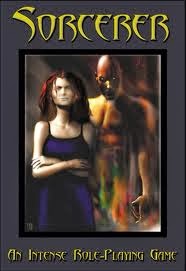
ANYway…great show.  Yes, twisted and grotesque, but still great. I suppose it falls into that “dark comedy” category that I am (generally) a fan of, at least in moderate amounts. And it has great writing and performances and a horrific manic-ness highly reminiscent of some of the darker Story Now indie-games. It’s like watching a show that was based on play reports from a few sessions of Ron Edward’s Sorcerer RPG. And I really do mean that in a good way.

It’s positively inspiring. It’s given me a huge swath of ideas for a new gaming project.

Yeah, even though I haven’t been blogging (or writing at all) the last couple-three weeks, I’ve actually been immersed in gaming. I’ve been reading (and rereading) a lot of games, both old and new. Some I’ve owned for a while: Sorcerer and its supplement Sex & Sorcery, 3:16 Carnage Beyond the Stars, InSpecters, Holmes D&D…just to name the ones in my backpack at the moment.

But mostly I’ve been reading new stuff that I’ve purchased or borrowed: Polaris, Trollbabe, Mouse Guard, the short-yet-sweet Bad Attitudes, and the 7.5 edition of Tunnels & Trolls (which I’ve never before owned in any edition). Heck, just picked up a copy of Jorg Dunne’s Western City yesterday while looking for a used copy of EverWay. I’ve been looking at how games “do what they do” especially with regard to explaining/molding game play, paying special attention to rules and writing for “scene framing” (a term that I’m coming to hate, actually, though I understand the reason behind the term’s use). I’ve been reading a LOT lately…more than I have in a long time.

I’ve also been reading other blogs, outside my couple dozen that I normally scan (though I admit at this point I’m just “lurking”). I’m still hopeless when it comes to this whole “G+” thing, but I’m getting sucked in to some of the conversations going on in that realm of Ye Old Internet. It’s a tad disappointing how much I still need to learn about 21st century technology.

Grotesque.

Did I mention I’ve been gaming with a pair of complete newbies? I had four players at the bar the last time I got out (two Thursdays ago), two of which had never played an RPG ever. Ever. Hell, they’ve had barely any exposure to computer RPGs…the barest basics were absolute mysteries to them. Fortunately, my latest rework of D&D (designed at new people) seemed to draw them right in and “worked.” But man-o-man, it sure has given me a lot of food for thought on how to meet my objectives of game design (i.e. designing for the non-gamer). I’ve spent so many years playing with people who had at least SOME background in gaming (at least the slightest of inklings) that I just have a huge blindside when it comes to the total novice. Hell, even when I was introducing B/X D&D to my teenage nephews for the 1st time, they had some ideas of class and level and “ability scores” from video games they’d played.

The new RPG gamer needs something better than Pathfinder. I’m sorry, they do. Grotesque.

All right, I’ve got to go…lots of breaking news stuff on the home-front which I’ll blog about later (in the next couple days). Have a good evening, folks.

Oh, yeah…good luck St. Louis!
: )
Need more beard?

Friday, October 4, 2013

Fantasy Objectives (Part 3)


Ugh. I know no one cares particularly about my problems, but yesterday was a real mess. Hell, most of the week has been less than ideal. I won’t go into detail (especially about work-related stuff that won’t matter to most) but for those readers who know him, my brother blew back into town Saturday night and I and my family have been dealing with that train wreck ever since.  It’s been enough to put me off my game…literally. Last night I went to the bar completely unprepared, even forgetting my beans at home, and ended up doing little in the way of playing or testing because AB was down at the bar and I had to handle his shit. Ugh.

Which is pretty sad because I had two new players who were really down to get on some gaming. And by “new” I meant really and truly new…they’ve never played RPGs, other than a couple computer versions and they were really excited to play “real Dungeons & Dragons with a real Dungeon Master.” Well, the girl was very excited…her boyfriend seemed to be more supportive and curious than “really excited.”

So it was unfortunate that we didn’t get started till 10 or so, and then I spent a whole passel of time explaining what an RPG is and how it works in the simplest terms. By the time we got through that and character creation (and the general rules overview which is decidedly simple compared to “actual” Dungeons & Dragons), it was close enough to midnight that I really had to call it. I still had to drive my brother back to Shoreline after all. But they were both enthusiastic to return next Thursday…the girl more so than the guy.

Age of the Newbies: 28 (female) and 38 (male).

Even though the game itself was a wreck, I still got some good ideas for tweaks to the game just from the character generation process. Remember, I’m trying to write a game for non-(RPG)gamers, and this would have been an excellent test…if we (I) hadn’t been distracted by my brother’s antics.

We’ll see if they actually show up next week. Fortunately, they live close by.

Regardless, I need to start “getting it together.” Now, part of that is getting back to my objectives series. The point of the last two posts, by the way, may have been lost on some folks…I was trying to lay a little groundwork for my thought process when I turn to designing a fantasy adventure game with different goals than D&D. Here are the things I’d hope people would take away from the last two posts:

  1. Having an objective of play is part of what makes a game a game.
  2. D&D had an objective of play (finding treasure), that was later subjugated (in priority) to a secondary feature of play not necessarily conceptualized by the designers originally: role-playing.
  3. Role-playing (of which I’ve written before) is the thing that makes RPGs unique in gaming and as such this aspect has taken priority in RPG design since the advent of the medium.
  4. Unfortunately, this has led to a loss of the thing that made RPGs “games” in the first place, namely an objective of play. Instead, emphasis on the play itself has supplanted objective leading to games only being playable when A) objective is added by pre-existing suppositions, and/or B) when players “in the know” can create pastiche of specific IP. Some (emphasis on that word!) indie-games in recent years have incorporated objectives, though the motive for this may be different from my own (i.e. making a game a “game”) and may lack broad appeal because of the type of objectives being included.
Now let me throw in a slight, amended disclaimer here and now: these RPGs I’m calling “unfortunate” or “flawed” or lacking in “broad appeal” are not necessarily BAD pastimes. There’s nothing inherently “wrong” with creating Firefly pastiche with Traveller, for example, or Neuromancer with Cyberpunk. There’s nothing wrong with enjoying GURPS role-playing because you like the system better than D&D, even though you want to do the same thing with the game (explore adventure sites, find treasure, etc.). If you are a veteran gamer, and you like the genre and system and are willing to put in the necessary work to make it functional, something like Starblazers may be right up your alley…and dammit, I’m not trying to tell you you’re doing it wrong, or you need to stop playing, or you should spit on these games or their designers. Likewise, there ain’t nothing wrong with playing an indie game like, say, Nicotine Girls if you’re feeling like that’s going to be a fun time that particular evening…certainly it’s cool to experiment and enjoy different things, and we can learn about ourselves stepping outside out comfort zone.

I was just kidding about the stomping, okay? Jeez.

Here’s the deal:

  • I want to write a game that is fantasy without a wargamey or kill-and-loot basis to it (i.e. a game with different objectives from Old School D&D). Not because D&D is wrong, but because sometimes you want to eat an apple instead of an orange.
  • I want to write a game that is accessible to non-veteran gamers, especially young ones. And one of the strategies to doing this means making the game more “game-like” by providing an objective of play. “What’s the object of the game? What are we working towards in-play?” The game should be able to answer this question, preferably on page one and in an explicit fashion.
  • At the same time, the game should be loose enough in structure to still allow and encourage imaginary role-playing because THAT is the main stand-out feature of RPGs or (as I like to call them) “fantasy adventure games.” It’s the thing the medium offers that other games cannot.
  • Finally, I (personally) would like the game to be serial in nature…not a one-off story like so many Story Now games…because I feel there is a benefit to extended play, character identification, and gradual (not slow!) development.
Now I wrote the first two posts on this topic before I ever bothered to check Wikipedia on the subject of game; the stuff I wrote was coming straight off the top of my head. However, I did take the time to look up the subject yesterday and found nothing terribly contradictory with my definition of “game” (specifically as to having an object of play). What was more interesting to me was what the Wikipedia had to say about role-playing games as a sub-category: there was a lot written on the way the game is played (duh) and very little on the general objectives of play. The text appears to suggest that the RPGs are “collaborative story-telling games” which implies the object is to create a story…definitely an object of many indie-games but really hard to do with your average commercial RPGs. I suppose the point can be debated (the ease of creating “story,” whatever that means, with a non-story focused RPG)…but regardless I have not known many players – certainly not a majority – that sit down the RPG table saying, “Let’s create a story tonight.”

And with regard specifically to table-top RPGs, we find this text:

During a typical game session, the GM will introduce a goal for the players to achieve through the actions of their characters…the goal may be made clear to the players at the outset, or may become clear to them during the course of the game.

To me, this just emphasizes what I’ve been writing about: there isn’t an objective to this thing called a “game” except what the participants bring to it. In which case one might ask is this really a game? Or is this it just “play” with some rules tacked on? For that matter, if the GM can change the rules and goal at a whim, doesn’t that move it farther from game and closer to play anyway? A free-for-all controlled by one egomaniacal participant?

Hopefully that’s not the usual case: after all, plenty of these games counsel the GM to be fair and even-handed when dealing with players. On the other hand, several RPGs also imply GMs should use their authority to manipulate the system and players in order to get a “fun game” (and who’s standard is used as the judge of fun?).

Whatever…that’s enough beating of the dead horse. People do have reasons for playing RPGs over other games, even without objectives, and here’s what they are, as far as I can tell:

Escapism from reality: first and foremost, imagining yourself in the fantasy world, taking on the persona of someone other than yourself: a wizard, a superhero, a gunslinger, a secret agent, whatever. The RPG medium provides structured play for pretending to be a particular “not me” person.

Exploration of the unknown: playing an imaginary character allows a person to experience (in their imagination) things they never would (or would never want to) in real life. High speed ar chases. Hyper-space travel. Fighting dragons. Fighting anything. Getting killed.

And that’s about it.

In-game achievement, collaborative story-telling, one-upping your buddy…these are things one can do without a role-playing game. Same with exploring a favorite genre: read a book or watch a movie. Same with kibitzing with buddies. Same with having “fun.” There are other games and pastimes that will satisfy these entertainment needs.
Immersive gaming, or so I've been told.
Now video games can provide this exploration and escapism…especially as vid technology improves to create a more immersive game experience. If I want to escape daily life and explore the criminal underworld, I can pick up a copy of Grand Theft Auto V and go to town. If I want to experience the horrors of war without enlisting in the army I can play Call of Duty or whatever the coolest army game is these days. But I’d argue there are a couple-three things that RPGs have up on video games, even leaving aside any social benefits from interacting in person or educational benefits from forcing players to read and do their own math. Those things include:

  1. Freedom of action: a video game can only allow you to do what the game has been programmed to do. An RPG is as wide-open as the participants imagination allows.
  2. Speed of update: video games can add additional content to increase replay-ability and/or extend normal gameplay experience. But an RPG can be updated easily and constantly – on-the-fly as necessary – and “bugs” and “patches” easily removed by the participants at the table. In the past, Dragon and similar publications made a business of ideas for additional, optional content that gamers could throw in their game. Again there are little limitations when the game resides in the minds and imaginations of the players (as opposed to requiring hard-wired programming).
  3. I’d argue that the trained imagination provides a more powerful experience in play than a video game…the video game (generally) removes the player from the experience. But some folks might debate this depending on the game; “first person” games are especially effective in providing an immersive experience and generating emotional response.
The point being: there’s still a reason to play…and in some cases to prefer…table-top role-playing games. They’re still relevant form of entertainment, even in our 21st century. But to compete with other forms of entertainment requires an ease and accessibility to non-gamers that I think is conspicuously absent in a lot of game design.

All right, in my next post on this subject (which I may or may not get to this weekend), I’ll try to bring this discussion “home” in terms of the game I’m working on. However, I want to take a look at a couple RPGs that I haven’t played/read, especially Barbarians of Lemuria. From the reviews I’ve read on-line, its system seems remarkably similar to the one I’ve been developing/testing.

[to be continued]

Wednesday, October 2, 2013

Fantasy Objectives (Part 2)


Okay, so where was I? Oh, yeah…objectives.

Dungeons & Dragons, regardless of its wargaming roots or its role-playing features, meets the definition of game because it has an objective of play. People sit down at the table asking, “What are we supposed to do in this game?” and the referee/DM can answer them succinctly. Specifically:

You’re looking for treasure; don’t get killed doing it.

Other early RPGs, too, have (relatively) clear and explicit objectives of play…though perhaps only because the design was informed by the D&D/wargame model. In Top Secret you are given missions and receive cash and XP in direct relation to the actions accomplished, especially as relates to your character’s “bureau” classification. In Gamma World characters search the post-apocalyptic ruins of ancient cities and installations, looking for treasure in the form of “artifacts” and, yes, gold. Boot Hill generally boils down to a number of gunfighting scenarios where the object is the simple kill or be killed…all roads lead to the same destination in BH.

However, once RPGs start getting away from the wargame/D&D paradigm, we see games start to lose any type of concrete objective of play. And losing that concrete objective means losing the very thing that makes the game a “game.” This problematic flaw of design (I’ll call it a “flaw” now, though I’ve used more derogatory language in the past) persists for a couple decades until the advent of the indie RPG “movement” and the creation of those “Story Now” games that tend to be relegated to the back shelf of the game shop.

[we’ll get to that in a moment]

Non-RPG games have objectives of play…and these objectives are explicit in their instructions. The instructions, the rules, give the parameters for achieving those objectives. Now some folks might ask:

JB…are you saying all these RPGs need to be as competitive as card and board games? That they need “victory” conditions of some sort? Like Monopoly or Magic: the Gathering or Chinese checkers? And if they don’t have a winner than they can’t be considered “games?”

No, a game can be a game without an objective that involves beating someone’s ass. Games can be cooperative, and not just in a “my-team-versus-your-team” kind of way. The object of the card game Once Upon A Time is to create a story using the cards dealt to the players; yes, the game has a “winner” (the person who drains their hand first), but it is explicitly emphasized in the rules that this should be a secondary consideration to the crafting a good tale. In Jenga, all players are working to build the tower with the object of not knocking down the blocks…the game doesn’t have a “winner” only a “loser,” though really EVERYONE loses if the blocks get knocked down, since this stops play (games like Twister are similar). In the classic party game Telephone players take turns whispering a particular sentence from one to another, with the explicit object being to perfectly “pass” the phrase all the way down the line. Of course this almost never happens, resulting in much fun and hilarity…but the “rules” and “objective” of the game are clear, with the play itself resulting in a fun “win” for everyone.

The object of a role-playing game doesn’t have to be killing things and taking their stuff. That works for the somewhat thuggish, treasure-hunting premise of D&D but is decidedly inappropriate for other flavors of fantasy role-playing. But as a game, you still need some objective. You need something as an object of play.

I wrote previously that “to have fun” is not an objective of play; fun is an expectation of play, and we play games expecting to have a good time. Here’s another thing that’s NOT an objective of play:

Creating an imaginary character and going on adventures.

The phrase isn’t the object of play, it simply describes play itself…the action that should, in theory, lead to the objective (if the RPG were written with objective firmly in the cross-hairs of the designer). Without creating the “roles” for players to play, no “role-playing” can occur. And since the act of character creation isn’t itself the game (all apologies to White Wolf and Pathfinder), the adventure – i.e. the exploration of the imaginary world by the characters – is a necessary part of game play. Without it, you simply have some nice concepts written on paper: beached whales longing for the open sea.

[yeah, that’s a weird analogy]

So the game play of a role-playing game has “imaginary characters going on adventures,” with the specific systems (“rules”) differing from game to game. But for a game to be a proper, functional game it still requires an objective of play…and it’s downright incredible to me how many games fail in this regard.

Yes, yes, yes…I know there are plenty of people who have played and enjoyed these “flawed” games. Hell, people continue to play and enjoy them. There are couple reasons why, even in the absence of a specific objective, such games can “work” (I use the term only to mean that there is functional play that occurs, regardless of the quality of that play):
  1. Long-time gamers incorporate previously learned suppositions into the game play of otherwise objective-less games; for example, creating site-based adventures (i.e. “dungeons”) into fantasy games like Stormbringer or Star Frontiers (the introductory module for Star Frontiers includes an actual cavern complex…with numbered encounters and monsters…for exploration).
  2. Games based on specific intellectual property (or IP with the serial numbers filed off) rely on participants’ knowledge of the IP or genre to create pastiche play aping the designated concept (see ElfQuest, Star Wars, Serenity, etc. for examples, as well as most RPGs of the “space opera” or “superhero” genre).

I would argue that gameplay for 99% (or more) of objective-less RPGs falls into one of these two categories, which basically means the participants are injecting their own objectives to account for a flaw of game design.

What if you took a game like, say, Risk or Monopoly and deleted any part of the rule book that pertained to the object of the game? You’d still have some rules available to you…how to set up, the order of play, etc…but you’d be missing a key part to the instruction, right? If you could find a person or two who’d played the game before (or who’d played a similar game) they’d certainly be able to help you out…but if you had no knowledge source to draw from? You’d be left grasping and guessing as to what it was all about. But then, maybe you just enjoy the accumulation of plastic army counters or fake paper money and that’s enough to satisfy you.

There is a conceit shared amongst many longtime gamers that all RPGs play pretty much the same…that the systems change, the themes and genre change, but that gameplay is “pretty much the same.” Here is a game about undead cowboys. Here is a game about pulp-era explorers. Here is a game about intrepid fantasy adventurers delving dungeons. Here is a game about steampunk time travelers in zeppelins.

Change character generation, change setting, change rules for “doing stuff,” change “reward system” (usually understood to be the method by which the imaginary avatar of “character” increases its in-game effectiveness)…but still doing the same old, same old. The only thing that causes one game to be played over another (besides group consensus at the game table is):

-        Interest in the new/different setting and characters
-        Interest in the new/different system of doing “that stuff we do in all RPGs”

Only as intense as you make it.
Now in recent years (the last decade or so) that’s changed a bit as the indie-game movement (especially folks interested in those damn Story Now games that facilitate a “narratavist” creative agenda), have made some inroads into returning RPGs to real games…i.e they’ve included objectives of play in their design, that have been so badly lacking in most “new” RPGs since the early 1980s. Games like Sorcerer and My Life With Master and InSpecters and Baron Munchausen (itself a hybrid game with a competitive edge) have distinct goals of play that the participants work towards over a session…much like an Old School D&D party works at digging the treasure out of well-guarded and hard-to-reach caches. Not every indie game does, of course…some (like The Riddle of Steel) fall prey to the same “flaw of design” found in other RPGs. And I don’t think the intent behind including objectives was to make the games more “game-like;” I think they were just trying to really define WHAT IT IS THE PLAYERS ARE DOING IN-PLAY WITH THE AUTHOR’S SYSTEM.

Specificity. Don’t fear it.

Now people who enjoy the hell out of “universal” RPG systems like GURPS and RISUS and whatever hate this kind of discussion, because the whole point of universal systems appears to be “give the players the tool kit they need to do anything they want.” They take umbrage with the idea that GURPS (for example) isn’t a “game” simply because it doesn’t include an in-play objective. “Bloody Hell!” they shout “That’s the whole damn POINT! I want a system that doesn’t tell me what I’m supposed to do, I want to create my own objectives of play.” Fine and dandy…GURPS isn’t a game; it’s a tool box to help you design your own game. (insert objective and) Enjoy it.

[actually, the snarky side of me would say GURPS IS a game with an actual objective of play; however, that objective is “to create a workable game using the GURPS system,” and that the play is in the design of the world/setting…i.e. the GM prep work…not in the actual play of the RPG itself]

Okay, that’s enough stomping on people’s feelings for now. More later.

[to be continued]

Tuesday, October 1, 2013

Fantasy Objectives (Part 1)


Last week, about five minutes after finishing up my post on Bean Counting, I began writing the follow-up post entitled something like “Adventure Objectives: Yes, THAT…Again.” If you run a Google search using the words “blackrazor” and “objective” you’ll find a bunch of past posts where I tried (without much success) to nail down some amorphous ideas I had regarding game objectives…ideas which met considerable resistance from some readers.

At the time, I didn’t really have a dog in the fight – that is, I wasn’t too concerned with resolving anything regarding “objectives.” I said my piece (such as it was) and let it go, moving on to other thoughts and topics. It wasn’t really imperative that I crystallize my thoughts on the concept or come up with any type of “plan” for anything I was working on. But in writing my Bean Counting post, I realized that going forward with my ideas for a new type of fantasy adventure game would absolutely require me to return to the subject. Because a game isn’t a game without real, concrete objectives of play.

I wish I still had my notes from psycho-physical development class (my Jesuit prep school couldn’t just have “P.E.” like normal high schools). Dragging my memory (freshman year was more than 25 years ago), I can recall that we had some pretty specific definitions of the concepts “play,” “game,” and “sport.” They were differentiated somewhat like this: 
  • PLAY: has no set rules, goals, or time limit.
  • GAME: has specific objective of play (and thus rules to determine how the objective is reached), but no limit of time.
  • SPORT: incorporates a limitation of time in addition to specific objective of play.

There are a myriad of degrees or levels within each category of course. Football (pick your preferred type) is a fairly different animal from competitive bass fishing, for example, but they both fall into the “sport” category. The vast majority of tabletop games (card, board, role-playing, war) are correctly labeled in the “game category” because there’s no expectation of time constraint. You can walk away from it and come back later (if you so choose) to continue the game.

However, for a game to be “a Game” it has to have a specific objective of play and rules governing how one reaches that objective.  Settlers of Catan, checkers, pinochle…all these games have an objective of play and rules that govern how that objective may be met. People playing Warhammer 40K don’t just set-up and move models willy-nilly; they’re required to use standard army lists and follow a detailed order of play with every turn (including the set-up of the board). Contrast this with a pair of children simply playing pretend with the 40K miniatures – or action figures or toys or whatever – with no specific rules (or an ever-changing rule-set based on social contract) nor objectives of play. It might look like a “game,” but really it’s just play…important to a youngster’s development, certainly entertaining, but lacking a level of intensity and sophistication inherent in the definition of game.

Role-playing games are not sport; while I suppose the tournament setting of previous decades injected a constraint of time into some types of RPG play (the wargame styled RPGs of TSR, like original D&D and Top Secret), the degree of latitude given to the “referee” to make rulings, the variation in possible number of participants, and the procedure by which play precedes in-session would all seem to prohibit the “sport” label. On the other hand, RPGs are not simple play; RPGs have rules that constrain play, even if the extent of those rules vary from game-to-game (the rules found in Puppetland are much “lighter” than those of, say, Champions but both have a set of written procedures that provide boundaries for all participants, players and GMs alike).

However, while RPGs may fall into that middle category of “game,” few provide actual specific objectives of play, which is the main thing that distinguishes a game from simple play. Having a set of rules (any extent) isn’t enough…game rules are designed (or should be designed) to facilitate play with an end objective in mind.

And “fun” is not an objective, despite the text of many of these RPGs. Fun is something inherent in any of these pastimes (play, game, sport)…if it’s not fun, why should we take part in these things? For ca$h? Sign me up to be a professional game player!

No, “to have fun” is not (despite the text found in many RPG’s introduction) the object of the game. No one designs a game with the express purpose of making it un-fun. Well, maybe some particularly misguided or masochistic type. However, even designers who write games that are so crunchy as to be near-unplayable due to the extended search & handling time...even these were designed by someone who felt that it would make for a fun game. No, fun is not an objective of play…it’s an expectation.

So then what are we left with? What do we have if we simply delete the line that says “the object of the game is to have fun?” Well, we’d appear to still have “games” with specific rules (unlike wide-open “play”) that directs and facilitates play to…no stated objective? Yeah, for most RPGs, that’s about the shape of it.

No stated objective, i.e. no explicit objective. But maybe there’s an unstated, non-explicit objective to be found…I’ll get to that in a second.

You were looking for this, right?
Dungeons & Dragons, God bless it, does have an explicit objective: acquisition of treasure. In play, the objective of the game is to acquire treasure by exploring dark and dangerous dungeons, overcoming challenges and defeating antagonists and walking that tight rope between acceptable risk and cautious discretion. Which is why, when all is said and done, D&D is a pretty well-designed game, even if it has some warts. We can thank Dave Arneson for this particular design choice: as he described (in his own words) he wanted to create a fantasy game of subterranean exploration for his wargaming buddies. Part of his design process was establishing an objective – a reason for the characters to be doing their exploration. But this is more than simple character motivation (in terms of “plot” or “story”); when you create a game, you need to create a goal or objective for the game because – duh – games have objectives. People grasp this intuitively, even without a master’s degree in “game theory.”

[well, people other than most RPG designers]

A wargame is a game, too, and has an objective: defeating one’s opponent on the field of battle. But this isn’t a very good objective for the basic premise of D&D since the game is A) cooperative (i.e. players do better when they work together), and B) the referee/DM is All-Powerful with few (if any) limits. In a wargame, the objective is (usually) fair because the game incorporates rules to ensure a level playing field (or one with parameters acceptable to all parties). In a game like D&D, the only thing ensuring a “fair and balanced” game is the magnanimity of the DM. And sometime, that’s not all that magnanimous (see Tomb of Horrors as an example).

But assuming the rules offer some guidelines regarding a fair and balanced approach to challenge setting and an objective method of measuring success, you can approach some degree of acceptable challenge. In the case of D&D, you have treasure acquisition as the goal with random placement of treasure (see random treasure tables based on monsters encountered) as a means of making the game more balanced. It remains a game…an interesting one, a challenging one, one that encourages imagination…even though it’s a game that has the strange and wonderful side-effect of creating this escapist fantasy we call “role-playing.”

It’s not just killing monsters and collecting coin that made D&D popular.
; )

[to be continued]